
Home Healthcare Device for Senior Care: Dr. Miltie N9+
See how the Dr. Miltie N9+ home healthcare device for senior care organizations supports virtual exams, remote monitoring, and connected care workflows.
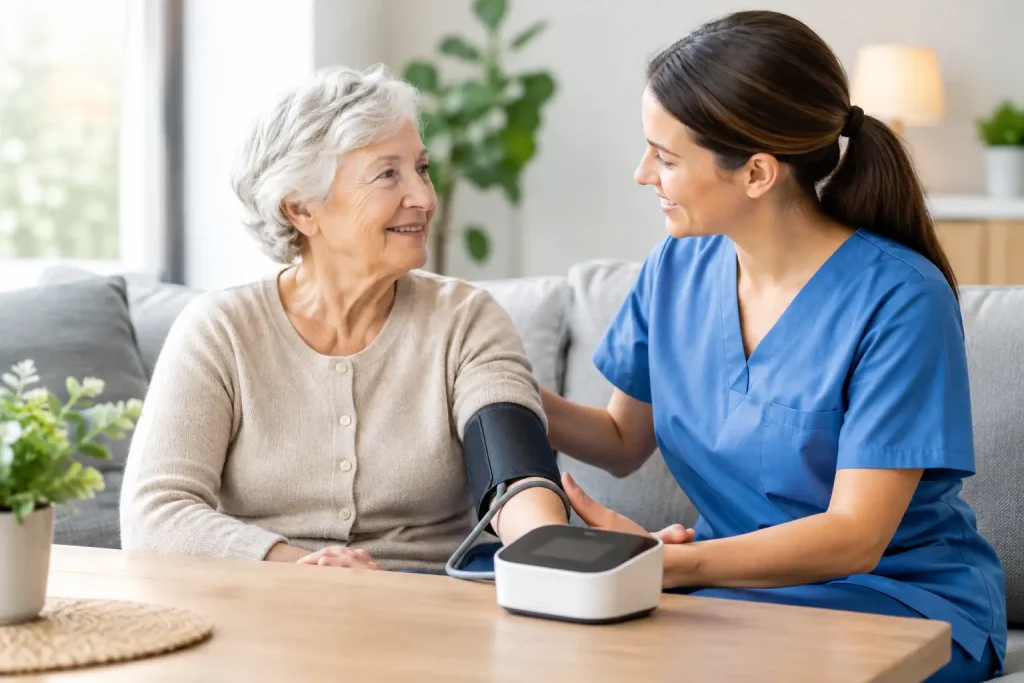
A missed change in breathing, swelling, mobility, cognition, or medication tolerance can become an avoidable transfer when a senior is seen only between scheduled visits. A home healthcare device for senior care organizations, such as the Dr. Miltie N9+, gives clinical teams a practical way to extend clinician-directed assessment and monitoring into the settings where older adults live and receive support.
For home health agencies, long-term care providers, hospice organizations, community-based programs, and health systems, the goal is not to replace bedside care. It is to give nurses, caregivers, and remote clinicians a better connection when in-person resources are limited, travel is burdensome, or a timely clinical decision is needed.
Why senior care needs more than a video visit
A standard video visit can support conversation, care planning, medication review, and caregiver education. It is often not enough when a clinician needs clinically relevant information to evaluate a new concern. Older adults may have complex chronic conditions, changing functional status, communication barriers, or symptoms that are difficult to describe accurately from a distance.
A device-enabled virtual exam changes the nature of the encounter. Instead of relying only on visual observation and patient or caregiver reporting, the care team can capture relevant health data and support a more informed remote physical assessment. That distinction matters when deciding whether a patient can remain safely at home, needs an urgent in-person evaluation, or can be managed through an adjusted care plan and close follow-up.
The Dr. Miltie N9+ is a mobile, wireless virtual examination and patient monitoring system designed to help organizations bring those capabilities beyond the traditional exam room. It supports connected care models in which local staff or caregivers can assist the patient while an authorized clinician participates remotely.
Where a home healthcare device for senior care organizations fits
Senior care is not one workflow. A rural home health agency may be trying to reduce windshield time across a large service area. A skilled nursing or long-term care team may need faster access to a physician or advanced practice clinician. A community health organization may be supporting older adults who face transportation, mobility, or caregiver barriers.
The most effective deployment starts with a specific care gap. Organizations can use a connected virtual examination system to support post-discharge follow-up, chronic disease management, symptom escalation pathways, preventive check-ins, medication-related concerns, and care coordination across distributed teams. In each case, the technology should fit an established clinical protocol rather than create a separate, disconnected telehealth process.
For example, a nurse visiting a patient after hospitalization may identify a change that warrants a remote clinician assessment during the visit. Rather than asking the patient to arrange transportation or waiting for the next available office appointment, the team can use a device-enabled virtual encounter to gather appropriate information, document the interaction, and determine the next step. The right next step may still be an in-person visit or emergency evaluation. Virtual care is valuable because it helps make that escalation decision earlier and with better context.
Supporting the care team, not shifting clinical responsibility
Connected devices are most useful when responsibilities are explicit. The remote clinician remains responsible for clinical judgment within their scope of practice. On-site nurses, medical assistants, home health staff, or trained caregivers can help facilitate the encounter, follow approved workflows, and communicate observations. Administrators and program leaders provide the operating model that makes those roles sustainable.
This structure can relieve pressure on a limited clinical workforce, but it does not eliminate the need for training. Staff need clear guidance on when to initiate a virtual exam, how to prepare the patient, how to use the equipment, what to document, and when to escalate. Caregiver participation also requires sensitivity. Some families welcome the ability to join a visit from home or work; others may need language access, technology support, or a different engagement approach.
Senior care organizations should also plan for patients who cannot or do not want to participate virtually. Cognitive impairment, sensory limitations, unstable symptoms, patient preference, and inadequate connectivity may make an in-person encounter the better option. A responsible virtual care program preserves that choice and builds clear exceptions into its workflow.
Clinical value comes from the pathway, not the device alone
A device can capture information. A pathway determines what happens next.
Before deployment, leaders should define which patient populations and clinical scenarios are appropriate for virtual examination and remote patient monitoring. They should identify escalation thresholds, clinician availability, documentation requirements, and handoffs to primary care, specialty care, emergency services, or hospice teams. This prevents staff from treating technology as a generic solution to every access problem.
Dr. Miltie’s Circle of Care™ model is especially relevant here because senior care frequently involves more than one participant. The patient, family caregiver, home-based staff, primary care clinician, specialist, facility team, and care coordinator may all hold part of the clinical picture. A connected-care approach can help organize those touchpoints around the patient rather than around the location of a traditional exam room.
Operational questions leaders should answer first
Purchasing a home healthcare device for senior care organizations should follow operational planning, not precede it. The strongest programs begin by examining the current patient journey: where delays occur, which patients travel unnecessarily, which changes in condition are difficult to assess, and which staff members lose time coordinating fragmented follow-up.
Leaders should then evaluate whether the platform can support their existing care model and technology environment. HIPAA-compliant workflows, user access controls, data handling practices, documentation processes, training requirements, and support expectations all deserve review. A virtual examination program also needs reliable connectivity plans, especially for rural homes, assisted living settings, and community sites where network conditions vary.
Financial design matters as much as clinical design. Remote patient monitoring, chronic care management, telehealth, and related services may have different coverage, coding, and documentation requirements depending on the payer, care setting, clinician type, and patient eligibility. CMS policies can inform program design, but they do not guarantee reimbursement for every service or organization. Reimbursement-aware implementation helps teams align clinical workflows with the evidence needed to support compliant billing where applicable.
Organizations should avoid measuring success only by the number of virtual visits completed. More meaningful indicators may include time to clinical assessment, avoidable travel, follow-up completion, hospital readmission trends, staff capacity, patient and caregiver experience, and continuity after a change in condition. The appropriate measures depend on the program’s original problem statement.
A practical approach to implementation
A focused pilot is often more useful than a broad launch. Start with a defined cohort, such as high-risk patients after discharge, residents with recurring chronic disease exacerbations, or homebound adults who struggle to attend follow-up appointments. Give the pilot a clinical sponsor, an operational owner, and a clear escalation process.
During the initial phase, observe the workflow closely. Are staff able to prepare the patient without delaying routine care? Can clinicians access the right information during the encounter? Are families receiving clear instructions? Are referrals and follow-up tasks closing the loop? These questions reveal whether the program is truly reducing friction or simply moving it elsewhere.
Training should be scenario-based. Teams learn more from rehearsing a post-discharge concern, an after-hours symptom escalation, or a medication follow-up than from reviewing features in isolation. Refresher training is equally important when turnover is high or when the organization expands to new care settings.
Extending access with clinical discipline
The value of connected care for older adults is not that every concern can be handled remotely. It is that organizations can bring qualified clinical attention closer to the patient when distance, staffing, mobility, and fragmented care create unnecessary barriers.
When paired with defined pathways, trained teams, caregiver support, and reimbursement-aware operations, the Dr. Miltie N9+ can help senior care organizations make virtual care more clinically useful than a screen-only encounter. The opportunity is to create a more responsive care experience: one that recognizes changes earlier, involves the right people sooner, and respects the patient’s home as a meaningful setting for care.
Move from information to action
See how the N9+ can fit your organization.
Explore the remote physical exam platform or request a focused demonstration.