
Community Health Technology Trends That Matter
Community health technology trends are reshaping pediatric, rural, and safety-net care through virtual exams, remote monitoring, and coordinated delivery.
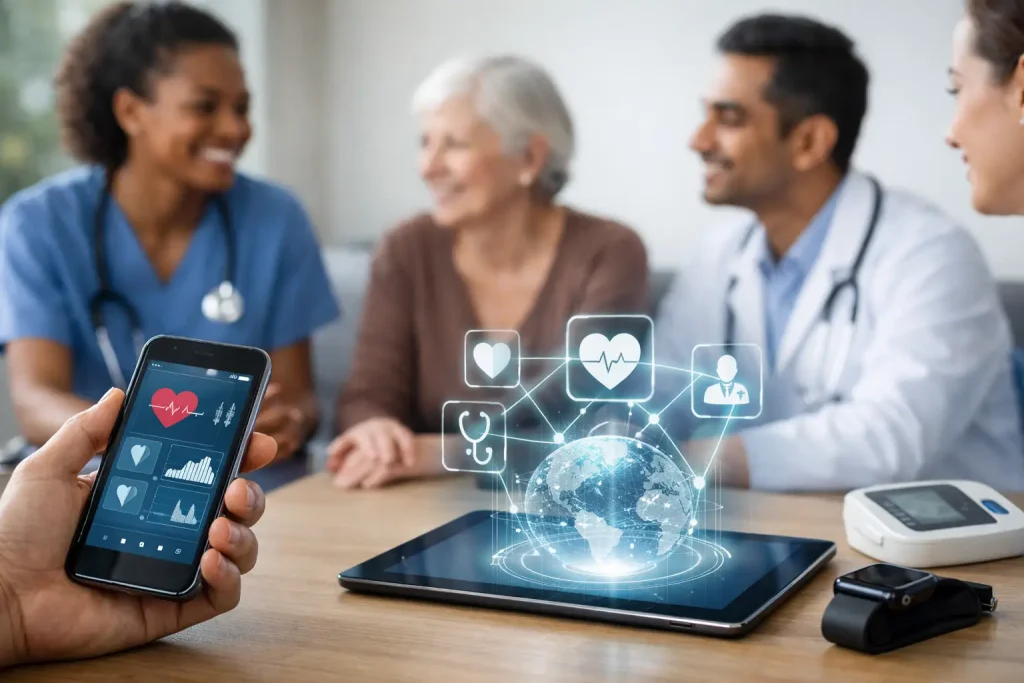
For a rural family managing a child’s asthma, the barrier to care may not be clinical expertise. It may be a two-hour drive, a missed day of school, a caregiver’s work schedule, or the difficulty of helping a child with sensory needs tolerate an unfamiliar clinical setting. The most meaningful community health technology trends address those real-world barriers by bringing clinically directed care closer to where patients live, learn, and receive support.
For healthcare organizations, the question is no longer whether virtual care has a role in community-based delivery. The more practical question is which technologies can extend clinical reach without creating disconnected workflows, uneven access, or data that clinicians cannot act on. The strongest programs pair technology with clinical protocols, care coordination, training, and a sustainable reimbursement strategy.
Community Health Technology Trends Reshaping Care Delivery
Virtual care is moving beyond the video visit
Video remains useful for follow-up, education, behavioral health, and care coordination. But video alone often cannot answer the clinical questions that lead to an in-person visit. A provider may need to assess lung sounds, inspect the ear or throat, review vital signs, or observe a skin condition with sufficient clarity to make an informed decision.
That is driving greater adoption of device-enabled virtual physical exams. Connected tools can allow a clinician to guide an examination remotely while capturing clinically relevant findings. In a school-based program, community clinic, home setting, or rural outreach location, a trained facilitator can support the patient while the clinician remains connected to the assessment.
The trade-off is clear: virtual examination technology is not a substitute for every in-person encounter. Patients with urgent symptoms, complex diagnostic needs, or conditions requiring hands-on procedures still need appropriate escalation. Yet when organizations define which encounters are clinically appropriate for remote assessment, virtual exams can reduce unnecessary travel and preserve in-person capacity for patients who need it most.
Remote patient monitoring is becoming more condition-specific
Remote patient monitoring is shifting away from passive data collection toward defined pathways of care. Rather than collecting every available metric, effective programs focus on the measurements that support a decision: blood pressure for hypertension management, weight and symptoms for heart failure, glucose patterns for diabetes, or oxygen saturation and respiratory symptoms for selected pulmonary patients.
For community health centers and rural clinics, this approach can strengthen chronic care management between visits. Care teams receive a clearer view of whether a patient is stable, declining, or struggling to follow a treatment plan. That visibility can support earlier outreach before a problem becomes an emergency department visit or hospitalization.
Pediatric deployment requires additional care. Children are not simply smaller adults, and their care often depends on caregiver participation, developmental considerations, and age-appropriate workflows. For autistic children and pediatric patients with special healthcare needs, monitoring and follow-up conducted in a familiar setting may reduce stress and improve the quality of caregiver observations. The technology must fit the family’s routine, however. A monitoring plan that is clinically elegant but too burdensome for caregivers will not produce reliable engagement.
Care coordination is becoming a core technology requirement
Community-based care is rarely delivered by one person in one location. A patient may interact with a primary care clinician, specialist, school nurse, community health worker, home health team, caregiver, and pharmacy. When those participants work from incomplete information, patients repeat their stories and care plans become harder to execute.
Technology platforms are increasingly expected to support the full care pathway, not just a single interaction. That includes documenting virtual encounters, routing findings to the right clinician, identifying follow-up tasks, engaging caregivers, and creating a clear escalation process. The goal is not more notifications. It is a more reliable handoff between people responsible for the patient’s care.
This is especially relevant in safety-net settings, where care teams manage high volumes, complex social needs, and limited workforce capacity. A connected-care model should help staff work at the top of their license by making clinical data, patient outreach, and next-step decisions easier to organize.
Care is reaching homes, schools, and trusted local sites
One of the most consequential trends is the expansion of care sites. Community health technology is enabling organizations to treat the home, school, long-term care setting, mobile clinic, and community partner location as extensions of the care delivery network.
Schools can be particularly valuable access points for pediatric populations. When a child develops symptoms during the school day, a device-enabled virtual assessment may help determine whether the child can remain safely at school, needs a same-day primary care visit, or requires a higher level of care. Caregivers can participate when appropriate, reducing fragmented communication between school staff and the child’s medical home.
For rural health clinics, federally qualified health centers, and critical access hospitals, distributed care can also improve access to specialty support and follow-up services. Success depends on local workflow design. Organizations need to determine who presents the patient, who operates the equipment, where documentation resides, how consent is managed, and what happens if connectivity or device readings are inadequate.
Reimbursement and compliance are influencing design decisions earlier
Virtual care programs are becoming less experimental and more operationally accountable. Clinical leaders and administrators are asking whether a program fits payer requirements, supports compliant documentation, uses appropriate consent processes, and can demonstrate measurable value.
CMS reimbursement pathways for remote patient monitoring, chronic care management, and related services can help support financially sustainable models, but eligibility and billing requirements vary by service and payer. Technology should therefore be selected with reimbursement-aware implementation in mind. A device that collects data is not enough; organizations also need workflows that document clinical review, patient communication, and the work performed by qualified care team members.
HIPAA compliance and security remain fundamental. Community-based programs must protect patient information across devices, networks, caregivers, and distributed locations. At the same time, overly complicated access processes can discourage adoption. The right balance protects privacy while allowing clinicians and authorized staff to access information when it is needed for care.
What Healthcare Leaders Should Prioritize
Technology decisions should start with a patient population and care gap, not a feature list. A pediatric practice may prioritize reducing avoidable travel for follow-up assessments. A rural hospital may focus on post-discharge monitoring and escalation. A community health center may need a scalable approach to hypertension, diabetes, or respiratory care across multiple sites.
From there, leaders should assess clinical fit, workflow fit, and financial fit. Clinical fit asks whether the technology captures information providers can use. Workflow fit asks whether staff can deploy it consistently without adding unsustainable steps. Financial fit considers reimbursement, staffing, device logistics, training, and the cost of maintaining the program after initial funding ends.
Interoperability also deserves close attention. Not every program requires a complex integration on day one, but isolated data creates downstream risk. Teams should understand how encounter findings, monitoring data, and care coordination notes will reach the medical record and the clinicians accountable for follow-up.
Training is often underestimated. Staff need more than an equipment demonstration. They need scenario-based guidance for preparing patients, supporting remote exams, recognizing red flags, troubleshooting common issues, documenting care, and escalating concerns. Caregivers also need communication that explains the purpose of the service, what they are expected to do, and when they should seek immediate care outside the program.
From Technology Deployment to a Circle of Care™
The most durable community health programs do not frame technology as a replacement for relationships. They use it to strengthen the connection between clinicians, patients, caregivers, and local support teams. Dr. Miltie’s N9+ approach reflects this model by combining mobile virtual examination capabilities, remote monitoring, customized care pathways, and care coordination for organizations delivering services beyond the traditional exam room.
For leaders evaluating these models, scale should not mean deploying the same workflow everywhere. A school-based pediatric program, a home-based chronic care program, and a rural clinic outreach service each require different staffing, clinical protocols, and patient engagement strategies. A shared technology foundation can support all three, while local design preserves what makes care practical for each community.
The next phase of community health will be defined less by the number of connected devices in use and more by whether those devices help a clinician make a timely decision, help a caregiver feel included, and help a patient receive appropriate care without an unnecessary burden. That is the standard worth designing for.
Move from information to action
See how the N9+ can fit your organization.
Explore the remote physical exam platform or request a focused demonstration.