
Dr. Miltie N9+ vs. Athena for Virtual Care
Compare Dr. Miltie N9+ vs. Athena for virtual care, remote exams, pediatric access, workflow fit, and connected-care planning across care settings today.
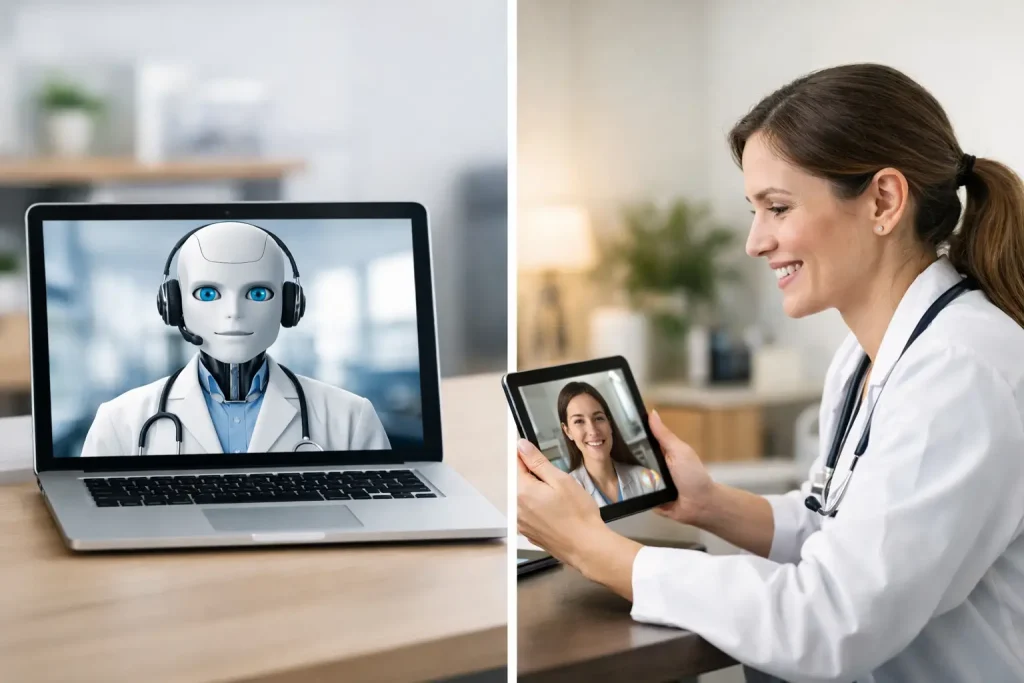
A search for Dr. Miltie N9+ vs. Athena can suggest a straightforward product comparison. For most healthcare organizations, however, the more useful question is not which platform is “better.” It is whether the organization needs to strengthen the clinical encounter itself, manage enterprise workflows and revenue operations, or create an integrated model that supports both.
The Dr. Miltie N9+ and athenahealth solutions generally address different parts of the care-delivery ecosystem. One is centered on device-enabled virtual examination, connected care, and patient access beyond the clinic. The other is widely known for cloud-based electronic health record, practice management, and patient engagement capabilities. A meaningful evaluation starts with that distinction.
Dr. Miltie N9+ vs. Athena: Different Starting Points
The Dr. Miltie N9+ is a mobile, wireless virtual examination and patient monitoring system. It is designed to help clinicians obtain clinically relevant information when the patient and provider are not in the same exam room. Depending on the configured care pathway, this can support virtual physical exams, remote monitoring, follow-up care, chronic care management, and care coordination across homes, schools, community sites, and distributed clinical settings.
Athenahealth, often referred to simply as Athena, is primarily evaluated as a cloud-based healthcare technology ecosystem. Organizations commonly use athenahealth for functions such as electronic health records, scheduling, billing, claims management, patient communications, and operational reporting. Its core value proposition is tied to managing the administrative and clinical documentation infrastructure of a practice or health system.
That means this is not always an either-or decision. An EHR and practice-management environment is essential for many organizations, but it does not automatically provide the connected diagnostic capability needed to conduct a more complete virtual physical assessment. Conversely, a virtual exam and monitoring system does not replace the need for documentation, revenue-cycle, and longitudinal patient-record infrastructure.
Where the N9+ Fits in a Virtual Care Strategy
Traditional video visits are useful for many follow-up conversations, medication reviews, behavioral health encounters, and lower-acuity concerns. Their limitation is clinical: a video connection alone may not give the clinician enough objective information to assess a patient confidently or determine the appropriate next step.
The N9+ is intended to close part of that gap by extending examination and monitoring capabilities to locations where patients already are. Instead of requiring every assessment to occur at a central clinic, organizations can design clinician-directed workflows that bring connected tools into the home, a school-based health program, a rural outreach site, a pediatric practice, or a community clinic.
For pediatric care, location can materially affect the quality of the encounter. A child may be more cooperative in a familiar setting, especially when a caregiver or trusted staff member is present. This can be particularly meaningful for autistic children and pediatric patients with special healthcare needs, for whom travel, waiting rooms, unfamiliar environments, and changes in routine can create substantial barriers to care.
The clinical objective is not to force every visit into a virtual model. It is to reserve in-person resources for encounters that truly require them while enabling appropriate assessment, follow-up, and escalation from more accessible settings.
Caregiver participation is a clinical advantage
Virtual care programs often measure convenience first. For pediatric and complex-care populations, caregiver participation is equally important. Caregivers can help describe changes in symptoms, assist with device use when appropriate, and participate in the plan of care without losing an entire workday to travel and waiting.
A connected-care model also gives teams a practical way to maintain continuity between visits. When configured with clear protocols, escalation pathways, and training, remote exam and monitoring tools can support earlier intervention rather than waiting for a concern to become urgent.
Where Athena Fits in the Operational Stack
Athenahealth can be a strong fit when an organization is seeking to modernize practice operations or consolidate core systems. Documentation, scheduling, billing workflows, patient communication, and reporting are foundational requirements for a scalable care-delivery organization. Leaders evaluating Athena are often focused on reducing administrative friction, improving visibility into performance, and supporting revenue-cycle operations.
Those needs remain critical in a virtual care expansion. A remote examination produces value only when the resulting information reaches the right clinician, is documented appropriately, triggers a follow-up plan, and supports compliant billing and care coordination processes.
For this reason, health systems should avoid framing the decision as a device purchase versus an EHR purchase. The more accurate planning question is: where is the organization’s current gap? If the operational backbone is the immediate constraint, an enterprise platform may be the priority. If clinicians already have an EHR but cannot gather enough objective information during remote encounters, device-enabled virtual examination may be the more urgent capability.
Evaluate the Clinical Workflow, Not Just the Feature List
Feature comparisons can obscure the work required to make virtual care successful. Healthcare leaders should map the patient journey before selecting or expanding technology. Identify who initiates the encounter, who assists the patient, which data are collected, how findings are reviewed, when escalation occurs, where documentation resides, and which reimbursement pathway applies.
For rural health clinics, federally qualified health centers, critical access hospitals, and community health centers, the workflow must account for workforce constraints and geography. A model that works in a large urban specialty practice may not work in a service area where patients travel long distances, broadband is inconsistent, and clinical staff cover multiple sites.
The same is true for pediatric programs. A school-based workflow may require trained support staff, consent processes, caregiver communications, and clearly defined clinical oversight. Home-based monitoring may require different education, device logistics, and technical support. The technology should adapt to the pathway of care, not require teams to reshape care around a generic deployment model.
Questions decision-makers should ask
A practical evaluation should examine four connected areas: clinical scope, implementation support, interoperability, and financial sustainability.
Clinical leaders should ask whether the solution enables the assessments their providers actually need. Operations leaders should examine training requirements, device management, support models, and whether the workflow can be used consistently across sites. Information technology teams should validate HIPAA compliance, security expectations, and how clinical information will move into existing records and coordination processes.
Finance and reimbursement leaders should look beyond initial acquisition costs. They should assess the care services the organization plans to deliver, applicable CMS and payer requirements, documentation standards, staffing time, and the program’s expected impact on avoidable travel, missed appointments, access, and utilization. Reimbursement-aware implementation matters because technology alone does not create a sustainable care model.
The Integration Question Matters More Than Replacement
Organizations using athenahealth do not necessarily need to replace their core platform to introduce advanced virtual exam capabilities. In many cases, the goal is to add a connected-care layer that supports remote assessment and monitoring while preserving the organization’s established documentation and administrative workflows.
The exact approach depends on technical requirements and implementation design. Some teams need data integration. Others may begin with defined workflows for reviewing and documenting findings. The right path should be determined by clinical governance, privacy and security review, operational capacity, and the organization’s long-term care model.
Dr. Miltie approaches this need through its Circle of Care™ model, which is designed to connect patients, caregivers, clinical teams, and community-based support around coordinated care pathways. The focus is not merely on placing devices in the field. It is on helping organizations operationalize virtual primary care, remote patient monitoring, and clinician-directed exams in ways that fit real-world staffing and reimbursement conditions.
Choosing Based on the Access Problem You Need to Solve
If the primary challenge is EHR modernization, practice operations, scheduling, claims, and administrative performance, Athena may be central to the organization’s strategy. If the challenge is that clinicians cannot conduct sufficiently informed virtual assessments for rural, pediatric, home-based, or community-based patients, the N9+ addresses a different and highly specific care gap.
Many organizations need both capabilities working in concert. The strongest programs do not treat telehealth as a video feature or remote monitoring as a disconnected pilot. They establish a clinically governed model that brings together virtual examination, care coordination, patient engagement, documentation, and financially sustainable workflows.
The best decision is the one that makes care more complete where patients live, learn, and receive support. When technology helps clinicians see more, caregivers participate more fully, and care teams respond earlier, virtual care becomes a practical extension of the exam room rather than a compromise.
Move from information to action
See how the N9+ can fit your organization.
Explore the remote physical exam platform or request a focused demonstration.