
Rural Virtual Exams With Dr. Miltie N9+
Rural virtual exams for regional health networks with Dr. Miltie N9+ help extend clinician-directed assessments, access, and connected care at scale.
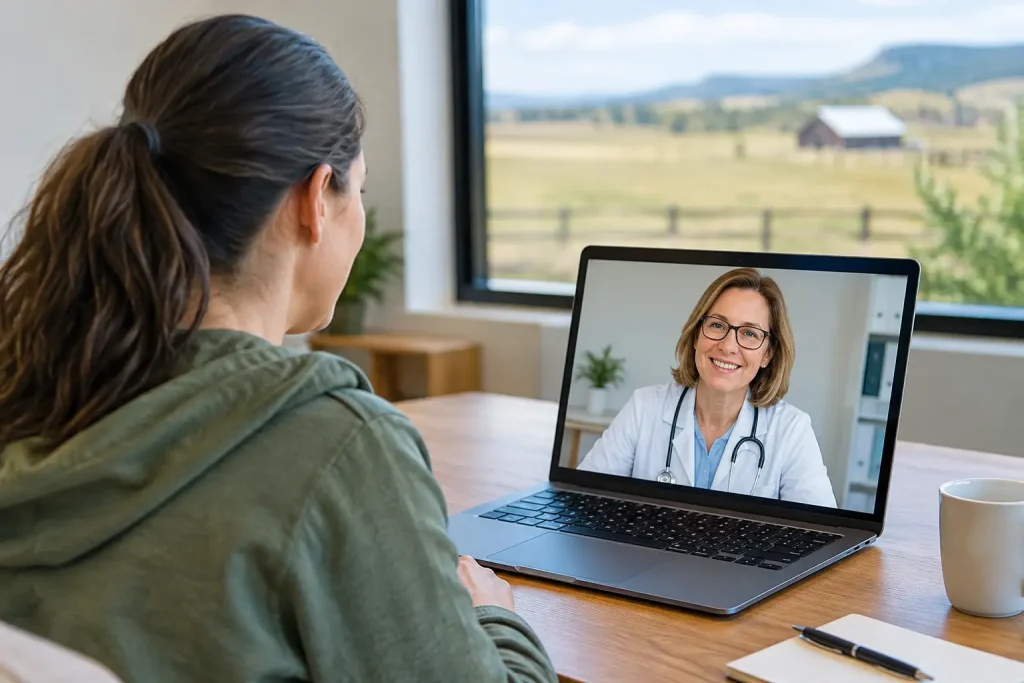
A child with asthma should not need to miss school and travel two hours for a follow-up that could be completed with the right clinical tools, a connected caregiver, and a clinician directing the exam remotely. Rural virtual exams for regional health networks using the Dr. Miltie N9+ are built around that operational reality: bringing clinically relevant assessment capabilities closer to patients while keeping providers at the center of care decisions.
For rural health clinics, critical access hospitals, federally qualified health centers, and community health organizations, virtual care cannot stop at a video visit. Regional networks need a practical way to extend physical assessment, capture actionable patient information, coordinate care teams, and create reliable pathways for patients who live far from specialty or primary care services.
Why Video-Only Care Falls Short in Rural Settings
Video can be valuable for conversation, counseling, medication review, and many follow-up needs. Yet clinical leaders understand its limits. When a patient presents with respiratory symptoms, an ear complaint, a skin concern, or a change in chronic disease status, the care team may need objective information beyond what a camera can provide.
That gap matters more in rural communities, where the alternative may be delayed care, an avoidable emergency department visit, or a long trip that patients and caregivers cannot easily make. Limited transportation, clinician shortages, weather, work schedules, and geographic distance can all turn a routine assessment into a missed appointment.
A clinician-directed virtual physical exam changes the model. Instead of asking patients to travel whenever an exam is needed, a regional network can equip a trained local facilitator, community site, school-based program, or home-based care workflow with connected examination capabilities. The remote clinician remains responsible for clinical judgment while receiving the information needed to determine the appropriate next step.
Rural Virtual Exams for Regional Health Networks
The strongest rural virtual care programs do not treat technology as a stand-alone service. They design a care pathway around the people, sites, workflows, and escalation protocols that already serve the community.
The Dr. Miltie N9+ supports this approach as a mobile wireless virtual examination and patient monitoring system. It enables care teams to conduct clinician-directed assessments and capture relevant patient data beyond the traditional exam room. That may support care in a rural clinic, a school, a community setting, a pediatric practice, or a patient’s home, depending on the organization’s clinical model and staffing plan.
For regional health networks, the value is not simply adding another telehealth endpoint. It is creating a connected clinical extension of the network. A hub-and-spoke model, for example, can allow a central clinical team or specialty resource to support multiple rural sites while local staff help patients participate in the exam. This can reduce unnecessary transfers and improve access to timely follow-up without suggesting that every concern can or should be managed virtually.
Some patients will still require in-person evaluation, imaging, laboratory testing, or emergency services. A well-designed virtual exam program makes those decisions faster and more informed. It helps the clinician distinguish between patients who can be safely managed closer to home and those who need a higher level of care.
A better experience for children and caregivers
The operational benefits are especially meaningful in pediatric care. Families often face substantial travel and missed-work burdens when a child needs a short follow-up or an assessment that does not require a full specialty-center visit. Care delivered in a familiar environment can also reduce stress for autistic children and pediatric patients with special healthcare needs.
Familiarity alone is not enough. The program must preserve clinical quality through clear workflows, caregiver communication, appropriate training, and clinician oversight. When those pieces are in place, caregivers can participate more actively in the visit, ask questions in real time, and better understand the care plan. That strengthens continuity between the patient, family, local care team, and remote clinician.
Designing a Network Model That Can Scale
A regional program succeeds when leaders define the care model before selecting sites or distributing devices. The first question is not, “Where can we place technology?” It is, “Which patient needs and service gaps can a clinician-directed virtual exam address safely and consistently?”
Start with high-friction use cases. These may include pediatric follow-ups, chronic disease check-ins, post-discharge assessments, respiratory symptom evaluations, medication adherence concerns, preventive-care outreach, or specialty access gaps. Each use case should have defined inclusion criteria, staffing expectations, documentation requirements, and escalation pathways.
The next decision is where the exam will occur. A rural health clinic may have staff available to facilitate appointments. A school-based setting may support pediatric access but require careful consent processes and coordination with parents or guardians. Home-based care can reduce travel most dramatically, but it may depend on caregiver comfort, connectivity, and the patient’s condition. There is no single setting that works for every population.
Build the workflow around clinical accountability
Every virtual examination pathway should clearly identify who initiates the visit, who supports the patient, which information is collected, where documentation resides, and when an in-person referral is required. This is where health systems can avoid a common mistake: launching technology without fully integrating it into clinical operations.
Training should address both device use and patient interaction. A facilitator may be comfortable operating equipment but still need guidance on positioning, privacy, infection-control procedures, communicating with children, and recognizing when to pause and escalate. Clinicians need workflows that fit their documentation and scheduling processes rather than creating an additional administrative burden.
Privacy and security should be part of deployment planning from the outset. Organizations need to evaluate HIPAA-aligned workflows, role-based access, consent, device handling, data governance, and vendor responsibilities according to their own policies and regulatory requirements. In connected care, confidence is built not only through clinical results but also through disciplined operations.
Measuring What Matters to Rural Health Leaders
Virtual exam programs need measures that reflect both access and clinical operations. Visit volume alone can be misleading. A high number of video encounters does not necessarily indicate that a network has improved patient access or reduced care fragmentation.
Regional networks should look at the practical outcomes their program is meant to influence: time to appointment, avoided travel, no-show rates, referral completion, follow-up adherence, emergency department utilization where appropriate, patient and caregiver experience, clinician capacity, and care-gap closure. For pediatric programs, teams may also examine school attendance, caregiver time away from work, and the timeliness of specialty guidance.
Financial sustainability belongs in the same conversation. CMS reimbursement and payer rules vary by service, setting, provider type, and state. Organizations should assess billing requirements, eligible clinical services, documentation standards, remote patient monitoring or chronic care management opportunities, and the staffing model before scaling. Reimbursement-aware deployment does not mean forcing care into a billing code. It means designing clinically sound services with a realistic operating model.
Connected Care Requires More Than a Device
A device-enabled exam is most useful when it is part of an ongoing relationship rather than an isolated encounter. Patients with chronic conditions, complex pediatric needs, or recurring access barriers often require coordination among primary care, specialists, caregivers, community partners, and local staff.
Dr. Miltie’s Circle of Care™ model reflects this need for coordinated participation. The goal is to help organizations connect the people involved in care around a shared pathway, whether the patient is seen at home, in a school, at a community clinic, or within a rural health network. Technology supports the connection, but the care pathway gives it purpose.
This distinction matters when leaders are planning expansion. A one-time deployment can demonstrate technical feasibility. A connected-care program can support continuity, patient engagement, timely follow-up, and longitudinal management across distributed communities.
Where to Begin
For organizations considering rural virtual exams, the most practical starting point is a focused pilot with a clearly defined patient population and service line. Select a site with engaged clinical leadership, establish escalation criteria, train the local team, and measure the access and operational outcomes that matter to the organization.
Then listen closely to patients, caregivers, facilitators, and clinicians. Their experience will reveal whether the workflow reduces friction or simply moves it elsewhere. Rural care transformation is most durable when technology makes it easier for local teams to deliver the care they already know their communities need – with the right clinical support available when and where it matters.
Move from information to action
See how the N9+ can fit your organization.
Explore the remote physical exam platform or request a focused demonstration.