
School-Based Healthcare Support for Children with Autism
School-based healthcare support for children with autism helps care teams deliver virtual exams, coordinate follow-up, and reduce barriers to care locally.
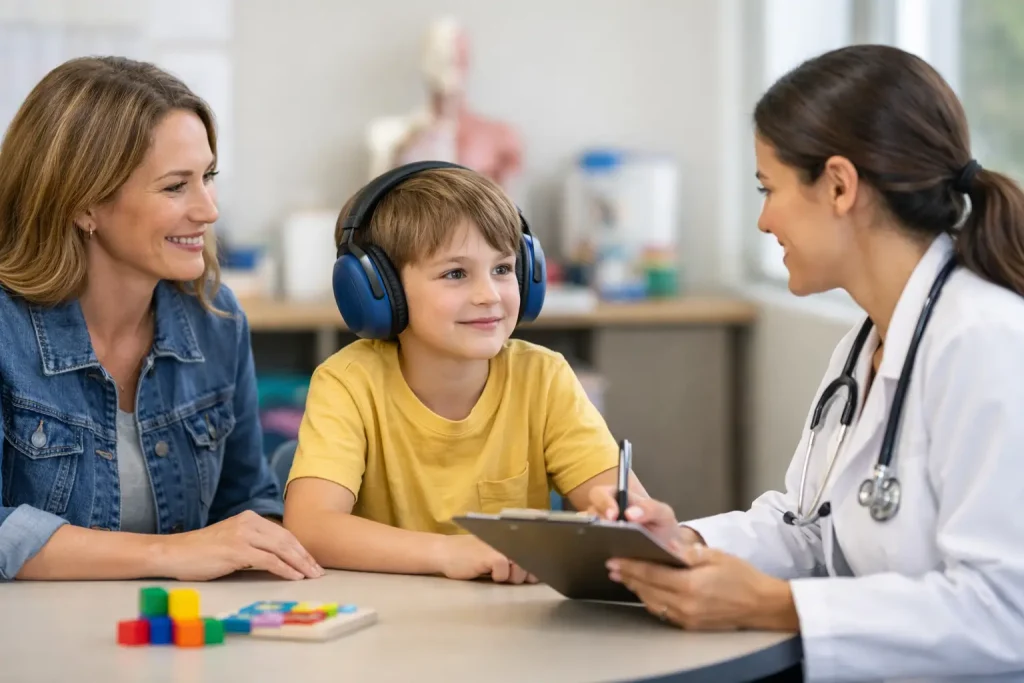
A child who becomes distressed in a crowded waiting room may miss appointments not because care is unnecessary, but because the pathway to receiving it is too difficult. School-based healthcare support for children with autism can change that pathway by bringing appropriate clinical access closer to a familiar setting, while keeping families, schools, and healthcare providers connected.
For pediatric practices, school-based health programs, rural clinics, and community health centers, the opportunity is not simply to place a video visit on campus. It is to create a clinically sound, consent-driven model that supports virtual physical exams, follow-up, care coordination, and caregiver participation without asking families to repeatedly navigate travel, time away from work, or unfamiliar environments.
Why access is often a clinical issue
Autistic children have the same need for preventive, acute, and chronic care as their peers, but the care experience may require different planning. Sensory sensitivities, communication differences, anxiety around unfamiliar environments, and difficulty with transitions can make a conventional office visit harder to complete. For some families, especially those in rural or underserved communities, transportation and limited specialist availability add another layer of complexity.
When appointments are delayed or abandoned, the impact can extend beyond a single missed visit. Medication concerns may go unaddressed. A mild respiratory symptom may become an urgent problem. Behavioral changes that could signal pain, sleep disruption, infection, or another health issue may be difficult to assess without timely clinical input.
A school setting is not appropriate for every healthcare encounter, and it should never substitute for emergency care, specialty treatment, or an established pediatric medical home. It can, however, serve as a practical access point for defined services when the clinical team, school staff, and family agree on the care plan. The goal is to reduce unnecessary friction while preserving clinical standards.
What school-based healthcare support for children with autism can include
The most effective programs begin with a clearly defined scope of service. Depending on local regulations, staffing, and provider relationships, a school-based model may support preventive follow-up, minor acute concerns, chronic condition check-ins, medication-related assessments, care coordination, and post-discharge outreach.
Virtual care is most useful when it is clinically supported rather than video-only. A clinician-directed virtual physical exam can combine real-time observation with connected tools that capture relevant information such as temperature, heart and lung sounds, ear images, throat images, oxygen saturation, heart rate, or blood pressure when appropriate. The exact data collected should follow the provider’s judgment and the reason for the visit.
For an autistic child, that encounter may be more successful when it is paced intentionally. The child may benefit from seeing a familiar school nurse, counselor, or designated support person first. A caregiver may join remotely from work or home. The clinician can use plain language, give the child time to respond, and limit unnecessary examination steps. These adjustments are not cosmetic. They can improve cooperation, reduce distress, and help the provider obtain more useful clinical information.
Build the model around the child, not the technology
Technology is only one component of a sustainable program. Clinical and operational leaders should begin by identifying the patients and use cases where school-based access can create measurable value. For some organizations, the priority may be rapid evaluation of minor illnesses that otherwise lead to absenteeism or emergency department use. For others, it may be follow-up care for children with chronic conditions, developmental needs, or complex family transportation barriers.
A strong workflow specifies who initiates a visit, how parent or guardian consent is documented, where the encounter occurs, which school personnel are present, and how findings are shared with the child’s primary care team. It should also define escalation procedures. If a child has concerning symptoms, abnormal vital signs, or needs hands-on treatment, the pathway must direct staff to the appropriate in-person or emergency service.
Care teams should avoid assuming that one approach works for every student. Some children may be comfortable engaging with a remote clinician on a screen; others may find it distracting or upsetting. A caregiver may need to participate in every visit, while another family may authorize a trusted school health professional to support a defined type of encounter. Personalized accommodations should be documented and revisited as the child’s needs change.
Design for predictable, lower-stress encounters
Predictability is a clinical asset. Programs can schedule visits at lower-traffic times, use a consistent room, and introduce equipment gradually. Visual supports, simple explanations, and a choice of small controls – such as whether to sit in a chair or on a caregiver’s lap – can help a child retain a sense of agency.
The team should also respect sensory needs. A bright room, loud device alerts, or multiple adults speaking at once can make a visit less successful. Small operational decisions, including use of headphones, lowered screen volume, and fewer transitions, can be as meaningful as the telehealth platform itself.
Connect the Circle of Care
A school encounter has the greatest value when it strengthens continuity rather than creating a separate channel of care. Families need to know who is making clinical decisions, where documentation resides, and how follow-up will occur. Primary care providers need timely, actionable findings. School personnel need clear guidance about what they can and cannot do after the visit.
This is where a connected-care approach matters. The Circle of Care™ should include the child, parent or guardian, school-based support staff, the treating clinician, and the primary care or specialty team as appropriate. Communication must remain HIPAA-compliant and aligned with applicable student privacy requirements. Organizations should establish role-based access, secure documentation practices, and clear consent processes before launching services.
Caregiver participation deserves particular attention. Virtual visits can make it easier for a parent to hear the clinician’s assessment without leaving work or arranging transportation, but only if the program makes participation simple. Offer scheduled connection options, interpreter support when needed, and an understandable plan for next steps. Families should not receive a vague message that a visit occurred; they should receive information they can act on.
Clinical quality and operational readiness go together
Program leaders are right to ask whether school-based virtual care can meet clinical, compliance, and financial expectations. The answer depends on the use case, state requirements, payer policies, clinician licensure, staffing model, and documentation quality. A successful program is not created by deploying devices alone.
Before implementation, organizations should establish clinical protocols, train school-based personnel on equipment and workflow, test connectivity, and identify a clinical champion responsible for quality oversight. Training should include more than device operation. Staff need guidance on trauma-informed and neurodiversity-affirming interactions, privacy boundaries, infection control, emergency escalation, and caregiver communication.
Measurement should be built in from the start. Useful indicators may include completed visits, avoided travel time, school attendance, time from referral to clinical assessment, caregiver satisfaction, referral completion, and escalation rates. For organizations pursuing reimbursement-supported models, accurate documentation of medical necessity, services furnished, supervising clinician requirements, and applicable billing rules is essential.
There are trade-offs. A virtual exam may allow faster access but may not answer every clinical question. A school-based setting can be convenient, but space, staffing, and student privacy may be limited. The right response is not to force every encounter into the same model. It is to reserve the model for situations where it improves access and supports safe decision-making.
A practical path to implementation
Start with a focused pilot rather than a broad promise. Select one or two high-value clinical pathways, such as same-day minor illness assessments or chronic care follow-up, and define the population, referral process, clinical protocols, and success measures. Engage families and school partners early, particularly families of autistic children, because their experience will reveal barriers that a workflow diagram may miss.
Choose technology that allows the remote clinician to perform a meaningful assessment and integrate findings into the organization’s care processes. The Dr. Miltie N9+ can support clinician-directed virtual exams and patient monitoring in school, community, and home-based settings, helping care organizations extend clinical reach while maintaining a connected workflow.
Then refine the model based on real encounters. If children are struggling with transitions, adjust scheduling and room setup. If caregivers are not joining visits, reconsider communication methods and appointment times. If clinicians need more data to make confident decisions, update the examination workflow. Progress comes from operational learning, not from treating implementation as a one-time technology project.
When care is brought closer to a child’s daily life with the right safeguards, schools can become a more supportive bridge between families and the healthcare system – one that respects individual needs while helping clinicians act earlier, coordinate better, and keep care within reach.
Move from information to action
See how the N9+ can fit your organization.
Explore the remote physical exam platform or request a focused demonstration.