
At 3 AM, Every Parent Needs a Dr. Miltie N9+
At 3 AM, every parent needs a Dr. Miltie N9+ for clinician-directed virtual exams, connected monitoring, and lower-stress pediatric care at home for all families.
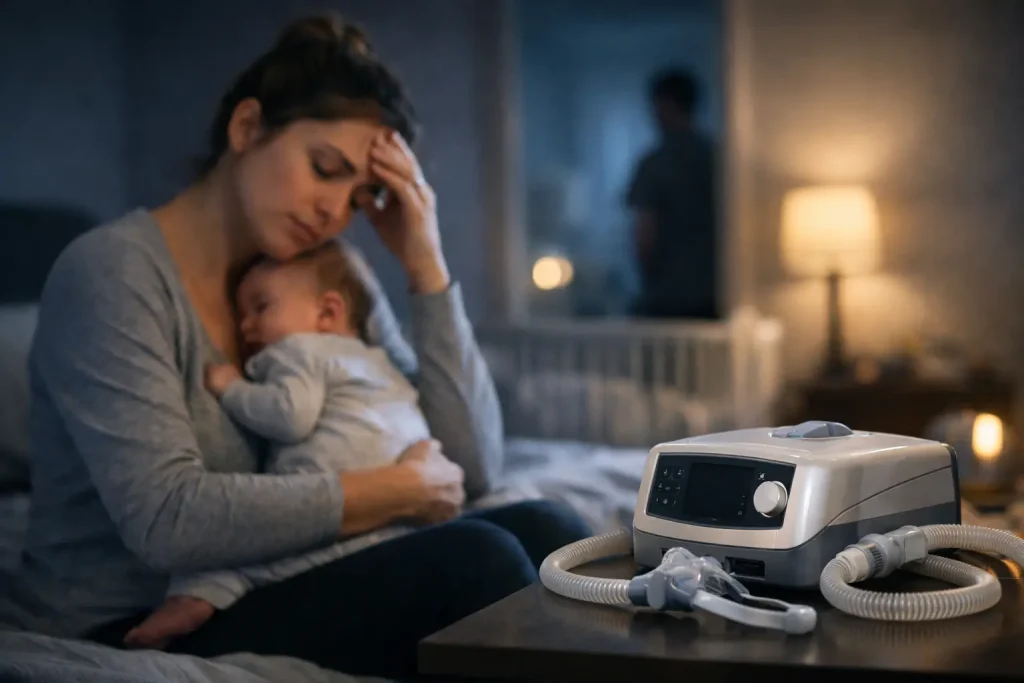
A fever climbs after bedtime. A child with complex needs is suddenly uncomfortable. An autistic child who has had a difficult day cannot tolerate another unfamiliar setting. Shoutout to every parent. It’s 3 AM, but you’ve got a Dr. Miltie N9+ is more than a comforting idea. For healthcare organizations, it represents a practical question: can the right clinician-directed tools and workflows bring meaningful assessment closer to families when the traditional exam room is unavailable or unsuitable?
The answer is not that every concern can, or should, be resolved remotely. Emergency symptoms still require emergency evaluation. But many pediatric questions arise in the space between routine care and the emergency department. Parents need a clear next step, clinicians need clinically relevant information, and care teams need a way to maintain continuity without making every family travel across town or across a rural county.
Why 3 AM Reveals the Access Gap
After-hours pediatric care exposes the limits of appointment-based access. A parent may be deciding whether a cough sounds concerning, whether an ear complaint can wait until morning, whether a rash has changed, or whether a child with a chronic condition is showing an early warning sign. A video-only visit can help a clinician see and speak with a family, but it may not provide the physical findings needed for a confident next decision.
That gap can be especially significant for rural communities, where the nearest pediatric specialist or emergency department may be hours away. It can also affect families whose children have sensory sensitivities, developmental disabilities, mobility limitations, or ongoing complex-care needs. For these patients, the burden of travel is not merely inconvenient. It can disrupt routines, increase stress, require missed work, and make a clinical encounter harder to complete.
Healthcare leaders should view this as an access and care-design challenge, not simply a telehealth challenge. A virtual visit becomes more useful when it can be supported by a clinician-directed virtual physical exam, actionable patient data, defined escalation protocols, and a connected care team that knows what to do next.
At 3 AM, Every Parent Needs a Dr. Miltie N9+ Care Pathway
The Dr. Miltie N9+ is designed to help clinicians extend the capabilities of a virtual encounter beyond conversation and observation. Through connected examination and monitoring tools, clinicians can guide a caregiver, nurse, school health professional, or other trained participant through the collection of clinically relevant findings. The goal is not to replace clinical judgment. It is to give that judgment better inputs when distance would otherwise limit the assessment.
For a pediatric practice, health system, rural health clinic, or community health center, the value lies in the workflow around the technology. A care pathway can identify which patient populations are appropriate for virtual examination, establish who initiates the encounter, define how findings are documented, and specify when the patient should be scheduled, monitored, referred, or directed to urgent or emergency care.
That distinction matters. A connected device without clinical governance can create more information without creating more clarity. A well-designed model uses the right data, delivered to the right clinician, at the right point in the patient journey.
Supporting caregivers without placing clinical responsibility on them
Parents are experts in their child, but they should not be expected to become diagnosticians. Effective virtual care programs preserve that boundary. The caregiver participates by describing symptoms, helping their child feel safe, and following clinician guidance. The clinician remains responsible for interpretation, decision-making, and escalation.
This approach is particularly valuable in pediatric care because caregiver context is clinically meaningful. A parent can describe changes in sleep, appetite, activity, behavior, medication adherence, and baseline function that may not be visible during a brief encounter. When that context is paired with a clinician-directed virtual exam, care teams can make more informed decisions while keeping the family involved.
For autistic children and pediatric patients with special healthcare needs, familiar environments can also support better engagement. A child may communicate more comfortably at home, at school, or in a trusted community setting than in a busy waiting room. That does not mean remote care is appropriate for every encounter. It means organizations can build flexible options that reflect the patient’s needs rather than forcing every care need into one setting.
From One Encounter to a Circle of Care™
A late-night concern rarely exists in isolation. It may relate to an unresolved primary care issue, a chronic condition, a medication change, a recent discharge, or a specialist plan. If the overnight encounter is disconnected from the rest of the care team, families may have to repeat their story the next day and clinicians may lose critical context.
The Circle of Care™ model is built around coordination across the patient, caregiver, clinician, and broader care network. It supports a more connected approach to virtual primary care, remote patient monitoring, chronic care management, follow-up, and patient engagement. The result is not simply a remote visit. It is a pathway that can carry information and accountability forward.
For example, an after-hours virtual exam may lead to a next-day pediatric follow-up rather than an emergency department visit. A recurring symptom pattern may trigger chronic care management outreach. A school-based or community-based encounter may alert the primary care team to a barrier that would otherwise go undocumented. These transitions require workflow customization and care coordination, but they create a more complete picture of the patient’s health.
Operational Questions Leaders Need to Answer
Organizations considering device-enabled virtual care should begin with clinical use cases, not a technology inventory. The most successful implementations define the populations, conditions, settings, staffing model, and desired outcomes before deployment. Pediatric after-hours support may be one use case, while school-based access, post-discharge follow-up, rural outreach, and chronic condition monitoring may be others.
Clinical leadership should determine which examinations can be conducted virtually, what training caregivers or onsite facilitators require, and what findings require immediate escalation. Operations teams should establish scheduling, documentation, device logistics, infection control procedures, and technical support. Compliance and information security teams should confirm HIPAA-aligned workflows and appropriate data governance.
Financial sustainability also belongs in the earliest planning conversations. CMS reimbursement, payer requirements, state rules, and site-specific documentation standards can affect which services are supportable and how care teams operationalize them. Reimbursement-aware deployment helps organizations avoid building a promising pilot that cannot scale into regular clinical practice.
There is no universal model. A critical access hospital may prioritize reducing unnecessary travel and extending specialist access. A federally qualified health center may focus on continuity for patients with transportation barriers. A pediatric practice may need lower-stress follow-up options for children who struggle with in-person visits. The technology should adapt to the care model, not the other way around.
Measuring What Better Access Actually Changes
Virtual care programs deserve the same discipline as any clinical service line. Utilization alone is not enough. Organizations should evaluate whether the program improves time to clinical assessment, reduces avoidable travel, supports appropriate emergency department utilization, increases follow-up completion, strengthens caregiver participation, and improves clinician confidence in remote decision-making.
For pediatric and special-needs populations, patient experience measures are also essential. Did the encounter reduce distress? Was the caregiver able to participate fully? Did the patient receive care in a setting that supported communication and comfort? These measures help teams understand whether access has improved in a way families can genuinely feel.
The most meaningful outcome may be simple: a parent with a concerning question has a clinically guided path forward before anxiety, distance, or uncertainty becomes a crisis. When healthcare organizations equip their teams to assess, monitor, coordinate, and escalate care appropriately, 3 AM can become less about facing a decision alone and more about knowing that connected care is within reach.
Move from information to action
See how the N9+ can fit your organization.
Explore the remote physical exam platform or request a focused demonstration.