
Telehealth Platform vs Point Solution Compared
Compare a telehealth platform vs point solution for virtual exams, remote patient monitoring, and care coordination across pediatric and rural settings.
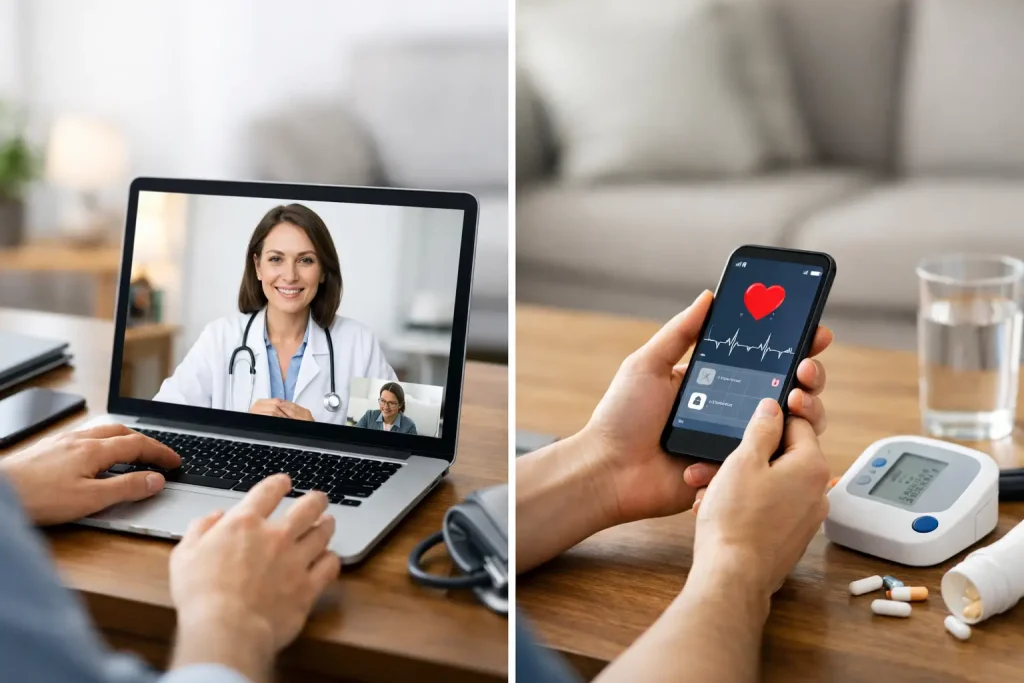
A telehealth platform vs point solution decision often begins after an organization has already added several digital tools: a video visit application, a remote patient monitoring program, a scheduling workflow, and perhaps a separate patient engagement system. Each tool may solve a real problem. The operational challenge appears when clinicians, patients, and care coordinators must bridge the gaps between them.
For healthcare organizations serving children, rural communities, and medically complex populations, the choice is not simply about buying more technology. It is about determining whether virtual care can support clinically meaningful assessment, connected follow-up, caregiver participation, and financially sustainable workflows.
Telehealth Platform vs Point Solution: The Core Difference
A point solution is designed to address a focused need. It may provide video visits, blood pressure monitoring, appointment reminders, behavioral health access, or a specific chronic care management workflow. Point solutions can be valuable because they are often fast to deploy and easy to understand. A team with one urgent gap may achieve results without redesigning its entire care model.
A telehealth platform is broader. It connects multiple elements of care delivery within a coordinated environment, often combining virtual visits, device-enabled clinical data capture, remote patient monitoring, care coordination, patient engagement, and reporting. The platform model is intended to help organizations build repeatable pathways of care across locations, populations, and service lines.
The distinction matters because a video visit is not always a virtual clinical encounter. When a clinician needs to assess lung sounds, skin conditions, vital signs, or other physical findings, a basic conferencing tool may leave the clinician without enough information to make a confident decision. A connected platform can incorporate virtual examination capabilities and clinically relevant data into the encounter rather than treating the visit as a conversation alone.
When a Point Solution Is the Right Choice
Point solutions are not inherently a temporary or inferior option. They can be the appropriate choice when the clinical need is narrow, the workflow is stable, and integration demands are limited.
For example, an organization may need a focused program for automated appointment reminders, a defined specialty referral process, or a limited remote monitoring initiative for one patient group. If the program has clear ownership, a small user base, and no requirement to share data across multiple teams, a targeted tool may provide a practical return on investment.
A point solution can also help leaders test demand before making a larger commitment. A rural clinic may pilot remote monitoring for patients with hypertension. A pediatric practice may begin with virtual follow-up visits for families who face transportation barriers. These pilots can reveal staffing requirements, patient adoption patterns, documentation needs, and reimbursement considerations.
The risk comes when each new problem is met with another isolated tool. Over time, clinicians may need to log into multiple systems, manually transfer information, and ask families to use different applications for different services. Fragmentation creates more than technical inconvenience. It can reduce visibility into the patient journey and add work for teams already facing workforce constraints.
Where Platforms Create Operational Value
A connected telehealth platform becomes more compelling when virtual care must extend beyond a single transaction. This is common in pediatric care, chronic disease management, rural health delivery, post-discharge follow-up, and community-based services.
Consider a child with special healthcare needs who receives care at home, in school, and at a pediatric practice. The family may need a clinician-guided virtual exam, while caregivers need a simple way to participate and share observations. The care team may need to review trends, coordinate next steps, and document the encounter appropriately. A platform approach can support these interconnected activities within a more consistent pathway.
For autistic children and other patients who experience distress in unfamiliar clinical environments, care delivered in a familiar setting may improve the encounter itself. The goal is not to replace necessary in-person care. It is to reserve travel and clinic visits for situations that require them, while enabling appropriate follow-up and assessment closer to the patient.
The same principle applies in rural and safety-net settings. Rural health clinics, federally qualified health centers, critical access hospitals, and community health centers often serve broad geographies with limited specialty access. A platform that combines virtual examination tools, connected devices, care coordination, and remote monitoring can help teams extend clinical reach without building separate workflows for each program.
The Clinical Question: Can Care Teams Act on the Data?
Technology decisions should start with a clinical question, not a feature checklist. What information must the provider have to safely evaluate the patient? What actions should follow if a reading is out of range, symptoms worsen, or a caregiver reports a concern?
A point solution may collect data, but the value depends on whether that data arrives in a usable clinical workflow. Teams need clarity on who reviews it, how often it is reviewed, what thresholds trigger outreach, and how findings are documented. Without this structure, remote monitoring can become a stream of data without a defined care response.
A platform can support more complete care pathways by linking device-enabled observations, virtual physical exams, communication, escalation protocols, and follow-up tasks. That does not eliminate the need for clinical governance. It does make the pathway easier to standardize across clinicians, sites, and patient populations.
Organizations should also evaluate whether technology supports the quality of the virtual assessment. Audio and video matter, but they may not be sufficient for many presentations. Connected medical devices can give clinicians access to clinically relevant findings that help determine whether a patient can remain at home, needs an in-person visit, or requires urgent escalation.
Integration, Compliance, and Workflow Cannot Be Afterthoughts
A narrowly focused tool can appear affordable until implementation work is fully considered. Leaders should account for identity management, HIPAA compliance, device logistics, training, data governance, clinical documentation, support requirements, and interoperability with existing systems.
The platform model can reduce duplication when one environment supports multiple use cases. However, a platform also requires thoughtful configuration. A system that tries to serve every department with the same workflow may create resistance rather than efficiency. The strongest implementations balance standardization with configurable pathways for different patient populations and care settings.
Reimbursement should be part of the planning process from the beginning. Requirements vary by care model, payer, setting, and services delivered. Virtual care programs need workflows that support appropriate documentation, time tracking where applicable, clinical oversight, and billing review. Technology alone does not create reimbursement readiness, but it should not make compliance harder.
This is especially relevant for organizations pursuing sustainable remote patient monitoring and chronic care management programs. The goal is to design a model that can be staffed, documented, measured, and improved over time rather than relying on a short-term pilot budget.
How to Evaluate the Right Model
The decision becomes clearer when leaders evaluate the care model across four practical dimensions:
- Clinical scope: Determine whether the program requires video communication only or clinician-directed virtual exams and device-enabled patient data.
- Population complexity: Consider whether patients need episodic access, longitudinal monitoring, caregiver involvement, or coordination across home, school, clinic, and community settings.
- Operational scale: Assess whether the solution will remain within one service line or expand across sites, teams, and populations.
- Financial sustainability: Review implementation costs alongside staffing, device management, reimbursement workflows, reporting, and long-term support.
A platform is usually justified when the answers point toward multiple connected services, longitudinal patient relationships, and cross-functional coordination. A point solution may be more appropriate when the need remains limited and distinct.
A Connected-Care Decision, Not Just a Technology Purchase
The most effective virtual care programs are built around the patient journey. They consider the moment a caregiver needs help, the data a clinician needs to make a decision, the handoff required after the encounter, and the support needed to keep care on track.
Dr. Miltie’s Circle of Care™ model reflects this broader view of connected care. By bringing device-enabled virtual exams, remote patient monitoring, customized care pathways, and care coordination together, organizations can shape virtual services around real clinical and community needs rather than forcing patients and teams to navigate disconnected tools.
The useful question is not whether a telehealth platform is always better than a point solution. It is whether the technology can support the level of clinical insight, coordination, and continuity your patients need. For organizations bringing care closer to children, families, rural communities, and underserved populations, that answer should guide every implementation decision.
Move from information to action
See how the N9+ can fit your organization.
Explore the remote physical exam platform or request a focused demonstration.