Technology Innovations in Rural Healthcare
Technology innovations in rural healthcare help care teams extend access, support continuity, and deliver clinically informed care closer to home today.
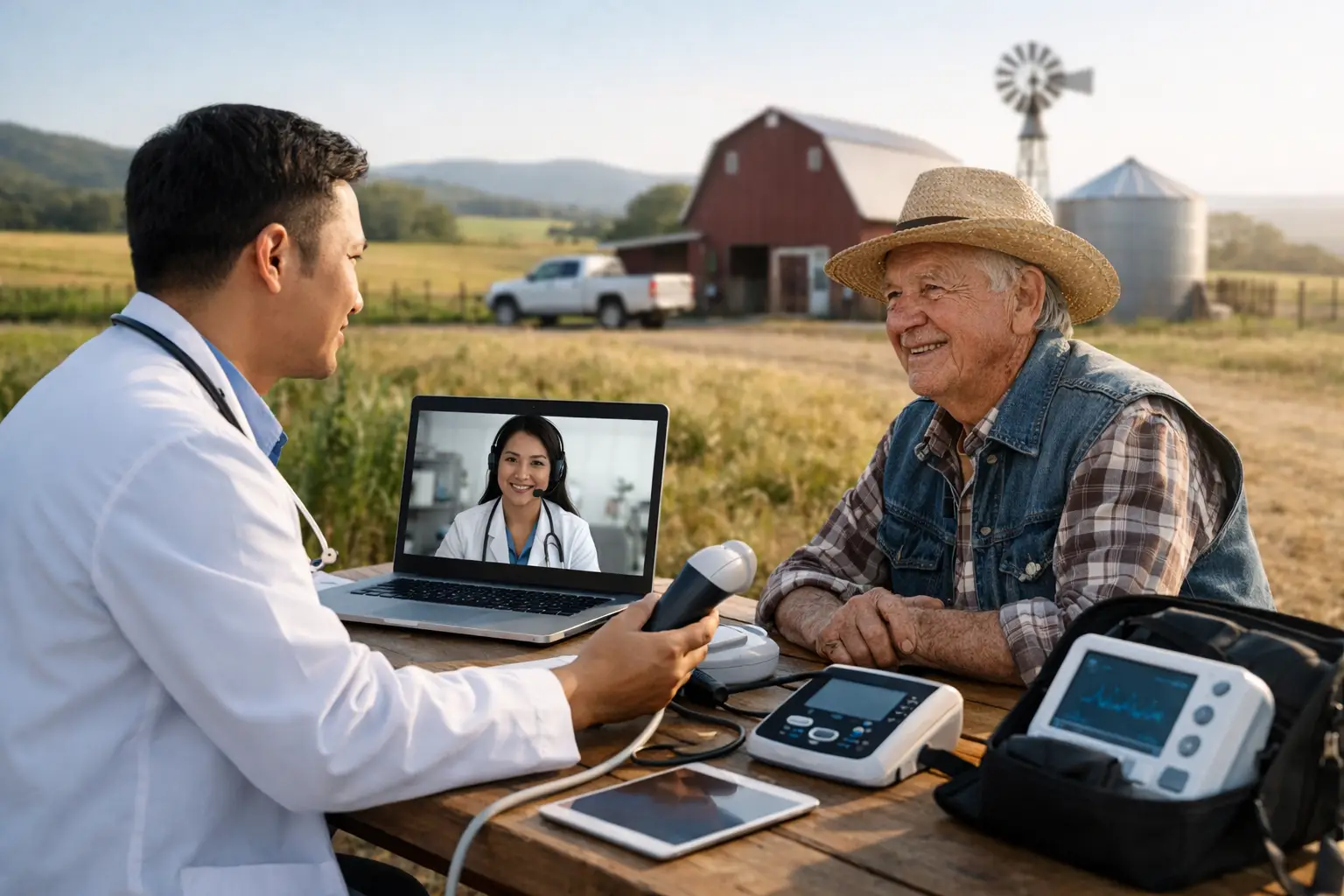
For a rural family, a routine follow-up can mean missed work, several hours on the road, arranging childcare, and weather-dependent travel. Technology innovations in rural healthcare can change that equation when they are built around clinical workflows rather than convenience alone. The goal is not to replace local care relationships with a video visit. It is to give rural clinicians, care teams, patients, and caregivers better ways to assess, monitor, coordinate, and act between in-person encounters.
Rural health organizations are managing a difficult balance. They need to expand access while working with limited staffing, long distances, inconsistent broadband, and patients who may have complex chronic, behavioral, or pediatric needs. The most valuable technologies address those constraints directly and create a practical extension of the care team.
Why Rural Care Needs More Than Video Visits
Video-based telehealth has made care more reachable for many communities, but conversation alone does not always provide enough clinical information to guide a decision. A provider evaluating a child with respiratory symptoms, an older adult with heart failure, or a patient whose blood pressure is uncontrolled may need more than a visual check-in. They may need reliable examination findings, vital signs, symptom trends, and a clear route for escalation.
That distinction matters in rural settings, where the next available in-person appointment may be far away. Technology must help clinicians determine which patients can be safely supported at home or in a community setting, which need an urgent in-person evaluation, and which require a higher level of care. A virtual care program that simply adds another appointment channel can create fragmentation. A connected-care program can improve continuity.
The shift from access to clinical capability
The strongest rural health strategies combine access with clinical capability. This means providing patients with tools that capture clinically relevant data, giving clinicians a way to perform virtual physical exams when appropriate, and connecting those findings to established workflows for documentation, care coordination, and follow-up.
It also means designing around the people who make rural care work: nurses, medical assistants, community health workers, school staff, home health personnel, caregivers, and local clinicians. Technology should clarify their roles rather than add a disconnected set of tasks.
Technology Innovations in Rural Healthcare That Matter
Several technology categories are shaping rural care delivery. Their impact depends less on novelty than on whether they solve a defined clinical and operational problem.
Device-enabled virtual examinations
Connected examination devices allow a clinician to obtain more actionable information during a virtual encounter. Depending on the deployment, this can include measurements and assessments that supplement a video visit and support a more informed clinical decision.
For rural clinics, critical access hospitals, school-based programs, and community health centers, this capability can extend the reach of a clinician into locations where patients already are. A trained staff member or caregiver can support the encounter while the clinician guides the assessment remotely. This can be particularly meaningful for pediatric patients who are more comfortable at home, in school, or in a familiar community clinic.
The trade-off is clear: devices alone do not create a clinical service. Organizations need protocols that define appropriate use, staff training, device cleaning and logistics, documentation requirements, and escalation pathways. Remote examination is most effective when it augments a clinician-directed model of care.
Remote patient monitoring for chronic conditions
Remote patient monitoring can give care teams a fuller view of a patient’s condition between appointments. For patients managing hypertension, diabetes, heart failure, chronic respiratory disease, or other ongoing conditions, home-collected data can identify concerning trends earlier and support more timely outreach.
In rural communities, this can reduce unnecessary travel while helping teams prioritize patients who need attention. A sustained rise in blood pressure, a change in weight, or worsening symptom responses may prompt a nurse call, medication review, virtual visit, or in-person referral before the issue becomes an avoidable emergency.
However, remote patient monitoring is not a passive data collection exercise. Programs need clear enrollment criteria, clinical thresholds, response expectations, and staffing capacity. Too many unprioritized alerts can burden already stretched teams. The right model focuses on actionable data and assigns responsibility for reviewing it.
Care coordination platforms and customized pathways
Rural patients frequently receive care across multiple settings: a rural health clinic, hospital, specialist office, school, home health agency, or community program. Without a coordinated process, the patient and caregiver may become the only link between those settings.
Care coordination technology can organize communications, follow-up activities, patient education, and task ownership around a customized pathway of care. This is especially useful after hospital discharge, during chronic care management, and when a child has special healthcare needs involving several providers.
A pathway should not be a rigid script. Some communities have local transportation barriers, language needs, workforce limitations, or different referral patterns that require adaptation. The right platform supports standardization where it protects quality, while allowing workflows to reflect local realities.
Pediatric and caregiver-centered virtual care
Pediatric rural care has distinct requirements. Children depend on caregivers to manage appointments, devices, symptoms, and follow-up. For autistic children and pediatric patients with special healthcare needs, unfamiliar clinical environments, long travel, and disrupted routines can create significant stress.
Care delivered in a familiar setting can reduce those barriers while giving caregivers a more active role in the encounter. A clinician can observe the child in a setting that may better reflect daily functioning, coach the caregiver through next steps, and coordinate with the broader care team. This approach is not suitable for every condition or every child, but it can make follow-up and monitoring more accessible for families who face repeated travel burdens.
Building an Operationally Sound Rural Virtual Care Program
Successful adoption begins with a use case, not a device purchase. Organizations should identify a patient population and a measurable gap in care. That might be delayed pediatric follow-up after discharge, limited specialist access, uncontrolled hypertension, avoidable emergency department utilization, or the distance between a school and the nearest clinic.
From there, clinical and operational leaders should determine where the encounter occurs, who supports the patient, what data the clinician needs, and what happens when findings require escalation. These choices shape staffing, training, device configuration, technology support, and documentation.
Design for reimbursement and compliance from the start
Financial sustainability should be part of program design, not an afterthought. Remote patient monitoring, chronic care management, virtual services, and care coordination may have different coverage and documentation requirements depending on payer, care setting, and patient eligibility. CMS reimbursement policies can support certain models, but organizations should validate the current rules and payer-specific requirements that apply to their programs.
HIPAA compliance also requires attention to more than the video platform. Organizations should evaluate how devices transmit data, where information is stored, who can access it, how patients are onboarded, and how staff manage privacy in homes, schools, and community sites. A compliant program is one that can be used consistently and confidently by the people delivering care.
Measure outcomes that reflect the real problem
Virtual care metrics should go beyond visit volume. Rural health leaders may track time to appointment, completed follow-ups, patient travel avoided, blood pressure control, readmissions, emergency department utilization, missed appointments, caregiver satisfaction, and clinician workload. The right measures depend on the use case.
Qualitative feedback is equally useful. If a nurse spends too much time troubleshooting, if caregivers struggle with onboarding, or if clinicians cannot easily find remote findings in the record, the workflow needs adjustment. Technology adoption improves when organizations treat implementation as an ongoing clinical improvement process.
A Connected Model Can Strengthen Local Care
The concern that virtual care will pull services away from rural communities is understandable. The better model does the opposite: it reinforces local care teams by giving them access to additional clinical capacity and information. A community health worker can support a patient at home. A school nurse can facilitate a clinically appropriate visit. A rural clinician can consult and coordinate without asking every patient to travel.
Dr. Miltie’s Circle of Care™ model reflects this approach by bringing clinician-directed virtual examinations, remote monitoring, care coordination, and caregiver participation into a connected pathway. For organizations serving rural and underserved populations, the value is not technology for its own sake. It is the ability to deliver more complete care in the settings where patients can realistically receive it.
Rural healthcare transformation will not come from a single platform or reimbursement code. It will come from practical models that respect local capacity, protect clinical standards, and make it easier for patients to stay connected to care. When technology is selected around those priorities, distance becomes less of a barrier and local care becomes more sustainable.
Move from information to action
See how the N9+ can fit your organization.
Explore the remote physical exam platform or request a focused demonstration.