Pediatric Healthcare Innovation Through Technology
Pediatric healthcare innovation through technology helps care teams extend clinical reach, reduce family burden, and improve care continuity for children.
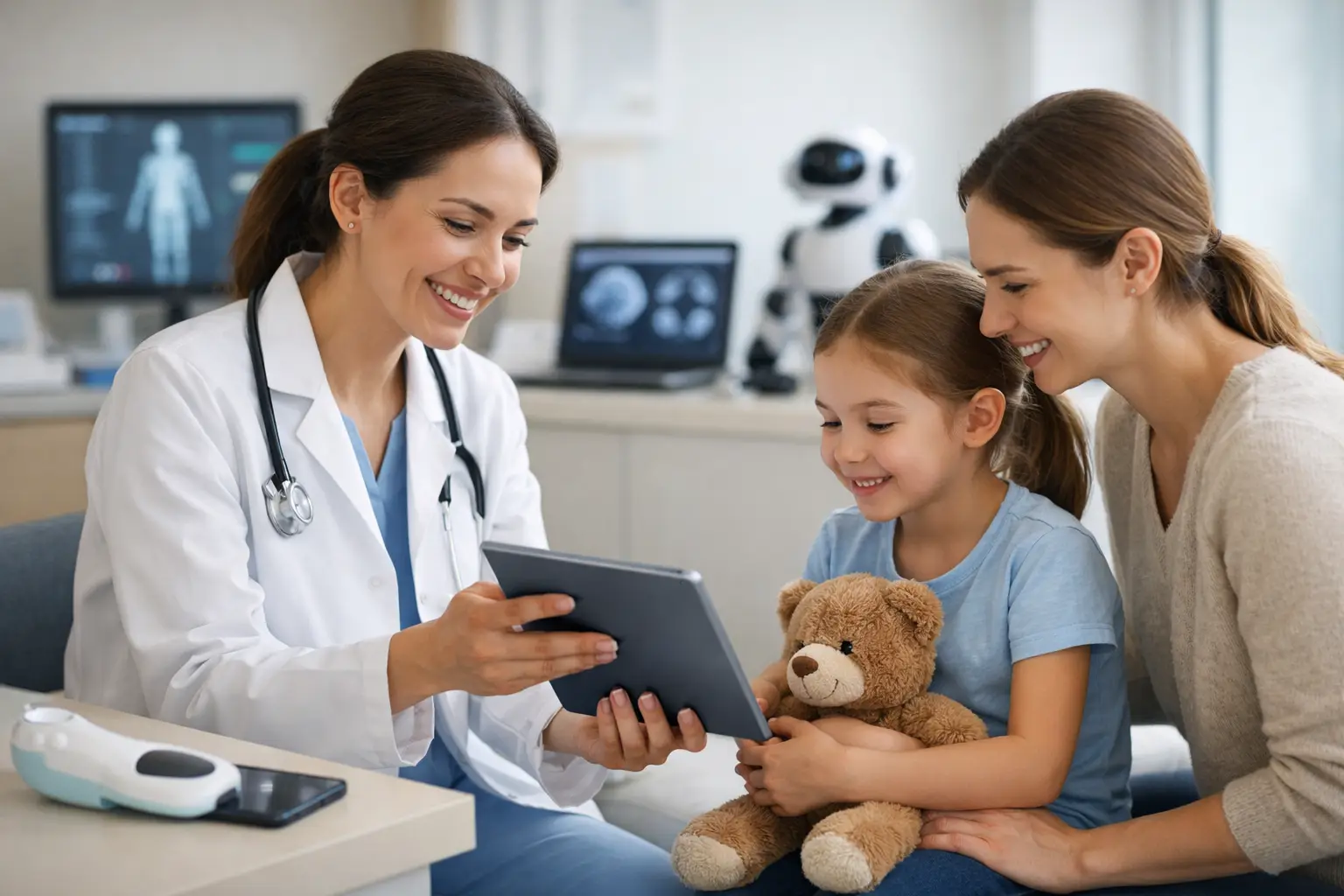
A child with recurring asthma symptoms should not have to miss school, travel hours to a specialty clinic, or wait until symptoms escalate for a clinician to assess what is happening. Yet for many families, particularly those in rural communities and those caring for children with special healthcare needs, these barriers remain part of routine care. Pediatric healthcare innovation through technology creates a more practical path: bringing clinician-directed assessment, monitoring, and follow-up closer to where children live, learn, and receive support.
For healthcare organizations, the opportunity is not simply to add another virtual visit option. It is to build a connected model of care that gives clinicians clinically relevant information, keeps caregivers involved, and supports timely action between traditional appointments.
Why Pediatric Care Requires a Different Technology Strategy
Pediatric virtual care cannot be designed as adult telehealth delivered on a smaller screen. Children depend on caregivers to describe symptoms, complete monitoring tasks, manage medications, and coordinate services across schools, specialists, and primary care teams. The clinical encounter also needs to account for developmental stage, family routines, sensory preferences, and the child’s ability to engage with unfamiliar people and environments.
For autistic children and children with complex or special healthcare needs, an in-person visit can be especially disruptive. Travel, crowded waiting rooms, unfamiliar sensory input, and changes in routine may cause distress that makes assessment harder for both the child and the care team. A well-designed virtual care pathway can shift appropriate portions of care into familiar settings while preserving clinician oversight.
That distinction matters. Video alone is valuable for conversation, education, and visual observation, but it does not always provide the clinical information needed to make a confident decision. When a pediatrician needs to assess heart and lung sounds, examine ears or skin, review vital signs, or track a chronic condition over time, the technology must support a more complete virtual physical exam.
Pediatric Healthcare Innovation Through Technology Means Better Clinical Context
The strongest pediatric care models combine real-time virtual visits with connected examination tools, remote patient monitoring, and workflows tailored to each population. This gives care teams context that a conventional video call cannot reliably provide.
A clinician-directed virtual examination can enable a trained caregiver, school health professional, community health worker, or clinic staff member to assist with the collection of relevant findings during a remote visit. The clinician remains responsible for interpreting the data and determining the appropriate next step, whether that is reassurance, medication adjustment, a same-day referral, or urgent in-person evaluation.
This model is especially useful when children need recurring follow-up rather than one-time consultation. Pediatric practices can support chronic disease management for conditions such as asthma, diabetes, hypertension, obesity, and behavioral health-related concerns. Community-based programs can identify changes sooner, helping teams intervene before a manageable issue becomes an emergency department visit or avoidable hospitalization.
The value depends on the clinical use case. Not every encounter should be virtual, and connected technology should never be positioned as a substitute for hands-on care when an in-person exam is necessary. Its role is to help organizations make that decision with better information, while making appropriate care easier to access.
Care Where the Child Already Is
Homes, schools, pediatric practices, rural clinics, and community health centers can all serve as effective access points when the model includes the right technology, training, and clinical protocols. A school-based visit, for example, may allow a child with nonurgent symptoms to be evaluated without a parent leaving work for an appointment that could otherwise require several hours of travel.
For rural health clinics, federally qualified health centers, and critical access hospitals, connected care can extend the reach of scarce pediatric expertise. Local staff can support the patient encounter while an off-site clinician conducts a guided assessment and collaborates with the family. This preserves the importance of local relationships while increasing access to specialty-informed care.
The result is not merely convenience. It can improve continuity, reduce missed appointments, and keep clinical teams connected to children who may otherwise fall out of regular follow-up.
The Operational Work Behind a Successful Program
Healthcare technology does not create access on its own. Pediatric programs succeed when technology is embedded in a clear care model with defined responsibilities, documentation practices, escalation criteria, and family support.
Organizations should begin with the care gaps that create the greatest burden. A pediatric practice may prioritize post-discharge follow-up for high-risk patients. A health system may focus on specialty access for rural communities. A school-based program may need a reliable way to triage acute concerns while maintaining communication with the child’s primary care provider. The technology selection should follow these operational goals, not the other way around.
Clinical workflows must also specify who supports the encounter, what data are captured, how results enter the patient record, and when the team transitions the child to in-person care. A remote exam is only useful when the clinician can trust the quality and relevance of the data. Training for caregivers, site staff, and care coordinators is therefore central to adoption, not an afterthought.
Privacy and security deserve equal attention. Pediatric programs handle sensitive clinical information and often involve communication among parents, guardians, schools, care managers, and multiple providers. HIPAA-compliant technology, role-based access, documented consent processes, and clear communication protocols help organizations protect patient information while enabling coordinated care.
Reimbursement and Sustainability Cannot Be Separate Conversations
A promising pilot can stall if reimbursement, staffing, and documentation are considered only after implementation. Program leaders should evaluate applicable CMS requirements, payer policies, state-specific rules, eligible service types, and documentation expectations from the start. The financial model may include virtual care, remote patient monitoring, chronic care management, care coordination, or value-based arrangements, depending on the organization and patient population.
There is no single reimbursement pathway that fits every pediatric program. A rural clinic serving Medicaid populations may face different opportunities and constraints than a hospital-based specialty practice or payer-aligned population health program. That is why reimbursement-aware deployment is essential: the clinical workflow, technology configuration, staffing plan, and documentation process should be designed to support sustainable operations.
The Circle of Care Is a Pediatric Advantage
Children rarely receive care from one person in one setting. Their health often depends on a circle that includes parents or guardians, pediatricians, specialists, school nurses, therapists, care coordinators, and community support organizations. Technology should strengthen this Circle of Care™ rather than create another disconnected channel.
A connected platform can give each participant a more defined role. Caregivers can share observations from home. Site staff can assist with guided examination tools. Clinicians can review findings and direct care. Coordinators can follow up on referrals, medication adherence, and preventive care needs. When communication is structured around the child’s care plan, teams spend less time chasing information and more time acting on it.
Dr. Miltie supports this approach through the N9+ mobile wireless virtual examination and patient monitoring system, combining clinician-directed remote assessments with customizable workflows for pediatric, rural, and community-based care. The practical goal is not to replace the pediatric care team. It is to give that team a flexible way to reach children earlier and more consistently.
What Leaders Should Measure Beyond Visit Volume
Virtual care programs are often judged first by utilization, but visit counts do not show whether access has meaningfully improved. Pediatric leaders should also evaluate time to appointment, missed-appointment rates, travel avoided, caregiver participation, follow-up completion, referral turnaround, emergency department utilization, and patient experience.
Clinical measures should reflect the intended population. An asthma program may track symptom control, action plan adherence, medication use, and acute exacerbations. A complex-care program may focus on post-discharge contact, avoidable utilization, and completion of specialist recommendations. For children with sensory or developmental needs, caregiver-reported stress and the child’s ability to complete the encounter can be meaningful indicators of whether the model is truly patient-centered.
Equity measures are equally important. If technology-enabled care is easiest to access only for families with reliable broadband, private space, and high digital confidence, it may widen existing gaps. Organizations can address this through flexible access sites, multilingual caregiver education, loaner or clinic-supported devices when appropriate, and outreach workflows that do not rely on a single communication channel.
The most effective pediatric technology programs begin with a simple question: where does the current care journey place unnecessary burden on children and families? When organizations design around that answer, connected care can become a dependable extension of the pediatric team – bringing clinical support closer to the moments and places where families need it most.
Move from information to action
See how the N9+ can fit your organization.
Explore the remote physical exam platform or request a focused demonstration.