
Virtual Care for Pediatric Special Needs Populations
Virtual care for pediatric special needs populations supports clinician-directed assessment, reduces travel stress, and strengthens caregiver participation.
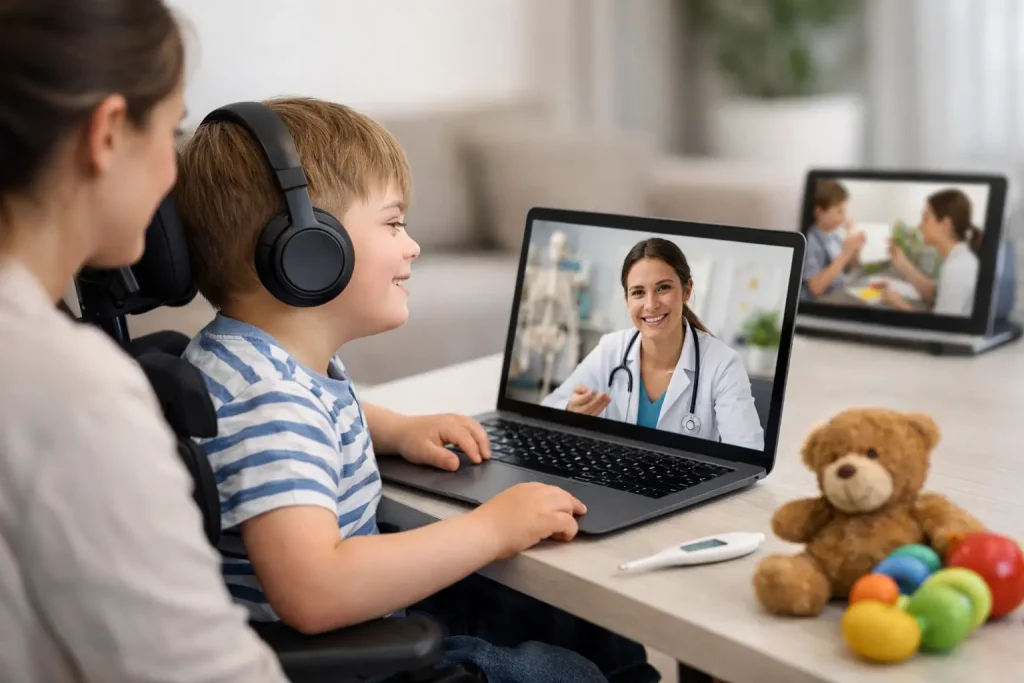
For a child with autism, medical complexity, mobility limitations, sensory sensitivities, or developmental differences, getting to an appointment can be the hardest part of receiving care. Virtual care for pediatric special needs populations changes that equation when it is designed as a clinician-directed extension of care, not simply a video visit. It can bring appropriate assessment, follow-up, monitoring, and caregiver collaboration into the settings where children are most comfortable.
For healthcare organizations, the opportunity is meaningful. Pediatric practices, rural health clinics, federally qualified health centers, critical access hospitals, and school-based programs can extend clinical reach while reducing avoidable travel and improving continuity. The challenge is to build a model that recognizes where virtual care adds value, where an in-person exam remains necessary, and what support families and care teams need to make the experience clinically useful.
Why Virtual Care for Pediatric Special Needs Populations Requires a Different Model
A standard telehealth visit may be appropriate for conversation, medication follow-up, care coordination, and selected behavioral health needs. But many children with special healthcare needs also require observation and physical data that a webcam alone cannot provide. A clinician may need to assess respiratory status, look into an ear or throat, review a rash, evaluate heart or lung sounds, or follow changes in chronic symptoms over time.
This distinction matters because families should not be asked to choose between convenience and clinical confidence. A virtual care program that relies only on video can create a low threshold for access, but it may also create uncertainty when the provider lacks the information needed to make a decision. The result can be an unnecessary trip to urgent care, a delayed escalation, or an avoidable repeat appointment.
Device-enabled virtual physical exams can close part of that gap. When an appropriately trained caregiver, school nurse, medical assistant, or community health worker can use connected examination tools under clinician direction, the provider can obtain more relevant findings from a remote setting. The purpose is not to replace every in-person encounter. It is to make the right level of care available sooner and closer to the child.
The pediatric context also changes how organizations should measure success. Visit volume alone is not enough. Better indicators include reduced missed appointments, fewer avoidable travel hours, caregiver participation, timely follow-up after acute events, adherence to care plans, and a clear record of when virtual care appropriately transitioned to in-person evaluation.
Familiar Settings Can Improve the Care Experience
Many pediatric patients communicate, regulate, and participate more effectively in familiar surroundings. This is particularly relevant for autistic children and children with sensory processing differences, anxiety, complex developmental needs, or traumatic experiences associated with clinical settings. Bright lights, crowded waiting rooms, unfamiliar routines, and long transitions can make a needed appointment distressing before the clinician has even begun the exam.
Care delivered at home, in a pediatric practice, at school, or through a trusted community site can reduce some of those barriers. A caregiver can help the child prepare using familiar routines. A school nurse may provide useful context about symptoms, attendance, medication timing, or changes observed during the day. For families in rural communities, remote care can prevent a specialist or primary care follow-up from becoming an all-day trip.
Familiarity alone does not guarantee a successful visit. Some children prefer direct contact with a known clinician, and others may need an in-person environment for specific assessments. Program design should preserve choice. Families need to understand the purpose of the virtual encounter, what equipment may be used, who will be present, and when the care team will recommend an in-person visit instead.
Caregiver Participation Is Clinical Infrastructure
Parents and caregivers often hold the most complete picture of a child’s baseline behavior, symptoms, triggers, medications, and response to treatment. Virtual care can make that knowledge easier to incorporate, especially when work schedules, transportation limitations, or caregiving responsibilities make clinic attendance difficult.
However, caregiver involvement should never mean shifting clinical responsibility to the family. Organizations need clear workflows, simple instructions, accessible technical support, and an escalation path when a caregiver is unable to complete a task or is concerned about a change in condition. Interpreter access and accommodations for caregivers with disabilities or limited digital literacy should be planned from the outset.
A strong program treats the caregiver as an informed partner while keeping the clinician responsible for clinical judgment. That balance improves trust and reduces the risk that technology becomes another burden on already stretched families.
Build Care Pathways Around Specific Use Cases
The most sustainable virtual care programs begin with defined clinical scenarios rather than a broad promise to make every visit virtual. Pediatric leaders should identify encounters where remote assessment and monitoring can improve access without compromising standards of care.
For example, a primary care team may create a pathway for post-discharge follow-up, medication checks, respiratory symptom reassessment, minor acute concerns, chronic condition monitoring, or care-plan review. A school-based program may focus on same-day assessment of symptoms that would otherwise prompt a parent to leave work or send a child home. A rural clinic may use connected examination capabilities to obtain specialist input while retaining the local care relationship.
Each pathway should specify eligibility criteria, the data needed for a clinician decision, who facilitates the visit, documentation requirements, and escalation triggers. A child with mild symptoms and a reliable caregiver may be a strong candidate for remote evaluation. A child with respiratory distress, altered mental status, severe pain, or other urgent warning signs needs a different response. Protocols should support clinical judgment rather than force a remote-first approach.
The Circle of Care Must Be Operational, Not Aspirational
Pediatric special needs care is rarely delivered by one person. Primary care clinicians, specialists, therapists, school personnel, home health teams, care coordinators, and family caregivers may all contribute important information. Virtual care works best when it supports this Circle of Care™ with clear roles and appropriate information-sharing practices.
That means determining who schedules the visit, who confirms consent, who operates examination equipment, where findings are documented, and how the follow-up plan reaches the people responsible for next steps. It also means protecting privacy. A school-based encounter, for example, must be organized around HIPAA-compliant workflows and the organization’s applicable privacy obligations, with attention to the environment, authorized participants, and secure handling of clinical data.
Technology should fit the workflow, not require staff to invent a new process in the middle of a busy day. The Dr. Miltie N9+ supports clinician-directed virtual examination and patient monitoring with connected tools that can be deployed across distributed pediatric and community settings. Its value depends on the care pathway around it: training, clinical governance, scheduling, documentation, and accountable follow-up.
Implementation Decisions That Determine Adoption
A pilot can demonstrate technical feasibility without proving operational value. Before scaling, organizations should define the patient population, clinical use cases, staffing model, training plan, and measures that will determine whether the program should expand.
Training should include more than device operation. Staff need to know how to prepare a child for the encounter, explain the visit to caregivers, recognize when an exam finding is inadequate, document exceptions, and route urgent concerns. Short practice sessions using realistic pediatric scenarios are often more effective than generic technical training.
Clinical leadership should also establish governance for quality and safety. This includes clinician oversight, protocols for remote examinations, infection-control practices for shared equipment, data review, and regular evaluation of escalation patterns. If a certain use case consistently results in incomplete visits or in-person follow-up, that is useful evidence. The pathway may need redesign, more training, or a different patient-selection approach.
Financial sustainability deserves the same discipline. Coverage and reimbursement rules vary by payer, setting, service, and jurisdiction. Organizations should involve reimbursement, compliance, and revenue-cycle teams early to determine which services may be supported, what documentation is required, and how remote patient monitoring or chronic care management may fit into the overall model. Reimbursement-aware deployment helps leaders avoid building a clinically promising program that cannot be maintained.
Equity Means Designing for Real Conditions
Virtual care can reduce access barriers, but it can also expose them. Some families lack dependable broadband, private space, compatible devices, or confidence using technology. Rural and safety-net organizations may face staffing constraints that limit who can facilitate examinations in community settings.
The answer is not to exclude these patients from virtual care. It is to offer multiple access points and support models. A clinic can host facilitated virtual visits. A school or community site can provide a trusted location for scheduled care. A care coordinator can conduct technology readiness outreach before a first visit. Programs may also need alternatives when a remote encounter is not feasible.
Equity-centered design asks a practical question: what would prevent this family from completing a clinically useful visit? Answering it early helps organizations create a service that reaches beyond the most digitally prepared households.
The strongest virtual pediatric care programs do not try to make distance irrelevant. They make distance less likely to determine whether a child receives timely, thoughtful, clinically appropriate care. For special needs populations, that is a meaningful standard: care that meets children where they are, supports the people who know them best, and gives clinicians the information to act with confidence.
Move from information to action
See how the N9+ can fit your organization.
Explore the remote physical exam platform or request a focused demonstration.