
Dr. Miltie N9+ vs. doxy.me for Connected Care
Compare dr. miltie n9+ vs. doxy.me for virtual exams, remote monitoring, pediatric access, and scalable care delivery across clinical settings confidently.
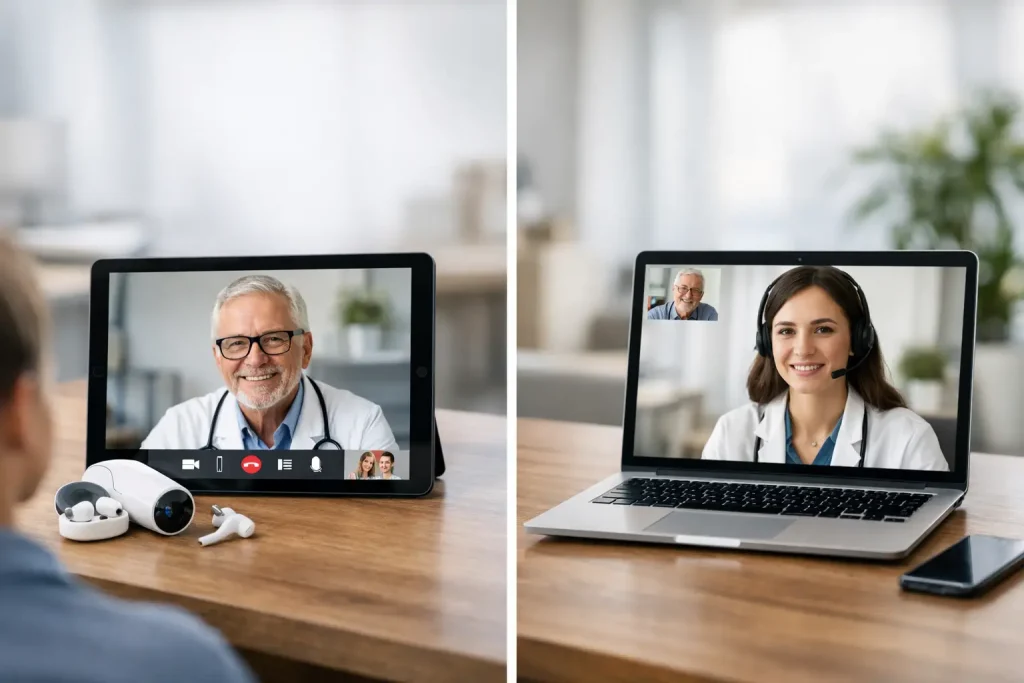
A video visit can resolve a straightforward follow-up. It cannot always answer the clinical questions that arise when a patient has respiratory symptoms, a concerning skin change, uncontrolled blood pressure, or a complex chronic condition. That distinction is central to the dr. miltie n9+ vs. doxy.me decision. Healthcare organizations are not simply choosing a telehealth interface. They are deciding how much clinical information their virtual-care model can capture, how care teams will act on it, and which patients can be served effectively outside the exam room.
For many organizations, both approaches may have a role. The right choice depends on whether the immediate need is accessible video communication or a broader connected-care model that supports clinician-directed virtual physical exams, remote patient monitoring, care coordination, and customized pathways of care.
Dr. Miltie N9+ vs. doxy.me: Different Starting Points
doxy.me is generally understood as a telehealth platform centered on facilitating video-based patient encounters. For practices that need a relatively simple way to conduct virtual consultations, counseling visits, follow-ups, or conversations where visual observation and patient history are sufficient, a video-first platform can be an appropriate starting point.
The Dr. Miltie N9+ is designed for a different operational and clinical objective. It is a mobile wireless virtual examination and patient monitoring system that brings connected clinical tools, patient data capture, and care coordination into the virtual encounter. Rather than treating video as the complete visit, the N9+ supports clinician-directed assessment beyond what a camera alone can provide.
This is not a question of one platform being universally better. It is a question of fit. A behavioral health practice conducting talk-based appointments may prioritize a straightforward video workflow. A rural health clinic, pediatric practice, community health center, or hospital program extending clinical services into homes, schools, and partner locations may need a model that can support more complete remote assessment and longitudinal monitoring.
The Core Difference: Conversation Versus Connected Clinical Data
Video is valuable because it preserves face-to-face connection. It allows clinicians to observe appearance, engage caregivers, review symptoms, and make decisions when an in-person exam is not necessary. Yet video by itself can leave a gap between what the patient reports and what the clinician needs to assess.
The Dr. Miltie N9+ is intended to help close that gap through device-enabled virtual exams and patient monitoring. Depending on the care pathway and clinical configuration, care teams can use connected examination capabilities to collect clinically relevant data during a remote encounter. This changes the nature of the visit from a video conversation into a more informed clinical interaction.
For health system leaders, that distinction affects more than the clinician experience. It influences triage protocols, staffing models, documentation workflows, care escalation, and the range of encounters that can be managed beyond a brick-and-mortar site. A virtual-care program built around video may be ideal for low-acuity needs. A program built around connected examination and monitoring can support a broader clinical strategy when appropriate governance, training, and workflows are in place.
What the N9+ approach can support
The N9+ is particularly relevant when organizations need to extend clinician reach while retaining access to objective patient information. This can include follow-up care, chronic condition management, preventive care, post-discharge touchpoints, and remote evaluations supported by trained staff, caregivers, or community-based partners.
Dr. Miltie’s connected-care model also recognizes that data alone is not a care pathway. The Circle of Care™ model helps organizations organize participation among clinicians, patients, caregivers, care coordinators, and community partners. For distributed care programs, the value comes from aligning technology with the people responsible for obtaining data, responding to findings, and supporting the patient between visits.
Where a video-first platform may be sufficient
A video-first workflow can be sufficient when the clinical service does not require connected examination tools or ongoing physiological data. Examples may include medication discussions, routine counseling, care navigation, certain specialty follow-ups, and consultations where history and visual observation are the primary inputs.
Organizations should avoid overbuilding for these encounters. Adding devices and workflow steps to every visit can create avoidable friction. The better strategy is to match the level of technology to the clinical need, patient population, and service line.
Pediatric and Rural Care Change the Evaluation
The comparison becomes more consequential in pediatric, rural, and underserved settings. Families may travel long distances for care, face limited transportation options, or have difficulty taking time away from work and school. For autistic children and pediatric patients with special healthcare needs, an unfamiliar clinical environment can add anxiety and make assessment more difficult.
A video visit reduces some of that burden, but it may not fully address the need for clinical assessment. The Dr. Miltie N9+ can help organizations bring virtual examination and monitoring capabilities closer to the child, whether care is delivered through a pediatric practice, home-based program, school-linked service, community clinic, or rural partner location. The familiar setting can also improve caregiver participation and give clinicians meaningful context about the patient’s daily environment.
For rural health clinics, federally qualified health centers, critical access hospitals, and community health centers, the question is often one of service reach. Can the organization use virtual care to expand access without sending every patient to a distant specialist or central facility? A connected-care system can help establish repeatable pathways for assessment, monitoring, referral, and follow-up. It may also help local teams work more effectively with remote clinicians.
That said, technology does not eliminate the need for clinical judgment. Organizations must define which conditions are appropriate for virtual evaluation, when an in-person assessment is required, how urgent concerns are escalated, and who owns follow-up. Strong protocols protect patients and make virtual programs easier for clinicians to trust.
Evaluate Workflow, Not Just Features
A comparison based only on feature checklists can lead to the wrong procurement decision. Healthcare leaders should examine the full operating model: patient onboarding, device logistics, clinician training, data review, documentation, support, privacy practices, and financial sustainability.
For a video platform, implementation may focus on scheduling, patient instructions, virtual waiting rooms, and clinician adoption. For a connected-care program, the work is broader because it touches clinical operations. Teams need clear policies for virtual physical exams, appropriate delegation, monitoring thresholds, clinical escalation, and caregiver engagement.
This added effort is a trade-off, not a flaw. A more clinically capable model requires intentional deployment. In return, it may enable care programs that a video-only approach cannot support. Organizations should assess whether they have a defined use case, clinical champions, operational ownership, and the ability to measure outcomes before scaling.
Reimbursement also deserves early attention. Payment rules vary by payer, care setting, state, and service type. Programs involving remote patient monitoring, chronic care management, virtual primary care, and telehealth should be designed with documentation, eligible services, staffing requirements, and applicable CMS or payer guidance in mind. Reimbursement-aware implementation is especially important for safety-net organizations working to expand access without creating an unsustainable operational burden.
How Healthcare Leaders Can Choose
Start with the clinical problem rather than the technology. If the primary goal is to make routine video conversations more accessible, a video-first platform may meet the need. If the goal is to extend clinical assessment, collect actionable patient data, coordinate care across settings, and support ongoing monitoring, the Dr. Miltie N9+ is better aligned with that broader mandate.
Leaders should also consider the patients who are least well served by the status quo. A program designed around the needs of a rural family, a child with complex care needs, or a community clinic with limited specialty access often reveals the limitations of a video-only model. It also clarifies where connected devices, trained workflows, and caregiver participation can create meaningful value.
The most effective virtual-care strategy is rarely the one with the longest feature list. It is the one that gives clinicians the information they need, gives patients a practical way to participate, and gives the organization a path to deliver care consistently. Build that path around the encounters that matter most, then choose the technology that can carry the clinical responsibility involved.
Move from information to action
See how the N9+ can fit your organization.
Explore the remote physical exam platform or request a focused demonstration.