
CMS Chronic Care Management for Rural Care Teams
CMS chronic care management can help rural and community providers coordinate care, engage patients, and build sustainable virtual care workflows at scale.
A child with asthma may be stable at a routine visit, then struggle weeks later when medication access changes or symptoms escalate at school. An older adult with diabetes and heart failure may leave the hospital with a plan that is technically complete but difficult to carry out at home. These are the gaps that CMS chronic care management is designed to address: the ongoing clinical work between visits that helps patients follow a plan, recognize changes early, and stay connected to the right care team.
For rural health clinics, federally qualified health centers, critical access hospitals, pediatric practices, and community-based organizations, chronic care management is more than a billing opportunity. When designed well, it is an operating model for continuity. It gives care teams a structured way to coordinate services, engage caregivers, document non-face-to-face clinical work, and extend care beyond the exam room.
What CMS Chronic Care Management Covers
CMS chronic care management, commonly called CCM, supports non-face-to-face care management for Medicare patients with two or more chronic conditions expected to last at least 12 months, or until the patient’s death, and that place the patient at significant risk of death, acute exacerbation or decompensation, or functional decline. The conditions do not have to be the same type, and they can include both physical and behavioral health needs.
The service recognizes work that has long been essential but often fragmented: reviewing a care plan, reconciling medications, following up after an emergency visit, coordinating with specialists, communicating with family caregivers, and helping a patient overcome barriers to treatment. CCM is distinct from a brief check-in or a one-time telehealth visit. It is longitudinal care coordination delivered across a calendar month.
Traditional CCM codes generally distinguish between clinical staff time directed by a physician or qualified health care professional and time personally provided by the billing practitioner. Complex CCM recognizes patients whose needs require more intensive care planning and coordination. CMS payment rules, code sets, and requirements can change, so organizations should validate current-year guidance, Medicare Administrative Contractor direction, and payer-specific policies before operationalizing a program.
The Operational Requirements Behind a Sustainable Program
A successful CCM program needs more than a list of eligible patients. It needs a dependable clinical workflow. CMS requirements have historically included patient consent, a comprehensive electronic care plan, continuity with a designated care team member, and timely access to clinical support for urgent needs. The care plan should be relevant to the patient’s conditions, goals, medications, providers, and anticipated community or social-service needs.
The practical challenge is making that plan usable. A care plan that lives only in the electronic health record but is never discussed with the patient will not improve adherence or reduce avoidable utilization. Care teams need a way to turn documented goals into follow-up actions: confirm whether prescriptions were obtained, identify transportation or food barriers, review home readings, and escalate concerning changes to a clinician.
Time capture also matters. Organizations should document the clinical activity performed, who performed it, the time attributed to the service, and how the work advanced the patient’s care plan. This is not merely a revenue-cycle requirement. Clear documentation gives leaders visibility into workload, recurring patient barriers, staffing needs, and program outcomes.
Why Virtual Exams and Remote Monitoring Strengthen CCM
Chronic care management is strongest when care coordinators are not working from incomplete information. A phone call can reveal that a patient feels worse. It may not reveal whether respiratory symptoms are worsening, whether a child’s ear pain needs prompt evaluation, or whether a patient’s blood pressure and oxygen saturation suggest a need for escalation.
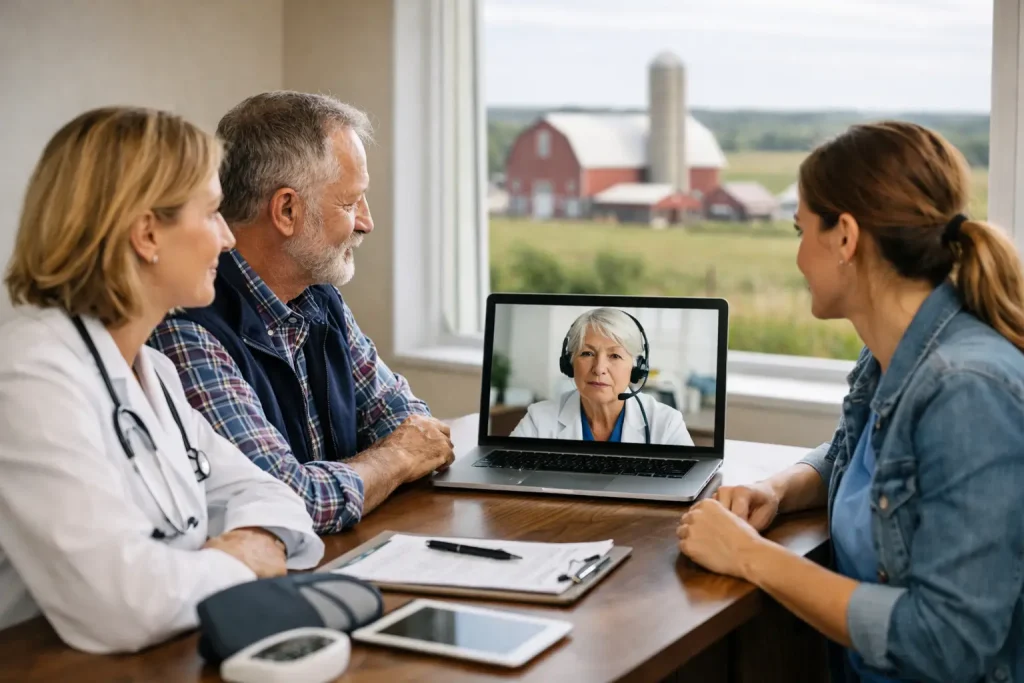
Connected-care tools can close part of that information gap. Remote patient monitoring can provide trend data between encounters, while clinician-directed virtual examination capabilities can support more informed assessment when an in-person visit is difficult or delayed. The goal is not to replace every office visit. It is to help the care team determine which patients can be supported where they are, which need a same-day clinical evaluation, and which require urgent in-person care.
For pediatric populations, that distinction can be especially meaningful. Children with complex needs, autistic children, and children who experience significant anxiety in unfamiliar clinical environments may benefit when follow-up can occur at home, school, or a trusted community setting with a caregiver involved. A virtual encounter still requires clinical judgment, privacy protections, and a clear escalation pathway. Yet it can reduce travel burden and allow the clinician to observe the child in a setting that may better reflect daily functioning.
Dr. Miltie’s N9+ supports this model by enabling clinician-directed virtual physical exams and the capture of clinically relevant patient data beyond the traditional exam room. Within a coordinated workflow, device-enabled assessments can give care teams more context for chronic care follow-up while keeping the responsible clinician at the center of decision-making.
Building a CCM Workflow That Teams Can Actually Run
The first step is to define the population rather than attempting to enroll every eligible patient at once. A rural clinic may begin with adults who have diabetes, hypertension, and recent emergency department use. A pediatric organization may focus on children with asthma, complex care needs, or frequent missed follow-up. Start where there is a clear clinical gap, sufficient patient volume, and a realistic ability to intervene.
Next, assign ownership. The billing clinician retains responsibility, but much of the monthly work may be performed by trained clinical staff under appropriate direction and supervision. Define who obtains consent, creates or updates the care plan, performs outreach, reviews incoming data, handles medication questions, and escalates findings. Ambiguity is one of the fastest ways to create missed tasks and clinician burnout.
Technology should support the workflow rather than create a parallel one. The care team needs access to the current care plan, patient communications, medication information, monitoring data when applicable, and documentation tools that fit daily practice. Interoperability is valuable, but a technically connected platform still fails if staff must search multiple systems to determine the next action.
Finally, make escalation explicit. For example, a coordinator may manage routine outreach and reinforce an asthma action plan, while a nurse reviews symptom changes and a clinician evaluates abnormal findings or treatment failures. Define the response expectations for after-hours concerns, missed monitoring readings, worsening symptoms, and caregiver-reported changes. This is where a Circle of Care™ approach becomes practical: patients, caregivers, community staff, coordinators, and clinicians each understand their role and their path back to clinical support.
The Rural and Community Care Trade-Offs
CCM can improve access, but it is not automatically the right program for every patient or organization. Patients may have limited broadband, inconsistent phone access, language needs, privacy concerns, or caregiver capacity constraints. Remote monitoring may be valuable for a patient with unstable disease but unnecessary for someone whose condition is well controlled and who prefers traditional follow-up.
Workforce realities also matter. Smaller organizations should be cautious about launching a broad program without dedicated capacity for outreach, documentation, and clinical escalation. A modest, well-run cohort can deliver more value than a large enrollment list with inconsistent contact. Some organizations may benefit from centralized care management, while others need locally embedded teams who understand the community’s referral patterns and resources.
Financial sustainability depends on more than selecting the right code. Leaders should assess eligible population size, expected monthly staff time, clinician oversight, technology costs, consent and documentation processes, no-show or non-engagement rates, and the relationship between CCM and other care-management services. They should also avoid duplicative billing and confirm whether patients are already receiving similar services elsewhere.
Measuring Value Beyond Monthly Claims
Claims volume alone does not show whether a chronic care management program is working. Clinical and operational leaders should monitor engagement, completed care-plan updates, medication reconciliation, resolved barriers, time to follow-up after acute events, referral completion, and escalation patterns. Depending on the population, they may also track emergency department use, preventable admissions, disease-control indicators, school attendance, or caregiver-reported confidence.
The most useful measures connect activity to a decision. If patients consistently disengage after enrollment, revise the onboarding conversation. If coordinators spend too much time chasing missing data, simplify the monitoring protocol. If caregivers report that virtual follow-up is helpful but clinicians lack enough examination data to act confidently, consider where connected exam tools can add clinical value.
The enduring opportunity in CMS chronic care management is not simply to account for work that already happens. It is to build a more intentional relationship between the patient’s daily life and the clinical team’s next decision. For organizations serving rural, pediatric, and underserved communities, that can mean care that is closer, more responsive, and more realistic for the families who depend on it.
Move from information to action
See how the N9+ can fit your organization.
Explore the remote physical exam platform or request a focused demonstration.