Dr. Miltie N9+ vs. eClinicalWorks for Virtual Care
Compare Dr. Miltie N9+ vs. eClinicalWorks for virtual exams, workflow integration, pediatric access, and scalable rural care delivery models for providers.
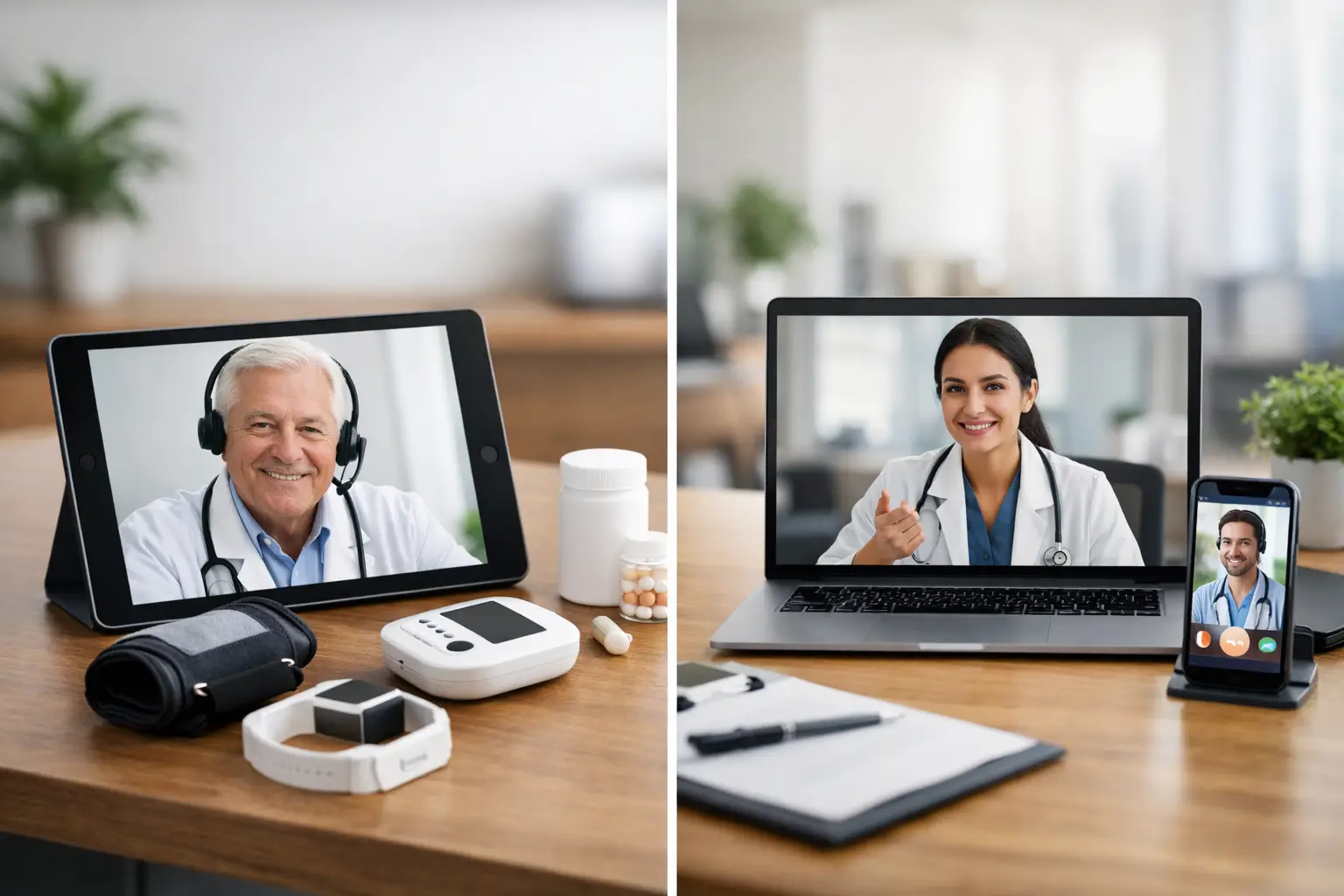
A comparison of dr. miltie n9+ vs. eclinicalworks should not begin with a feature checklist. These solutions typically address different, complementary parts of the care-delivery model. One centers on bringing clinician-directed examination and monitoring capabilities to the patient. The other is widely known for supporting the administrative and clinical record infrastructure that keeps a practice or health system operating.
For organizations expanding virtual care, the practical question is not simply which platform is better. It is whether the organization needs a stronger system of record, more clinically meaningful remote encounters, or an integrated approach that addresses both.
Dr. Miltie N9+ vs. eClinicalWorks: Different Core Roles
The Dr. Miltie N9+ is a mobile, wireless virtual examination and patient monitoring system designed to extend the clinician’s reach beyond the traditional exam room. It supports virtual physical exams and clinically relevant data capture in settings such as homes, schools, community clinics, pediatric practices, and rural care sites. Its value is particularly clear when a standard video visit cannot provide enough clinical information for a provider to assess the patient confidently.
EClinicalWorks is generally evaluated as an electronic health record and practice-management platform. Organizations may use it for documentation, scheduling, billing, patient records, population health workflows, portal access, and other operational functions. Depending on the organization’s configuration, its broader ecosystem can also support virtual-care workflows.
That distinction matters. An EHR can document a remote encounter, route orders, and preserve the longitudinal patient record. But documentation alone does not create a virtual physical exam. A device-enabled care model can help capture information during the encounter, yet it does not replace the EHR functions required to manage records, claims, and enterprise workflows.
When the N9+ Is the Stronger Fit
The N9+ is most relevant when access barriers and examination limitations are the central challenge. A rural health clinic may have patients who face long travel times for follow-up appointments. A school-based program may need a clinician to assess a child while a trained support person is present. A pediatric practice may need a lower-stress alternative for an autistic child or a child with special healthcare needs who has difficulty tolerating travel and unfamiliar clinical environments.
In these situations, a basic video connection may establish communication, but it may not deliver the clinical data needed to make an informed decision. The N9+ is designed to support clinician-directed remote assessment, remote patient monitoring, and customized pathways of care. This allows care teams to bring a more complete virtual-care experience closer to the patient and caregiver.
The platform also supports a Circle of Care™ approach, recognizing that virtual care often involves more than one person. Caregivers, school personnel, community health workers, nurses, care coordinators, and specialists may each have a role in helping the patient connect to appropriate services. The goal is not to add technology for its own sake. It is to create a practical care pathway that preserves clinician oversight while reducing unnecessary friction for families and frontline teams.
For pediatric and community-based programs, this can improve caregiver participation and continuity between visits. For critical access hospitals, federally qualified health centers, and other safety-net organizations, it can help extend scarce clinical capacity to distributed populations.
When eClinicalWorks Is the Stronger Fit
EClinicalWorks is likely the more immediate priority for an organization that needs to establish, standardize, or modernize its core clinical and administrative workflows. An EHR and practice-management environment can be foundational for patient registration, appointment management, clinical documentation, charge capture, claims workflows, quality reporting, and longitudinal records.
For a growing practice or a health system consolidating fragmented workflows, those capabilities are central to operational stability. Virtual-care teams also need a reliable place to document encounters, review history, coordinate referrals, communicate with patients, and support billing processes. An organization without an effective system of record may struggle to scale any new care model, regardless of the devices or telehealth tools it adopts.
The trade-off is that an EHR-centered deployment may not, by itself, solve the last-mile clinical problem: how to obtain the right physical-exam data when the provider and patient are in different locations. Organizations should distinguish between a video-enabled workflow and a clinically equipped remote-care workflow.
The Better Question: Replacement or Complement?
For many organizations, positioning the N9+ and eClinicalWorks as direct replacements creates a false choice. A more useful architecture may place the EHR at the center of patient records and enterprise operations while adding device-enabled virtual examination capabilities where the care model requires them.
This approach is especially relevant for programs that serve patients across multiple settings. Consider a community health center supporting children with asthma, diabetes, developmental needs, or complex chronic conditions. The EHR can help organize care plans, documentation, appointments, and claims. The N9+ can help care teams conduct more clinically informed remote follow-ups from a school, home, partner site, or satellite clinic.
The same principle applies to chronic care management and remote patient monitoring. Operational teams need workflows for identifying eligible patients, obtaining consent, assigning staff responsibilities, documenting outreach, and tracking reimbursement requirements. Clinicians need timely, actionable data and a clear escalation path when findings require intervention. Neither the operational workflow nor the clinical data stream should be treated as an afterthought.
Integration should be assessed carefully rather than assumed. Before selecting a model, technical and clinical leaders should confirm what data must be exchanged, how information is documented, who reviews incoming findings, and how the workflow supports HIPAA compliance. They should also validate interface options, device connectivity, user access controls, data governance, and the organization’s specific EHR configuration.
Evaluation Criteria for Clinical and Operational Leaders
A productive evaluation begins with the patient population, not the software category. If the primary objective is to improve scheduling, documentation, billing, and enterprise record management, an EHR-focused investment may lead the roadmap. If the objective is to reduce travel, support remote clinical decision-making, and reach patients who cannot reliably access a traditional office visit, virtual examination technology deserves closer attention.
Clinical leaders should ask what information providers cannot obtain through video alone. Operations leaders should ask where the care will occur, who will support the patient during the session, and how findings will move into the patient record. Finance and reimbursement teams should examine whether the intended services align with applicable CMS requirements, payer rules, state regulations, and internal documentation policies. Reimbursement depends on the service, setting, payer, clinician credentials, and current rules, so it should be validated during program design rather than after launch.
Implementation capacity also matters. A successful program requires more than procurement. Teams need training, defined clinical protocols, patient and caregiver education, escalation procedures, and measures that show whether access, utilization, and outcomes are improving. Rural and community-based organizations often benefit from a phased rollout that starts with a focused use case, such as pediatric follow-up, chronic-condition monitoring, or post-discharge support.
Choosing for the Care Model You Want to Deliver
The most meaningful comparison is between the care experience an organization has today and the care experience it needs to provide next. EClinicalWorks can serve as a foundation for the operational discipline of modern care delivery. The N9+ can help clinicians deliver a more complete virtual encounter when distance, transportation, workforce constraints, or patient needs make in-person care difficult.
For healthcare organizations serving children, families, rural communities, and medically underserved populations, the opportunity is to design virtual care that feels clinically credible and genuinely accessible. The right technology decision is the one that helps the care team see more, know more, and support patients where they are.
Move from information to action
See how the N9+ can fit your organization.
Explore the remote physical exam platform or request a focused demonstration.