At-Home Medical Exams for Families With Dr. Miltie N9+
At-home medical exams for families with Dr. Miltie N9+ help care teams conduct clinician-directed virtual exams, monitoring, and follow-up closer to home.
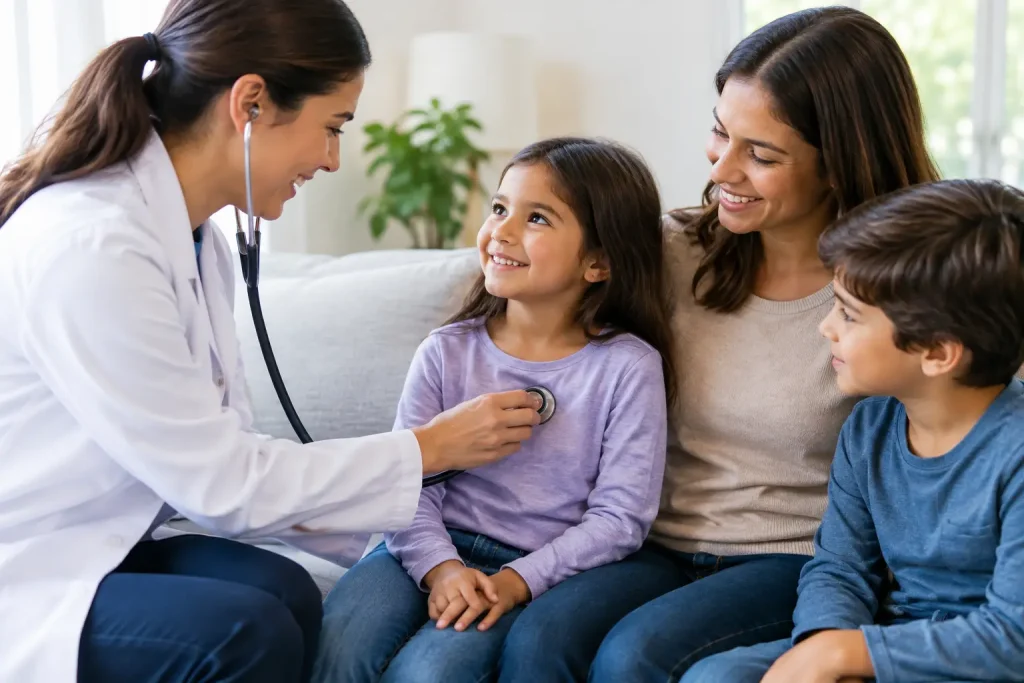
A child with recurring ear pain should not always require a long drive, missed work, an unfamiliar waiting room, and a rushed visit. At-home medical exams for families with the Dr. Miltie N9+ give care organizations a way to bring more of the clinical encounter into the home while keeping the clinician at the center of assessment and decision-making. For pediatric, rural, and community-based programs, that difference can reshape access, follow-up, and family participation.
The goal is not to replace every in-person appointment. It is to make appropriate care more available when distance, transportation, sensory needs, workforce shortages, or chronic conditions make traditional visits difficult. A connected virtual examination model can help clinicians gather meaningful findings, guide caregivers in real time, and determine when home-based care is sufficient and when escalation is necessary.
Why At-Home Medical Exams for Families Matter
A conventional video visit offers conversation, visual observation, and care planning. It may be enough for medication counseling, behavioral health follow-up, or a straightforward check-in. But when a clinician needs to assess temperature, oxygen saturation, heart or lung sounds, ears, throat, skin, or other physical findings, video alone has limits.
That gap matters most for families already facing barriers to care. Rural households may travel hours to reach a pediatric specialist or primary care office. Families managing complex chronic conditions may make frequent visits that are disruptive and costly. Caregivers of autistic children or children with special healthcare needs may find unfamiliar clinical environments distressing, particularly when appointments involve waiting, transitions, and sensory overload.
Clinician-directed at-home examinations can create a more complete virtual care option. A caregiver, home health professional, school nurse, community health worker, or other trained support person can participate in the encounter using connected examination tools while the remote clinician guides the process. The family remains in a familiar setting, and the clinician has access to data that supports a more informed clinical judgment.
This is also a care equity issue. Virtual care succeeds only when it addresses more than broadband access and a video connection. Families need care models that account for transportation, caregiver availability, language, disability, local workforce capacity, and the practical reality of getting a sick child to an appointment.
What a Clinician-Directed Virtual Exam Can Support
The Dr. Miltie N9+ is designed to extend the reach of a virtual visit through mobile, wireless examination and patient-monitoring capabilities. Rather than treating a remote encounter as a conversation on a screen, care teams can use the platform to support clinically relevant data capture and virtual physical assessments within defined workflows.
The appropriate use case depends on the patient, condition, care setting, available support, and clinician judgment. For example, an organization may use home-based exams for pediatric sick visits, post-discharge follow-up, chronic disease monitoring, medication checks, or care coordination with specialists. The same model can support a school-based or community-site encounter when the home is not the best location for the patient.
A well-designed workflow gives the clinician control over the examination sequence. The clinician can observe the patient, ask targeted questions, direct the use of connected tools, review readings or images, document findings, and establish a clear next step. That next step may be home care instructions, a prescription decision within the clinician’s scope and local requirements, scheduled follow-up, diagnostic testing, or an in-person evaluation.
The value is not simply collecting more data. It is collecting the right data at the right time, in a way that fits clinical protocols. Programs should avoid assuming that every reading is equally meaningful or that a remote device can substitute for a full in-person workup. Clinical governance, staff training, patient selection, and escalation pathways remain essential.
A Better Experience for Pediatric Families
For pediatric programs, the home can offer clinical advantages as well as convenience. Children are often more relaxed in familiar surroundings. Caregivers can participate fully, share observations from daily routines, and receive education in the environment where care instructions will be followed.
This can be particularly meaningful for autistic children and pediatric patients with special healthcare needs. A lower-stress setting may reduce barriers associated with travel, sensory stimulation, disrupted routines, and difficulty tolerating a waiting room or unfamiliar exam room. It also allows clinicians to see contextual factors that may not be visible during an office visit, such as how equipment is used, who supports the child, or where symptoms occur.
Still, home-based care should never be presented as a one-size-fits-all pediatric solution. Some children need hands-on assessment, imaging, laboratory testing, procedures, or urgent treatment that cannot be delivered remotely. Families need clear guidance about urgent symptoms and a reliable pathway to in-person or emergency care. The strongest programs use virtual exams to improve triage and continuity, not to delay necessary escalation.
Operational Design Determines Whether a Program Scales
Healthcare leaders evaluating at-home examination programs should begin with the clinical pathway, not the device. Which patients are appropriate? What problems are being addressed? Who will facilitate the exam? What findings require an immediate in-person referral? How will documentation, clinician communication, and follow-up occur?
These questions affect staffing and financial sustainability. A rural health clinic may prioritize same-day pediatric access and reduce unnecessary travel. A federally qualified health center may focus on continuity for patients who routinely miss follow-up because of transportation or work barriers. A critical access hospital may use connected examinations to strengthen post-discharge outreach and identify worsening symptoms sooner. Each model requires its own workflow, staffing plan, and measurement strategy.
Implementation also needs to account for HIPAA compliance, device logistics, infection-control practices, connectivity, consent, training, and EHR documentation. If equipment is sent home, organizations need a dependable process for onboarding, technical support, cleaning or replacement where applicable, and return management. If a care team member facilitates the visit, that person needs clear competency standards and a simple way to reach the clinician when a problem arises.
Reimbursement should be assessed before broad deployment, not after. CMS and payer policies can affect which services are billable, who may furnish them, required documentation, supervision expectations, and the distinction between telehealth, remote patient monitoring, chronic care management, and other service models. Coverage and policy details vary by payer, state, patient location, and program design. Reimbursement-aware implementation helps organizations build a model that is clinically useful and operationally sustainable.
The Circle of Care Extends Beyond the Visit
At-home exams work best when they are part of coordinated care rather than an isolated technology transaction. A family may interact with a pediatrician, specialist, nurse, care coordinator, school staff member, community health worker, and caregiver across a single episode of care. Each person needs appropriate visibility into the plan and a defined role in carrying it forward.
Dr. Miltie’s Circle of Care™ model reflects this broader need for coordination. Connected examination tools can support the encounter, but the care model determines whether findings turn into timely action. That means closing referrals, communicating results, scheduling follow-up, reinforcing care plans, and identifying families who need extra outreach.
For organizations serving dispersed communities, this approach can also help preserve clinical capacity. A clinician may be able to support more appropriate follow-up encounters remotely when care teams have a consistent process for capturing information and managing exceptions. The benefit is not fewer touchpoints for the sake of efficiency. It is better-targeted touchpoints, with in-person resources reserved for patients who need them most.
Measuring What Matters to Families and Care Teams
Program evaluation should look beyond visit volume. Leaders should measure time to appointment, completed follow-up rates, avoidable travel, no-show patterns, escalation rates, patient and caregiver experience, clinician confidence, and the quality of documentation. For chronic care pathways, organizations may also assess adherence, symptom trends, acute utilization, and whether patients remain connected to their primary care team.
Qualitative feedback matters as well. A caregiver may value avoiding a four-hour round trip. A school nurse may value timely clinician support when a child becomes ill during the day. A rural clinician may value being able to assess a patient sooner rather than asking them to wait several days for an office opening. Those experiences help reveal whether a workflow is reducing friction or merely moving it elsewhere.
The most effective at-home exam programs make care feel closer without making clinical standards feel distant. When organizations pair connected examination technology with clear protocols, trained teams, coordinated follow-up, and practical reimbursement planning, families gain a more accessible path to care and clinicians gain a more complete way to serve the communities that depend on them.
Move from information to action
See how the N9+ can fit your organization.
Explore the remote physical exam platform or request a focused demonstration.