
Virtual Care for Children With Developmental Disabilities
Virtual health services for children with developmental disabilities give care teams ways to examine, monitor, and coordinate support where families live.
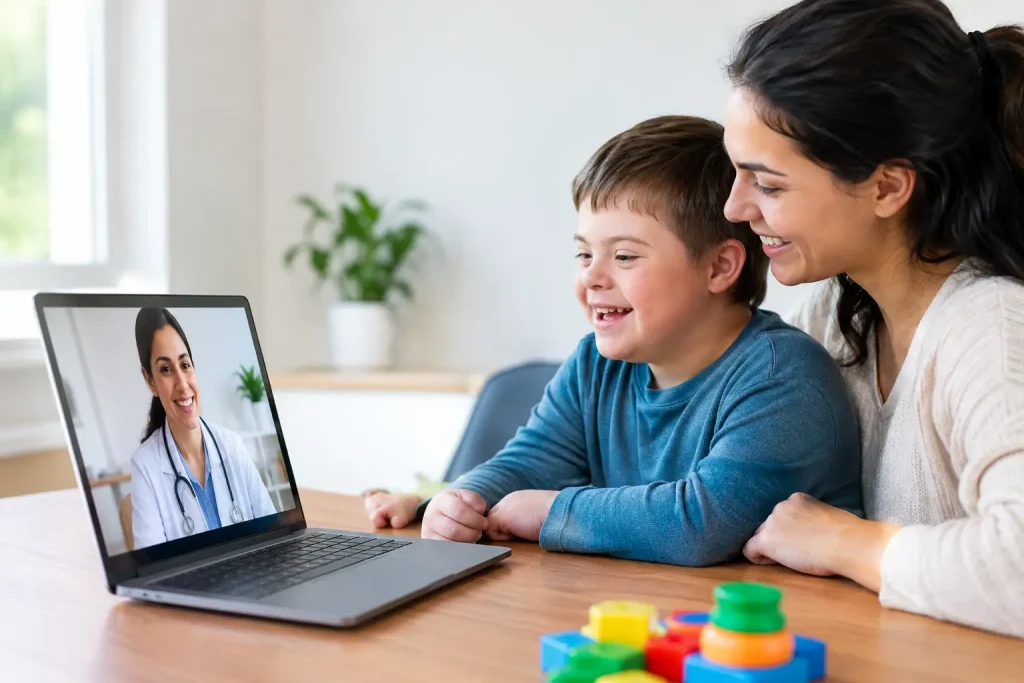
A child who becomes distressed in a crowded waiting room may show a very different clinical picture than they do at home, at school, or with a trusted caregiver nearby. For organizations serving autistic children and children with special healthcare needs, virtual health services for children with developmental disabilities can create a more practical path to timely assessment, follow-up, and coordinated support. The value is not simply avoiding a trip to the clinic. It is giving clinicians access to relevant information while reducing barriers that can delay care.
For pediatric practices, rural health clinics, community health centers, and health systems, the question is no longer whether virtual care has a role. The more useful question is which care needs can be supported virtually, what clinical data must be available, and how the program connects families, caregivers, schools, and the treating team.
Why Virtual Health Services Matter for This Population
Children with developmental disabilities often receive care across multiple settings and from multiple professionals. A primary care clinician may need input from a parent, school nurse, behavioral health provider, therapist, specialist, or care coordinator. Travel, sensory sensitivities, mobility limitations, caregiver work schedules, and distance from pediatric specialty services can make a routine follow-up difficult to complete.
Those challenges are especially pronounced in rural and underserved communities, where a family may travel hours for an appointment that lasts far less than the drive. A missed visit can mean delayed medication review, unresolved respiratory symptoms, gaps in chronic condition management, or a loss of connection with the broader care team.
Virtual care can help organizations bring the encounter closer to the child. A familiar setting may allow caregivers to describe day-to-day functioning more clearly and may help clinicians observe concerns that are less visible in an exam room. It can also make it easier for a parent or guardian who cannot leave work, a school-based support professional, or a distant specialist to participate when appropriate and permitted.
That said, video alone is not a complete clinical model. A conversation on screen may be appropriate for education, care planning, behavioral follow-up, and some medication management. It is less sufficient when a clinician needs vital signs, visualization of the ears or throat, heart and lung sounds, or other objective findings to make a clinical decision.
Virtual Health Services for Children With Developmental Disabilities Need Clinical Depth
A sustainable program starts by matching the virtual modality to the clinical need. The goal is not to force every pediatric interaction into a remote format. It is to give clinicians the ability to choose a care setting and examination approach that is medically appropriate for the child and the presenting concern.
From video visit to virtual physical exam
A clinician-directed virtual physical exam expands what can happen during a remote encounter. Connected examination tools can help a trained caregiver, school nurse, medical assistant, or community health worker capture relevant findings for the clinician in real time or through a defined workflow. Depending on the use case, this may include temperature, pulse oximetry, blood pressure, weight, images, or examination data such as heart, lung, ear, throat, and skin findings.
The clinician remains responsible for interpreting the data and determining whether the child needs an in-person evaluation, urgent escalation, diagnostic testing, or a change in the care plan. This distinction matters. Technology should support clinical judgment, not imply that every concern can be resolved remotely.
For a child with communication differences, the ability to complete part of an assessment in a lower-stress environment can be meaningful. A caregiver can help explain routines, demonstrate how symptoms appear during daily activities, and support the child through the process. When school-based care is part of the model, the team may also gain timely context about attendance, functional changes, or concerns observed during the school day.
Remote monitoring between visits
Some children need support that extends beyond a single encounter. Remote patient monitoring and chronic care management workflows can help care teams track defined measures, identify concerning trends, and follow up before a manageable issue becomes an avoidable emergency department visit.
The right monitoring plan depends on the child’s diagnosis, family capacity, clinical goals, and access to local services. More data is not automatically better. Teams should identify the measures that will change care decisions, establish who reviews them, define response times, and give families clear guidance on when to contact the care team or seek urgent help.
Design Around the Child and Caregiver
Pediatric virtual care works best when it respects the realities of caregiving. Families should not be expected to become medical technicians without training, support, and a clear reason for each step. Workflows need plain-language instructions, accessible scheduling, technical assistance, and accommodation for language, literacy, sensory needs, and variable broadband access.
Caregiver participation is a clinical asset, but it should not become an unfunded burden. Organizations can reduce friction by selecting care pathways where a remote visit offers a clear advantage, such as post-discharge follow-up, chronic condition check-ins, medication adherence support, triage for new symptoms, and coordination with school or community-based partners.
Consent and privacy also require deliberate planning. Teams need to confirm who may participate in a visit, where data is collected, how it is transmitted and documented, and how HIPAA-compliant communication is maintained. When care occurs in a school or community setting, organizations should establish roles, parental permissions, escalation procedures, and communication boundaries before the first encounter.
Build a Connected Care Workflow, Not a Standalone Program
Many virtual care initiatives stall because the technology is introduced without operational ownership. A device kit by itself does not create access. The program needs an intake process, scheduling rules, staff training, clinical protocols, documentation standards, and a pathway for referrals or in-person escalation.
A practical implementation begins with a small number of high-value use cases. For example, a rural clinic might prioritize pediatric sick visits that require basic exam findings, while a health system may focus on post-hospital follow-up for children with complex medical needs. A federally qualified health center may use virtual visits to strengthen chronic care management while partnering with schools or community sites that can support the examination process.
Organizations should define success in both clinical and operational terms. Useful measures may include completed visits, time to appointment, travel avoided, no-show rates, escalation rates, caregiver experience, staff workload, and continuity after an acute event. Clinical leadership should review whether virtual findings were sufficient for decision-making and where in-person care remained necessary.
Train for confidence and consistency
Staff members need more than a technical demonstration. They need to understand the purpose of the program, the limits of remote care, how to assist families, and how to respond when a child cannot tolerate an examination. Simulation-based training can help teams practice device use, communication techniques, troubleshooting, and emergency escalation.
The Dr. Miltie N9+ is designed to support this kind of clinician-directed model by bringing virtual examination and patient monitoring capabilities into homes, schools, practices, and community care settings. Combined with customized workflows and the Circle of Care™ model, connected-care technology can help organizations extend clinical reach without separating the virtual encounter from the patient’s broader care plan.
Make Financial Sustainability Part of the Design
Virtual pediatric programs must be clinically valuable and financially workable. Reimbursement policies, payer requirements, eligible practitioners, place-of-service rules, documentation expectations, and state regulations can vary. Leaders should involve compliance, billing, clinical operations, and technology teams early rather than treating reimbursement as a final implementation step.
A reimbursement-aware approach documents the clinical rationale for the encounter, the data reviewed, the clinician’s assessment, caregiver education, and the follow-up plan. It also distinguishes among telehealth, remote patient monitoring, chronic care management, care coordination, and other applicable service models. The appropriate model depends on the organization’s patient population, contracts, staffing structure, and care goals.
For safety-net and rural organizations, sustainability may also include grant-funded infrastructure, partnerships with schools or community sites, and strategies that allow scarce pediatric specialists to support local teams. The strongest programs do not measure virtual care only by a single billing event. They evaluate whether it improves access, strengthens continuity, and makes limited clinical capacity go further.
Start With the Care Gap, Not the Technology
The best place to begin is a specific care gap: children missing follow-up because travel is difficult, families waiting too long for a pediatric assessment, school staff lacking a timely clinical escalation route, or care coordinators struggling to connect a fragmented team. Once that gap is clear, leaders can determine whether video, a clinician-directed virtual exam, remote monitoring, or a blended model is the right response.
Children with developmental disabilities deserve care models that recognize both their medical needs and the conditions surrounding their daily lives. When virtual services are clinically grounded, caregiver-centered, and connected to local care, they can help organizations bring thoughtful pediatric support closer to the families who need it.
Move from information to action
See how the N9+ can fit your organization.
Explore the remote physical exam platform or request a focused demonstration.