
Exam-Level Telehealth for Clinics With Dr. Miltie N9+
See how exam-level telehealth for clinics Dr. Miltie N9+ supports virtual physical exams, pediatric access, and scalable connected care across care delivery models.
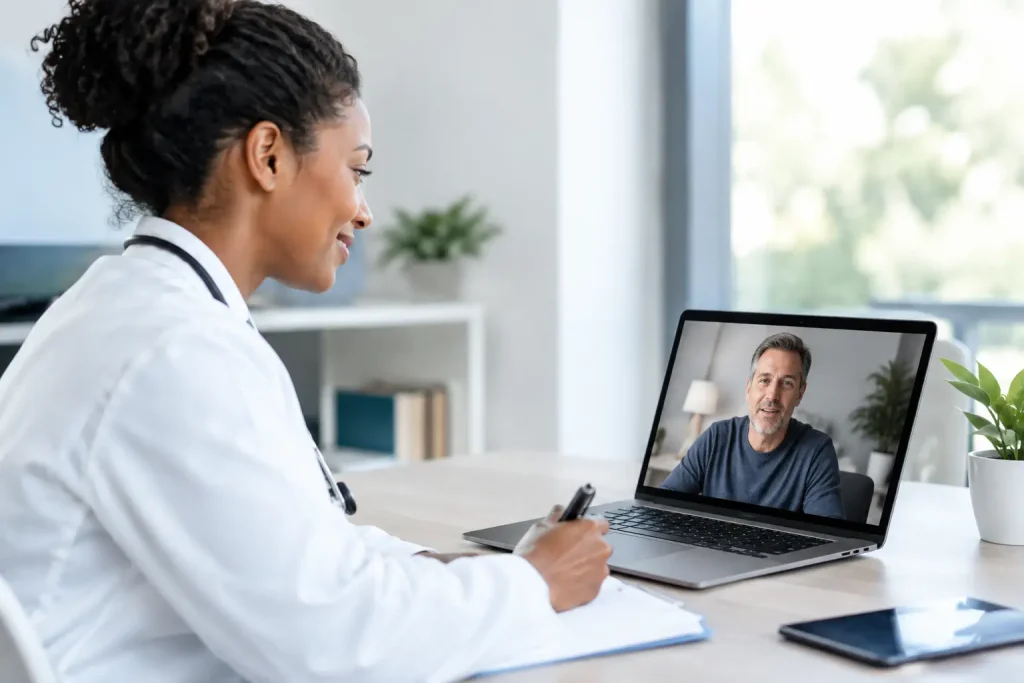
A video visit can confirm that a patient is present, engaged, and able to describe a concern. It cannot always give a clinician the clinical information needed to evaluate that concern. Exam-level telehealth for clinics Dr. Miltie N9+ is designed to close that gap by extending clinician-directed physical assessment beyond the traditional exam room.
For organizations responsible for pediatric, rural, and community-based care, the distinction matters. A virtual care program becomes more clinically useful when clinicians can obtain relevant examination data, involve caregivers in the encounter, and act on information that supports a confident next step. The goal is not to make every visit remote. It is to make appropriate remote visits more complete, more accessible, and better connected to the patient’s ongoing plan of care.
What Exam-Level Telehealth Means for Clinics
Exam-level telehealth refers to a virtual care model that goes beyond conversation and visual observation. It supports clinician-guided use of connected examination tools to gather clinically relevant information during a remote encounter. Depending on the care pathway and the patient’s needs, that may include data such as temperature, oxygen saturation, heart or lung sounds, images, or other assessments supported by the virtual exam system.
This is fundamentally different from treating telehealth as a video-only access channel. Video remains valuable for behavioral health, medication follow-up, care coordination, and many low-acuity concerns. Yet clinics often encounter situations in which a patient’s symptoms require more than a conversation before the clinician can determine whether home management, an in-person appointment, testing, referral, or escalation is appropriate.
The Dr. Miltie N9+ helps organizations create a more capable virtual examination environment. It brings connected examination and patient-monitoring capabilities into homes, schools, community sites, pediatric practices, and other settings where patients already receive support. A clinician remains responsible for the assessment and clinical decision-making, while a caregiver, trained staff member, or other designated participant can assist with the encounter according to the organization’s workflow.
Why Video-Only Visits Leave a Clinical Gap
The operational appeal of video-only telehealth is clear: it is familiar, comparatively easy to launch, and useful for many encounter types. But clinical teams know that convenience does not eliminate uncertainty. When a child has a persistent cough, a rural patient reports shortness of breath, or a patient with chronic illness needs follow-up, the absence of examination data can narrow the types of visits that can be managed virtually.
That limitation can create avoidable friction. Patients may travel long distances for a brief assessment. Caregivers may miss work or arrange transportation. Clinics may schedule an in-person visit after a virtual visit simply because the clinician needs more information. In underserved communities, that second step can become a missed appointment rather than timely care.
Exam-level telehealth does not remove the need for in-person evaluation when it is clinically indicated. Nor should it be used as a substitute for emergency care. Its value lies in helping the care team identify when remote assessment is sufficient, when additional evaluation is needed, and how to move the patient through the right care pathway without unnecessary delay.
Exam-Level Telehealth for Clinics With the N9+
The N9+ is most effective when it is implemented as part of a connected-care model rather than deployed as a standalone device. Clinics need more than equipment. They need defined use cases, clinical protocols, training, patient and caregiver support, documentation practices, escalation criteria, and a plan for incorporating virtual findings into everyday operations.
For example, a rural health clinic may use clinician-directed virtual exams to support follow-up for patients who face substantial travel barriers. A school-based program may help connect a child and caregiver with a pediatric clinician when symptoms arise during the school day. A community health center may use the system to strengthen chronic care management, preventive follow-up, or post-discharge outreach for patients who are less likely to return quickly for an office visit.
The most appropriate workflow depends on the population, staffing model, connectivity, and scope of services. A clinic with trained on-site staff may follow a different model than a program that ships equipment to families or coordinates visits from a patient’s home. The common requirement is a reliable connection between the patient, the person assisting with the exam, and the clinician who interprets the information.
Dr. Miltie’s Circle of Care™ model is built around that connection. It recognizes that meaningful virtual care often includes more than one participant: the clinician directing care, the patient, a caregiver, a school nurse, a community health worker, or another trusted support person. This approach can make remote care more practical while preserving clinical accountability.
A Better Fit for Pediatric and Special Healthcare Needs
Pediatric care illustrates why location matters. Children may be more comfortable in a familiar environment, especially when they have sensory sensitivities, developmental differences, or complex healthcare needs. For autistic children and pediatric patients with special healthcare needs, a crowded waiting room, unfamiliar equipment, and a disruptive trip to a distant clinic can increase stress for the child and the entire family.
A clinician-directed virtual exam can give families another option for appropriate encounters. Caregivers can participate directly, ask questions in real time, and help the child feel secure. When supported by clear instructions and a well-designed workflow, this model can reduce travel burden without reducing the clinician’s role in the assessment.
There are trade-offs. Some children will not tolerate certain examination steps remotely. Some symptoms require hands-on evaluation, diagnostics, or immediate treatment that cannot be delivered through telehealth. Clinics should establish age-appropriate protocols, explain limitations clearly, and create simple escalation routes when a virtual assessment does not provide enough information.
Building a Program That Clinicians Will Use
Technology adoption often fails when it adds work without solving a meaningful clinical problem. For exam-level telehealth, successful implementation begins with a focused question: which patients, encounter types, and access barriers are the organization trying to address?
A practical program typically starts with a limited set of use cases. Pediatric sick visits, chronic disease follow-up, remote patient monitoring, post-discharge check-ins, and care coordination for rural patients can be strong starting points. Each use case should have an identified clinical owner and a documented pathway from scheduling through documentation, follow-up, and escalation.
Training is equally important. Clinicians need confidence in directing remote examination steps and interpreting the available data in context. Caregivers and support staff need simple, repeatable guidance. Operations teams need to understand device logistics, connectivity support, cleaning procedures where applicable, patient onboarding, and how to prevent virtual visits from becoming fragmented work outside normal workflows.
Organizations should also evaluate integration and compliance requirements early. HIPAA-aligned workflows, appropriate access controls, documentation standards, data handling, and clinical governance are not afterthoughts. They are central to building patient trust and supporting a program that can scale responsibly.
Connecting Clinical Value to Financial Sustainability
Healthcare leaders must evaluate whether a virtual care initiative can be sustained, not merely whether it can be launched. That requires looking at clinical outcomes, access measures, workforce impact, patient experience, and reimbursement considerations together.
For some organizations, the clearest value may be fewer unnecessary trips, stronger follow-up completion, or faster access to a clinician. For others, it may be the ability to extend specialty support into remote sites, improve chronic care engagement, or use limited clinical capacity more effectively. Rural health clinics, federally qualified health centers, critical access hospitals, and community health centers may prioritize different metrics based on their populations and funding models.
Reimbursement should be assessed according to the organization’s payer mix, service model, state requirements, and current CMS policies. Remote patient monitoring, chronic care management, telehealth, and related services each have distinct operational and billing considerations. A reimbursement-aware deployment helps leadership align the technology, clinical workflow, staffing, and documentation needed to support appropriate billing and long-term viability.
Choosing the Right Encounters for Remote Examination
Not every clinical question belongs in a virtual exam pathway. Programs should identify exclusion criteria from the start, including symptoms that require urgent in-person or emergency evaluation. They should also give clinicians discretion to convert an encounter to in-person care whenever the available information is insufficient.
The strongest use cases are usually those where access is difficult, the examination data can meaningfully inform a decision, and the care team can act on the result. That may mean addressing an acute concern early, monitoring a known condition, supporting a follow-up visit, or bringing a caregiver more fully into the care process.
A well-designed exam-level telehealth program gives clinics a practical middle ground between video-only encounters and automatic in-person referral. It helps bring clinical assessment closer to the patient while keeping the clinician, the care plan, and the appropriate standard of care at the center of every decision.
Move from information to action
See how the N9+ can fit your organization.
Explore the remote physical exam platform or request a focused demonstration.