
It’s 10 PM: Your Child’s New Cough Persists
When it's 10 PM, the house is quiet, and your child's new cough persists, connected virtual exams help clinical teams triage families with confidence.
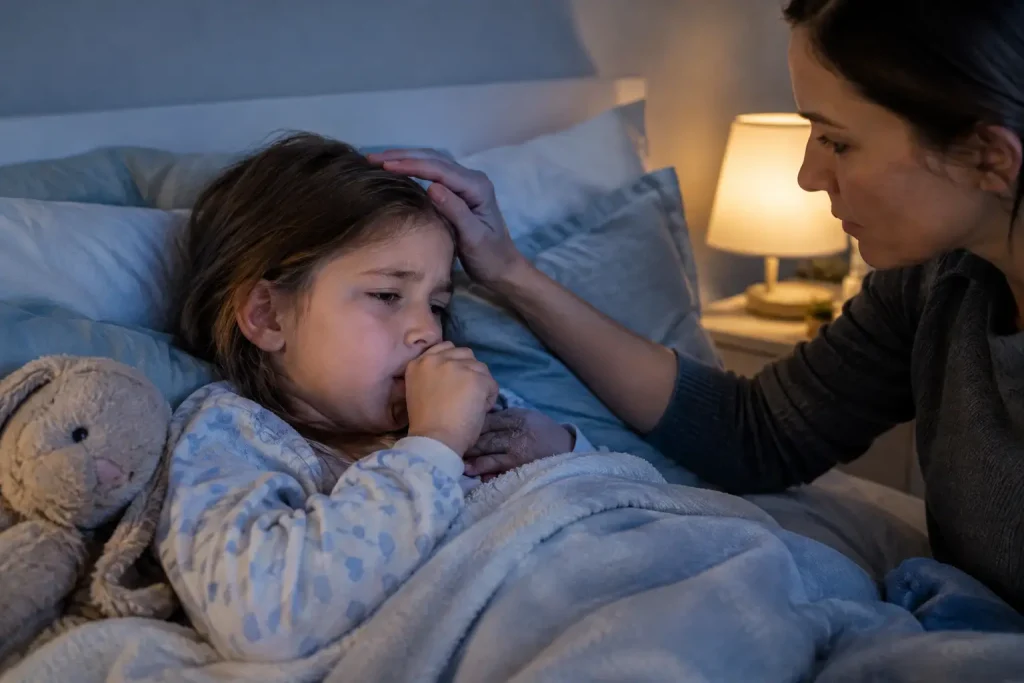
It’s 10 PM. The house is quiet, but that new cough from your child persists. For a parent, that moment can quickly become a question with no easy answer: Is this something that can wait until morning, or does my child need care now? For pediatric practices, health systems, and community-based care organizations, it represents a familiar operational gap – families need clinically credible guidance outside the hours when a traditional exam room is available.
A cough is common, but context matters. A clinician’s next steps depend on age, breathing effort, hydration, fever, underlying conditions, symptom duration, exposures, and what the child looks and sounds like in the moment. A telephone-only interaction may establish some of that context, but it cannot always support the level of assessment needed to confidently guide a family. Connected virtual care can help close that gap when it is designed around clinical workflows rather than simple video access.
When a child’s cough persists at 10 PM, uncertainty becomes the care challenge
Pediatric symptoms often escalate the practical burden of access. Parents may be deciding whether to drive a long distance to an emergency department, wait for an urgent care center to open, or try to manage concerns alone. The impact can be even greater for rural families, caregivers without reliable transportation, and families supporting children with autism or complex healthcare needs for whom an unfamiliar clinical setting can create significant distress.
For care organizations, the goal is not to make every cough a virtual visit or to substitute remote care for in-person evaluation when an in-person evaluation is necessary. The goal is to create a reliable path for timely clinical assessment, appropriate escalation, and meaningful follow-up.
That path starts with recognizing that a cough is not a diagnosis. A dry cough after a cold may require a different approach than a barking cough, a wheeze, a cough associated with fever, or symptoms in a child with asthma, cardiac disease, immunocompromise, or a history of respiratory complications. A virtual care model should give the clinician enough information to distinguish routine monitoring from a situation requiring urgent in-person assessment.
Video alone is not a virtual physical exam
Video can be valuable. It lets clinicians observe a child’s general appearance, work of breathing, alertness, skin color, and interactions with a caregiver. It can also reduce the friction of connecting a parent to a trusted care team at a stressful hour.
But video has limits. Lighting can be poor. Audio may distort respiratory sounds. A young child may not be able to describe symptoms clearly. Caregivers may not know which observations are clinically significant, particularly when they are tired and worried.
A more complete connected-care approach pairs virtual communication with clinician-directed examination tools and structured data capture. Depending on the organization’s care model and the patient’s needs, this may support remote assessment of temperature, oxygen saturation, heart rate, lung sounds, throat or ear findings, and other clinically relevant observations. The value is not in collecting more data for its own sake. It is in making data available to a licensed clinician in a form that supports a defensible, documented care decision.
For pediatric programs, this can shift a late-night interaction from an uncertain conversation to a more informed clinical encounter. The clinician can assess the child, identify concerns, document findings in the appropriate workflow, communicate a plan, and determine whether the patient can remain at home with instructions, needs next-day follow-up, or requires immediate in-person care.
The caregiver remains central to the encounter
Connected care works best when it strengthens, rather than replaces, caregiver participation. Parents and guardians know what is normal for their child. They can report changes in sleep, appetite, activity, cough pattern, medication use, and exposures that may not be apparent in a short clinical encounter.
Technology must make that participation practical. Clear instructions, age-appropriate engagement, accessible user interfaces, language support where needed, and trained staff all influence whether an assessment can be completed successfully. For families of children with sensory sensitivities or special healthcare needs, the familiar home environment can be a meaningful clinical advantage. The child may be calmer, the caregiver may be better able to participate, and the care team may gain a more representative view of the child’s baseline behavior.
Building a safe after-hours pediatric pathway
Organizations should not treat after-hours virtual cough assessments as a standalone service line. They should be part of a defined pediatric access pathway with clinical governance, escalation protocols, documentation standards, and continuity with the child’s primary care team.
A strong pathway establishes which symptoms can enter virtual triage, which conditions require immediate emergency referral, who is responsible for responding, and how the encounter is handed back to the patient’s regular care team. It also accounts for clinical variation. A healthy school-age child with a mild new cough may be appropriate for a different pathway than an infant, a child with chronic lung disease, or a child whose caregiver reports worsening symptoms.
Care teams should provide families with plain-language instructions about emergency warning signs. These may include significant trouble breathing, bluish or gray lips or face, unusual sleepiness or difficulty waking, signs of dehydration, a severe allergic reaction, or a child who appears seriously ill. These signs require urgent evaluation and should not be managed through routine virtual follow-up.
The operational design matters as much as the clinical protocol. Programs need workflows for device availability, caregiver onboarding, infection-control practices for reusable equipment, HIPAA-compliant communication, clinician training, and documentation in the electronic health record. Without these foundations, a promising technology deployment can create fragmented work instead of reducing burden.
Remote examination should lead to a clear next action
The most useful outcome of a virtual assessment is not merely a completed encounter. It is a clear, clinically appropriate next action. That may be home care guidance with return precautions, a scheduled follow-up with the pediatrician, medication review, referral to urgent care, or emergency department escalation.
This is particularly relevant for rural health clinics, federally qualified health centers, critical access hospitals, and school-based care programs. These organizations often serve patients whose options are constrained by distance, staffing shortages, transportation barriers, or limited local specialty access. A connected model can allow a broader care team to participate without requiring every family to travel for an initial assessment.
It can also improve continuity. Rather than receiving episodic advice from an unfamiliar source, families can connect with clinicians operating within an established care relationship and a shared documentation environment. That continuity supports better follow-up, more accurate medication reconciliation, and a clearer understanding of the child’s history.
Designing for clinical scale, not one-off visits
For healthcare leaders, the late-night cough scenario raises larger questions about access strategy. How many avoidable emergency visits occur because families cannot reach a clinician with enough information to make a safe decision? Which patients are most affected by after-hours gaps? Can virtual physical exams support workforce capacity without lowering the clinical standard of care?
The answers depend on program design, payer arrangements, state-specific practice requirements, staffing, and the population served. Reimbursement should be considered early, alongside care quality and workflow fit. Programs may combine virtual examination capabilities with remote patient monitoring, chronic care management, nurse triage, and care coordination when those services align with patient needs and applicable CMS or payer requirements.
Dr. Miltie’s connected-care approach is designed for this broader operational reality. By combining the N9+ virtual examination and patient monitoring system with customized pathways of care and the Circle of Care™ model, organizations can extend clinician-directed assessment into homes, schools, and community settings while maintaining a focus on care coordination and scalable deployment.
The technology is only one part of the answer. Clinical leadership must define protocols. Operations teams must make workflows usable. Caregivers must understand when and how to seek help. And organizations must measure whether the program improves access, reduces unnecessary travel, supports appropriate utilization, and helps patients receive the right level of care at the right time.
At 10 PM, a parent does not need a complicated explanation of the healthcare system. They need a trusted path forward. For care organizations, building that path means giving clinicians the ability to see, hear, assess, document, and guide – while keeping the child, caregiver, and local care team connected.
Move from information to action
See how the N9+ can fit your organization.
Explore the remote physical exam platform or request a focused demonstration.