
No Crowded Office When Kids Feel Unwell: Miltie N9+
When your kid's not feeling well, no crowded office with Dr. Miltie N9+ can support clinician-directed virtual exams, family-centered follow-up, and care.
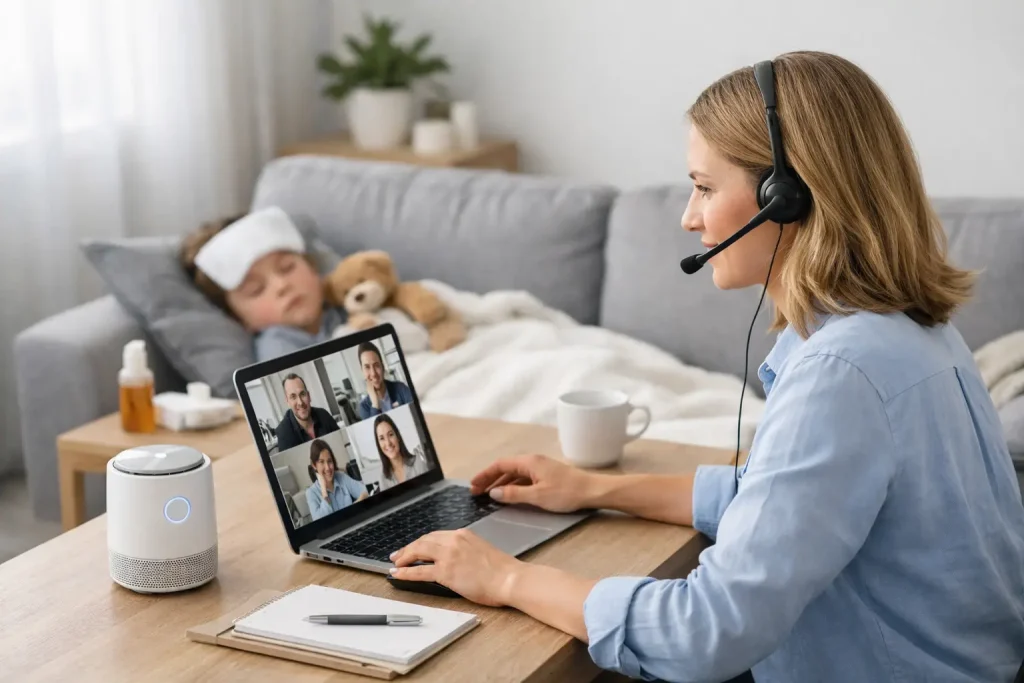
A child wakes up with a fever, a worsening cough, ear pain, or a new rash. For many families, the next step has traditionally meant arranging transportation, leaving work or school, sitting in a waiting room with other sick patients, and hoping an appointment is available. The promise behind the phrase, “when your kid’s not feeling well, no crowded office with Dr. Miltie N9+,” is not convenience alone. It is a different care model: clinician-directed assessment delivered closer to where a child feels safest.
For healthcare organizations, that model can help address a persistent access gap. Pediatric patients do not always need to travel to a clinic for an initial evaluation, a follow-up, or ongoing monitoring. When a qualified clinician can remotely guide a physical assessment and review clinically relevant findings, the care team can make better-informed decisions about what should happen next.
Why crowded-office care can be hard on children and families
A busy pediatric office can be stressful even when a child is well. For a child who is ill, in pain, sensory-sensitive, autistic, or managing a complex health condition, the environment can create additional barriers. Bright lights, unfamiliar people, long waits, noise, disrupted routines, and close contact with other symptomatic patients may intensify distress for the child and caregiver alike.
The burden is often greater in rural and underserved communities. A short appointment can require hours of driving, missed wages, unreliable transportation, and coordination with siblings or other caregivers. For a rural health clinic, federally qualified health center, critical access hospital, or community-based pediatric program, these realities affect more than patient satisfaction. They can contribute to delayed care, missed follow-up, avoidable emergency department use, and uneven continuity of care.
Virtual visits help remove distance, but video alone has limits. A clinician may be able to observe a child’s appearance, breathing effort, behavior, and caregiver concerns through a screen. Yet many clinical decisions require more than conversation and visual observation. The care team needs a way to collect reliable patient information as part of a guided virtual physical exam.
When your kid’s not feeling well, no crowded office with Dr. Miltie N9+
The Dr. Miltie N9+ is designed to extend the clinical encounter beyond the traditional exam room. It supports clinician-directed virtual examinations and remote patient monitoring by helping care teams capture and review relevant health data from distributed settings, including homes, schools, pediatric practices, and community clinics.
This matters because remote care should not force clinicians to choose between access and clinical context. With the appropriate workflow, a caregiver, trained staff member, school health professional, or community-based support person can participate in a clinician-guided assessment. The clinician remains responsible for interpreting findings, determining whether virtual care is appropriate, and directing the next step in care.
That next step may be home care with clear instructions, a scheduled follow-up, medication management, an in-person evaluation, urgent referral, or emergency services. The goal is not to replace every office visit. It is to make the right level of care available earlier and with less unnecessary disruption.
A more complete virtual interaction
A meaningful virtual care program connects the patient, caregiver, clinical team, and care setting. The N9+ helps organizations move beyond a basic video call by enabling a more informed remote interaction. That can support acute symptom assessment, chronic condition follow-up, preventive care pathways, post-discharge monitoring, and care coordination.
For pediatric populations, caregiver participation is especially valuable. Parents and guardians know what is normal for their child and can describe changes in energy, appetite, sleep, pain, behavior, or medication response. Bringing that perspective into a clinician-directed virtual assessment can improve communication while reducing the practical burden of an office visit.
For children with special healthcare needs, familiar surroundings may also support a more representative assessment. Some children communicate, regulate, and cooperate more effectively at home or in a trusted school-based setting than in an unfamiliar clinical environment. That does not eliminate the need for in-person specialty care when indicated, but it can make routine touchpoints and early escalation more accessible.
Building a pediatric virtual-care pathway that works
Technology alone does not create better access. Healthcare organizations need a defined pathway that establishes which patients and clinical scenarios are appropriate for device-enabled virtual exams, who will support the encounter, how data will be documented, and how escalation will occur.
A strong program begins with clinical governance. Pediatric leaders should define protocols for common use cases, including symptom triage, follow-up after acute illness, asthma and chronic disease monitoring, medication checks, and school-based access. Protocols should identify red flags that require immediate in-person or emergency evaluation. Remote assessment is valuable when it improves clinical decision-making, not when it delays necessary hands-on care.
Operations teams also need to plan for the family experience. Instructions should be plain-language, culturally appropriate, and available before the visit whenever possible. Families need to know who will contact them, what equipment will be used, how long the appointment may take, and what to do if the child’s condition changes. A well-designed workflow should feel supportive rather than technical.
Training is equally important. Clinicians must be comfortable directing remote physical assessments and interpreting information within the limits of virtual care. Support staff need clear responsibilities for device readiness, patient onboarding, connectivity troubleshooting, and documentation. In school and community settings, organizations should establish consent, privacy, supervision, and communication procedures that respect the caregiver’s role.
Extending clinical reach without fragmenting care
Virtual pediatric care is most effective when it strengthens the patient’s existing care relationships. Fragmented, one-off encounters can leave families repeating their story and clinicians working without adequate context. A connected-care approach should instead support continuity across primary care, specialty services, schools, home-based supports, and community health partners.
Dr. Miltie’s Circle of Care™ model reflects this operational need. The model helps organizations create customized pathways that bring the relevant people and settings into the care process while maintaining clinician oversight. For a child with recurring respiratory symptoms, for example, a primary care team may coordinate virtual follow-up with the caregiver, school health staff, and appropriate monitoring support. For a child recently discharged from a hospital, the pathway may focus on timely reassessment, medication understanding, and early identification of concerns.
This approach can also help organizations use limited workforce capacity more effectively. Rural facilities and safety-net providers often face shortages of pediatric expertise, long travel distances, and high demand for care coordination. Device-enabled virtual exams can extend clinician reach to locations where a specialist or pediatric provider cannot be physically present every day. The trade-off is that programs require intentional scheduling, staff training, dependable connectivity, and clear escalation arrangements.
Implementation must account for compliance and sustainability
Healthcare leaders evaluating virtual examination technology should consider the full operating model, not only the device. HIPAA-compliant workflows, role-based access, documentation practices, patient consent, clinical protocols, and data governance all need to be addressed. The technology must fit the organization’s electronic workflows and care standards rather than create a parallel process that staff cannot sustain.
Financial planning matters as well. Organizations should evaluate relevant CMS reimbursement pathways, payer requirements, eligible services, staffing models, and reporting needs. Remote patient monitoring, chronic care management, virtual primary care, and care coordination may each have different operational and reimbursement considerations. A reimbursement-aware deployment helps leaders align clinical goals with a model that can scale responsibly.
Success measures should go beyond visit volume. Depending on the program, organizations may monitor time to appointment, missed-visit rates, travel avoided, caregiver participation, follow-up completion, emergency department utilization, staff efficiency, and patient experience. For pediatric and special-needs populations, qualitative feedback from families can be as revealing as utilization data. If the care experience reduces distress and improves the family’s ability to act on a care plan, that is meaningful operational value.
The most useful question is not whether virtual care can replace the pediatric office. It is where a clinician-directed virtual exam can safely make access easier, follow-up more reliable, and the care experience less stressful. When organizations design around that question, children can receive more timely attention in the settings where families need it most.
Move from information to action
See how the N9+ can fit your organization.
Explore the remote physical exam platform or request a focused demonstration.