
Telehealth Success Stories in Rural Communities
Telehealth success stories in rural communities show how clinician-directed virtual exams, remote monitoring, and local workflows expand access safely.
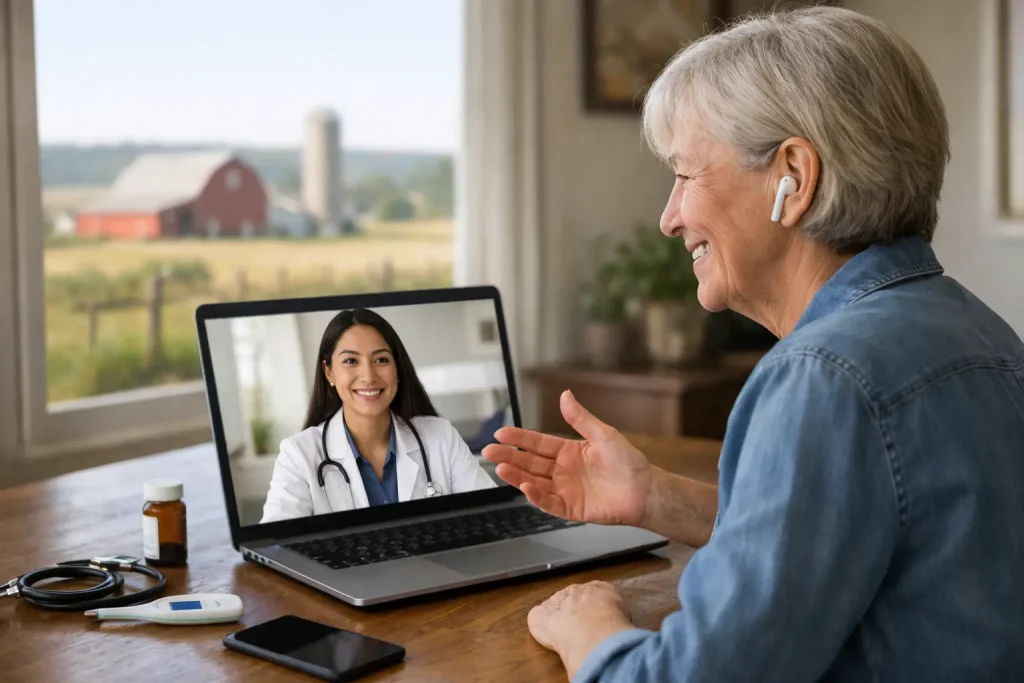
A child with complex care needs should not have to miss a day of school, spend hours in a car, and overwhelm a caregiver just to complete a follow-up visit. Yet for many rural families, that remains the practical cost of specialty and primary care access. The most meaningful telehealth success stories in rural communities are not simply about replacing a video visit. They show what happens when clinicians can gather useful physical assessment data remotely, local care teams are equipped to act, and families can participate from settings where patients are more comfortable.
For rural health clinics, critical access hospitals, federally qualified health centers, and community-based programs, telehealth can extend the reach of limited clinical capacity. Its value is highest when it strengthens the care relationships already in place rather than creating another disconnected service line.
What Rural Telehealth Success Actually Looks Like
A successful rural telehealth program is measured by more than visit volume. A completed video connection matters, but it does not necessarily mean a clinician had the information needed to make a confident care decision. Programs create greater clinical value when virtual encounters support appropriate examination, timely escalation, coordinated follow-up, and continuity between visits.
Consider a rural pediatric practice supporting a child with autism and recurring respiratory concerns. Travel to a distant specialist can disrupt routines, require a parent to miss work, and make the appointment itself difficult for the child. If the care team can conduct a clinician-directed virtual exam in the home, school, or local clinic, the family may receive guidance sooner in a familiar environment. The specialist remains involved, while the local nurse, caregiver, or trained support person becomes an active part of the care process.
That is a more useful definition of access: not merely the ability to schedule an appointment, but the ability to complete clinically appropriate care without unreasonable burden.
The local team remains essential
Virtual care does not eliminate the need for local clinicians. In many of the strongest care models, it increases their impact. A medical assistant, school nurse, community health worker, or rural clinic nurse can help capture observations, support device use, reinforce the care plan, and identify when an in-person evaluation is necessary.
This model is especially valuable where specialist coverage is limited. Rather than asking a specialist to travel regularly to every remote location, the organization can bring specialist expertise into a local setting that already knows the patient. The result can be faster consultation, stronger handoffs, and fewer unnecessary transfers.
Telehealth Success Stories in Rural Communities Share a Clinical Foundation
Rural telehealth programs often begin with a straightforward goal: reduce distance. They become sustainable when they address clinical workflow, technology readiness, patient engagement, and reimbursement together.
Virtual visits must support real clinical decisions
Video alone can be appropriate for counseling, medication follow-up, care coordination, and many behavioral health encounters. It may be insufficient when a clinician needs objective data or a closer physical assessment. The limitation is not a failure of telehealth. It is a signal that the organization needs the right level of virtual care capability for the use case.
Connected examination tools can help clinicians obtain clinically relevant information during a remote encounter, with appropriate training and protocols. A device-enabled approach can support remote assessment of vital signs and other exam findings, while the clinician retains responsibility for interpreting the information and determining next steps. This can make a virtual encounter more actionable for patients who would otherwise face long travel distances for an evaluation.
The appropriate design depends on the service line. A chronic disease program may prioritize remote patient monitoring trends and outreach workflows. A pediatric access program may need flexible virtual examination capability and caregiver participation. A post-discharge program may focus on early symptom identification and medication reconciliation. One platform should not force every care model into the same pathway.
Caregiver participation can improve follow-through
In rural care, caregivers frequently manage transportation, medications, school communication, appointments, and daily symptom observation. A virtual model that invites caregivers into the visit can turn that reality into an advantage. They can describe changes in function, demonstrate environmental factors, ask questions in real time, and receive instructions while they are in the setting where care happens.
For pediatric patients with special healthcare needs, familiar settings can also reduce the stress associated with clinical visits. That does not mean every assessment should occur remotely. Some patients require in-person examination, diagnostics, or urgent evaluation. But when telehealth is clinically appropriate, it can reduce avoidable disruption while preserving a direct connection to the treating clinician.
From Pilot to Operating Model
The difference between a promising pilot and a durable program is usually operational discipline. Rural organizations should start with a narrow, high-value use case, define how patients move through the process, and establish measures that demonstrate clinical and financial value.
A practical implementation plan should clarify four areas:
- Patient selection: Identify conditions, visit types, and populations for whom virtual care is clinically appropriate and likely to reduce access barriers.
- Clinical workflow: Define who schedules, prepares the patient, captures data, supports the virtual exam, documents findings, and manages escalation.
- Technology and training: Confirm connectivity needs, device workflows, HIPAA compliance requirements, staff competency, and patient or caregiver education.
- Financial sustainability: Align documentation, coding, payer requirements, remote patient monitoring, chronic care management, and other applicable reimbursement pathways.
These steps are not administrative extras. They determine whether a care team adopts the model and whether patients receive consistent service rather than a one-time technology demonstration.
Reimbursement awareness should shape the design early
CMS reimbursement and commercial payer policies can support several technology-enabled care models, but coverage and requirements vary by program, patient population, setting, and payer contract. Organizations should avoid building a workflow around assumed reimbursement. Instead, clinical, operations, compliance, and revenue cycle leaders should review the intended services together before launch.
The most sustainable approach begins with a legitimate care need and a defensible clinical workflow. Reimbursement can then support the work already required to monitor patients, coordinate care, and document clinician involvement. A program designed only around a billing code is less likely to earn staff trust or deliver measurable patient benefit.
The Circle of Care Matters More Than the Screen
Rural access improves when information moves reliably among the patient, caregiver, local care team, primary clinician, and specialist. A fragmented telehealth encounter can create more work if findings do not reach the people responsible for follow-up. A connected-care model should instead make the next action clear: continue monitoring, adjust treatment, schedule an in-person visit, refer to a specialist, or escalate urgently.
Dr. Miltie’s Circle of Care™ model reflects this need for coordinated participation around the patient. With the Dr. Miltie N9+, organizations can build customized pathways that support clinician-directed virtual examinations, remote patient monitoring, chronic care management, and engagement across homes, schools, community clinics, and other distributed settings. The goal is not to make care feel distant. It is to give clinicians and local teams better ways to deliver care close to where patients live.
For rural systems, this approach can also support workforce resilience. A limited pool of clinicians can focus their time on decisions that require their expertise, while trained local staff and connected workflows support preparation, data collection, education, and follow-up. The trade-off is that organizations must invest in change management. Training, role clarity, and escalation protocols are essential; technology cannot compensate for an unclear operating model.
Choosing the Right Measures of Progress
Leaders should track measures that reflect both access and care quality. Reduced miles traveled, fewer missed appointments, faster time to specialist input, and improved caregiver participation can demonstrate immediate value. Clinical measures should match the use case, such as improved monitoring adherence, timely follow-up after discharge, symptom escalation identified earlier, or better chronic condition management.
It is also useful to measure staff experience. If nurses must duplicate documentation or clinicians cannot easily access remote findings, the program may add friction despite positive patient feedback. Conversely, a well-designed workflow can reduce avoidable coordination work and help teams use scarce in-person capacity for patients who truly need it.
Rural telehealth succeeds when it is built as care delivery infrastructure, not a digital substitute for care. Start with the patient journey that is currently hardest to complete, equip the people already serving that community, and design each virtual touchpoint to lead to a clear clinical next step.
Move from information to action
See how the N9+ can fit your organization.
Explore the remote physical exam platform or request a focused demonstration.