
Remote Patient Monitoring Wearables That Work
How remote patient monitoring wearables improve access, support pediatric and rural care, and fit clinical workflows for better outcomes.
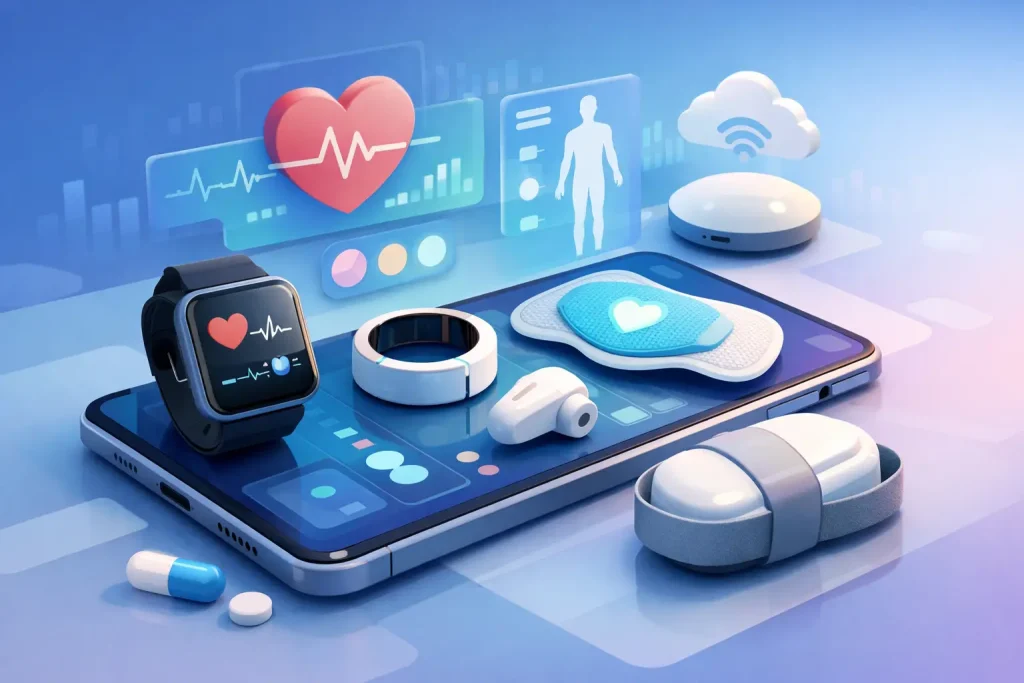
A pulse oximeter that gets used twice and left in a drawer is not a remote care strategy. For healthcare organizations building sustainable virtual programs, remote patient monitoring wearables need to do more than collect data. They need to fit clinical workflows, support reimbursement, reduce patient burden, and produce information a care team can actually act on.
That is where many RPM initiatives succeed or stall. The question is not whether wearables can generate more data. It is whether they can help clinicians extend care safely and efficiently into homes, schools, community settings, and rural environments where access gaps are real and follow-up is often harder than diagnosis.
What remote patient monitoring wearables need to solve
In practice, wearables sit at the intersection of patient engagement, chronic care management, clinical oversight, and operational design. A device may measure heart rate, oxygen saturation, blood pressure, temperature, activity, sleep, or glucose trends, but the value comes from what happens next. If readings are inconsistent, if transmission fails, or if staff cannot interpret data in context, the wearable becomes another disconnected technology layer.
For providers serving pediatric populations, rural communities, and medically underserved patients, the bar is even higher. Devices must be simple enough for caregivers to use correctly, dependable enough for distributed care models, and flexible enough to support clinician-directed follow-up. In many cases, comfort and familiarity matter just as much as technical capability. A child with sensory sensitivities or special healthcare needs may tolerate one form factor and reject another. That trade-off can determine adherence more than the spec sheet does.
Where remote patient monitoring wearables make the biggest impact
The strongest use cases tend to share one trait: they answer a specific clinical and operational need.
For chronic disease programs, wearables can help care teams identify deterioration earlier and intervene before a patient ends up in the emergency department. For post-discharge monitoring, they can support a safer transition home and reduce the risk of missed warning signs. For maternal and pediatric care, they can reduce travel demands on families who would otherwise need repeated in-person checks for relatively routine follow-up.
Rural health organizations often see another benefit. Remote monitoring can help stretch limited workforce capacity without lowering clinical oversight. When a specialist is far away, a connected care model can give local teams better visibility into patient status and help patients remain in their communities longer. That matters for access, but it also matters for equity. Travel time, missed work, childcare logistics, and transportation barriers are clinical barriers when they delay care.
In pediatrics, the value case is slightly different. Children are not simply smaller adults, and caregiver participation is central. Wearables that support remote observation in lower-stress environments can improve continuity for children who struggle with frequent clinic visits, including autistic children and those with special healthcare needs. The right model does not replace pediatric expertise. It helps bring that expertise closer to where the child is.
Why standalone wearables often underperform
A wearable on its own rarely fixes fragmented care. Many organizations learn this after purchasing devices before defining escalation protocols, staffing models, documentation pathways, or patient eligibility criteria.
The most common failure point is not hardware. It is workflow. If incoming data lands in a portal that no one checks consistently, alerts are too frequent to be useful, or readings cannot be tied to a virtual assessment, clinicians may not trust the program. Administrators may then see RPM as expensive monitoring rather than meaningful care delivery.
There is also a compliance and reimbursement layer. RPM programs need clear documentation standards, patient consent processes, device management protocols, and billing workflows aligned with applicable CMS and payer requirements. It depends on the care setting, patient population, and service mix, but organizations generally do better when RPM is implemented as part of a broader care model rather than a device rollout.
Choosing wearables for clinical relevance, not novelty
Healthcare leaders evaluating remote patient monitoring wearables should start with the clinical question, not the device catalog. What conditions are being monitored? Which metrics change care decisions? Who reviews the data? How quickly does the team need to respond? What level of patient or caregiver training is realistic?
For some programs, a simple connected device is enough. For others, wearable data needs to be paired with virtual physical assessment, symptom review, and care coordination. That distinction matters. A trend line can flag concern, but it may not explain the cause. Clinician-directed remote exams can add needed context when a number alone is not enough.
This is especially relevant in pediatric and community-based care. A child with respiratory symptoms may benefit from both monitoring and remote exam capabilities, particularly when travel to a specialty center is disruptive or impractical. The same is true in rural settings where local teams need tools that support assessment, not just passive tracking.
The operational case for connected care platforms
Organizations with the best RPM outcomes usually build around a connected-care framework. That means devices, data review, escalation, caregiver communication, and documentation are designed together.
When wearables are integrated into a larger platform, teams can standardize who gets monitored, how thresholds are set, and what happens when values change. That reduces avoidable variation. It also gives clinical leadership a clearer path to scale because the program is not dependent on ad hoc staff workarounds.
A connected approach is often more practical for safety-net providers and community-based organizations. These settings do not need technology that adds administrative burden. They need systems that support distributed care, make training manageable, and align with real reimbursement conditions. That is one reason enterprise buyers increasingly look beyond consumer-grade wearables toward solutions built for clinical use, workflow customization, and longitudinal care management.
Dr. Miltie approaches this need through a connected model that combines remote monitoring, virtual exam capability, and care coordination to help organizations extend clinician-directed care into homes, schools, clinics, and underserved community settings.
What matters most in pediatric and rural deployment
Pediatric and rural implementation introduces constraints that generic RPM strategies often miss. In pediatrics, device tolerance, caregiver confidence, and environment all shape adherence. A wearable may be technically accurate, but if it is difficult to place, intimidating for families, or poorly suited to a child with sensory challenges, utilization will drop.
Rural deployment brings different issues. Connectivity may be inconsistent. Staff may wear multiple hats. Patients may have long travel distances and fewer local specialty resources. In those settings, the right RPM program reduces unnecessary visits while preserving escalation pathways for patients who truly need in-person care.
This is why flexible deployment matters. Some organizations need school-based support, some need community clinic workflows, and some need home-based monitoring tied to chronic care management or post-acute follow-up. Wearables should fit the service model, not force the service model to adapt around the device.
Measuring success beyond device adoption
High enrollment numbers can look promising early, but they do not tell the full story. Better metrics include adherence over time, caregiver satisfaction, clinician response efficiency, reduced avoidable utilization, and whether the program expands access for patients who previously struggled to receive follow-up care.
Leadership teams should also ask whether wearable data is improving decision-making. Are clinicians identifying deterioration earlier? Are care coordinators able to intervene before issues escalate? Are families more engaged because monitoring happens in a familiar environment? Those are stronger indicators of value than shipment volume.
Financial sustainability matters too. Programs that ignore reimbursement, staffing costs, and device logistics can become difficult to maintain even when the clinical concept is sound. The most durable models balance patient-centered design with operational discipline.
The future of remote patient monitoring wearables
The next phase is not about adding more sensors for the sake of complexity. It is about making remote data more clinically meaningful and easier to use across real care pathways. That includes better integration with virtual exams, clearer escalation logic, and more tailored deployment for pediatric, chronic care, and rural health populations.
Healthcare organizations do not need wearables that simply collect more numbers. They need tools that support earlier intervention, broader access, and more confident care delivery outside the traditional exam room. When the technology is selected and deployed with that standard in mind, remote monitoring becomes less about devices and more about extending the reach of the care team.
The most effective programs start there: with the patient, the caregiver, and the clinician, all connected by a model that makes care easier to deliver and easier to receive.
Move from information to action
See how the N9+ can fit your organization.
Explore the remote physical exam platform or request a focused demonstration.