
Telehealth Support for Caregivers of Autistic Children
Supporting caregivers of children with autism through telehealth helps care teams reduce barriers, strengthen follow-up, and involve families in care sooner.
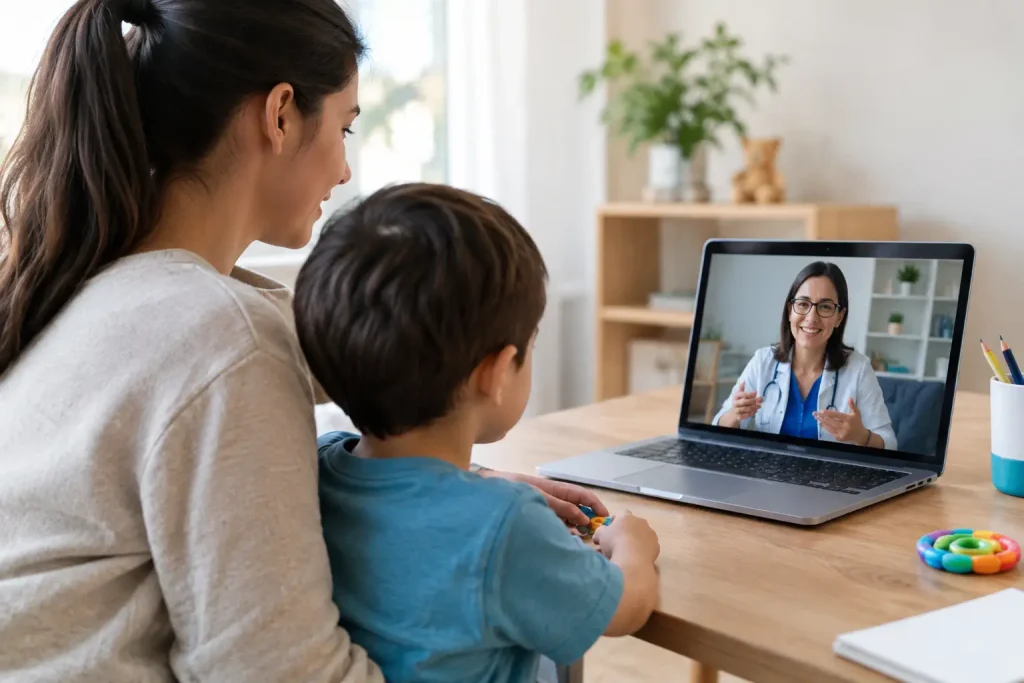
A caregiver may spend hours preparing a child for a 20-minute appointment: arranging transportation, managing changes in routine, packing preferred items, and anticipating sensory stress in an unfamiliar setting. For many families, supporting caregivers of children with autism through telehealth is not simply a matter of convenience. It is a practical way to bring clinical guidance into a setting where the child is more regulated and the caregiver can participate more fully.
For healthcare organizations, the opportunity is larger than adding video visits. Effective virtual care must support clinically appropriate assessment, caregiver education, follow-up, and coordination across the people and settings involved in a child’s care. When designed thoughtfully, telehealth can reduce access barriers while giving care teams a clearer picture of the family’s day-to-day needs.
Why caregiver support is a clinical priority
Caregivers are often the primary observers of changes in sleep, appetite, behavior, medication response, pain cues, bowel habits, and functional routines. They also carry much of the operational work of care: scheduling appointments, communicating with schools, navigating referrals, and managing treatment plans across specialists.
That responsibility can become especially demanding when in-person care requires long travel, time away from work, or repeated exposure to environments that create distress for the child. These burdens are often more acute in rural communities and underserved areas, where pediatric specialty services may be limited and families may travel significant distances for follow-up care.
A telehealth program that treats caregivers as passive appointment facilitators will miss valuable clinical context. A stronger model recognizes caregivers as essential partners in observation, decision-making, and care-plan execution. It creates space for them to describe what is changing at home, ask questions without the pressure of a waiting room, and receive guidance that fits the family’s actual routines.
Supporting caregivers of children with autism through telehealth
Virtual care works best when organizations identify which moments in the care journey are appropriate for remote delivery. Many needs can be addressed effectively through telehealth, including care coordination, medication follow-up, chronic condition check-ins, parent coaching, developmental concerns, referral triage, and review of symptoms that do not require immediate hands-on evaluation.
The home setting can also add meaningful context. A clinician may be able to observe communication patterns, daily routines, mobility, environmental triggers, or the practical challenges a caregiver faces when implementing a recommendation. This does not make virtual care a replacement for every in-person visit. It helps organizations use each care setting for what it does best.
For example, a child who becomes distressed during a clinic visit may be more willing to engage briefly from home. A caregiver may be better able to explain a recurring concern while demonstrating the equipment, food, medication routine, or environmental factor involved. When a virtual visit reveals a need for in-person examination, testing, or urgent evaluation, the care team can direct the family to the appropriate next step with greater confidence.
Build visits around the child’s regulation needs
Standard scheduling processes can unintentionally create barriers. A family may need a shorter appointment, a predictable visit agenda, an afternoon time when the child is settled, or the flexibility to let the caregiver speak while the child participates only as tolerated.
Programs should establish visit protocols that account for sensory and communication needs. Simple measures can make a material difference: sharing expectations before the visit, minimizing unnecessary transitions, allowing a familiar support person to be present, and giving families permission to pause when the child needs a break.
Care teams should also avoid assuming that camera engagement is a measure of visit quality. Some children may communicate more comfortably off camera, through a caregiver, or while focused on a preferred activity. The clinical objective is meaningful assessment and support, not forcing a conventional video-visit format.
Give caregivers a defined role without shifting clinical burden
Telehealth can increase caregiver participation, but it should not turn caregivers into untrained clinicians. Asking a caregiver to describe symptoms, position a camera, or use connected examination tools requires clear instruction and real-time support.
The distinction matters. Caregivers can provide invaluable observations and assist with clinician-directed assessments, while the licensed clinician remains responsible for interpretation, diagnosis, and medical decision-making. Clear roles protect families, strengthen clinical quality, and help staff communicate the purpose of each visit.
Pre-visit outreach can identify who will be present, what technology is available, the family’s preferred communication approach, and whether an interpreter or additional support is needed. After the visit, concise instructions should clarify what to monitor, when to contact the care team, and when symptoms require urgent or emergency evaluation.
Move beyond video-only telehealth when clinical needs require it
Video is useful for conversation, observation, and care coordination, but it has limits. Clinicians may need objective information to make decisions about respiratory symptoms, ear concerns, skin changes, vital signs, or other physical findings. When a child’s needs call for more complete remote assessment, organizations need a device-enabled virtual examination workflow rather than a video platform alone.
Connected tools can allow clinicians to direct portions of an examination remotely and capture clinically relevant data within a structured workflow. The Dr. Miltie N9+ supports this type of clinician-directed virtual examination and patient monitoring, helping organizations extend assessment capabilities into homes, schools, community clinics, and other settings where families already receive support.
Implementation should be guided by clinical appropriateness. Some visits will still require in-person assessment, particularly when symptoms are urgent, examination quality is insufficient, or the clinician needs diagnostic services that cannot be provided remotely. A mature program makes these escalation pathways visible to caregivers and staff from the beginning.
Design a Circle of Care around the family
Children with autism may receive care across pediatric practices, behavioral health providers, developmental specialists, schools, therapy programs, and community organizations. Caregivers often become the default connector among these groups, repeating histories and carrying information from one setting to another.
A coordinated telehealth strategy can reduce that fragmentation. Dr. Miltie’s Circle of Care™ model supports a connected approach in which clinicians, caregivers, and authorized care partners can participate in customized pathways of care. For a pediatric practice or community health organization, this may mean using virtual follow-up after an acute visit, coordinating chronic care management, or bringing a school-based or community-based support setting into the care process when appropriate.
The operational goal is not more touchpoints for their own sake. It is better-timed touchpoints, with the right information available to the right member of the care team. That can help reduce duplicate outreach, clarify responsibility, and give caregivers a more consistent experience.
Make adoption practical for families and staff
The strongest telehealth model will fail if it assumes every caregiver has reliable broadband, a private place for appointments, digital confidence, or time to troubleshoot devices. Equity-focused programs plan for those realities rather than treating them as exceptions.
Organizations should assess connectivity and technology readiness early, offer simple onboarding, and provide a clear support channel when families encounter problems. Community health centers, rural health clinics, and school-based programs may also consider supported access points where trained staff can assist with a virtual visit or clinician-directed exam.
Staff workflows need equal attention. Clinical leaders should define which visit types are eligible, who prepares families, how data are documented, how findings move into the record, and how follow-up is assigned. HIPAA-compliant processes, consent practices, training, and reimbursement-aware deployment are foundational requirements, not afterthoughts.
Program measurement should look beyond completed visit volume. Useful indicators include appointment access, no-show patterns, travel avoided, caregiver satisfaction, time to follow-up, escalation rates, clinician adoption, and whether patients who previously struggled to attend care are being reached. Results will vary by population and service line, so organizations should use pilot data to refine workflows before scaling.
Start with a focused pediatric use case
Healthcare organizations do not need to virtualize every pediatric interaction at once. A focused use case is often the most reliable starting point: post-visit follow-up for families traveling long distances, medication monitoring, care coordination for children with complex needs, or virtual assessment support through a community setting.
Engage caregivers during program design, not only after launch. Their feedback can reveal avoidable friction in scheduling, communication, technology setup, and visit flow that operational metrics alone may not show. It can also identify what families value most: less travel, more predictable care, better access to familiar clinicians, or simply the ability to raise a concern before it becomes a crisis.
Caregivers should never have to choose between a child’s ability to tolerate an appointment and a child’s ability to receive timely care. Thoughtful telehealth gives care organizations another clinically grounded way to meet families where they are, while keeping the caregiver connected to a care team that can act on what they see every day.
Move from information to action
See how the N9+ can fit your organization.
Explore the remote physical exam platform or request a focused demonstration.