
Dr. Miltie N9+ vs. RPM: What Care Teams Need
Compare Dr. Miltie N9+ vs. RPM to choose virtual exam and monitoring workflows that improve access, support care teams, and fit reimbursement goals well.
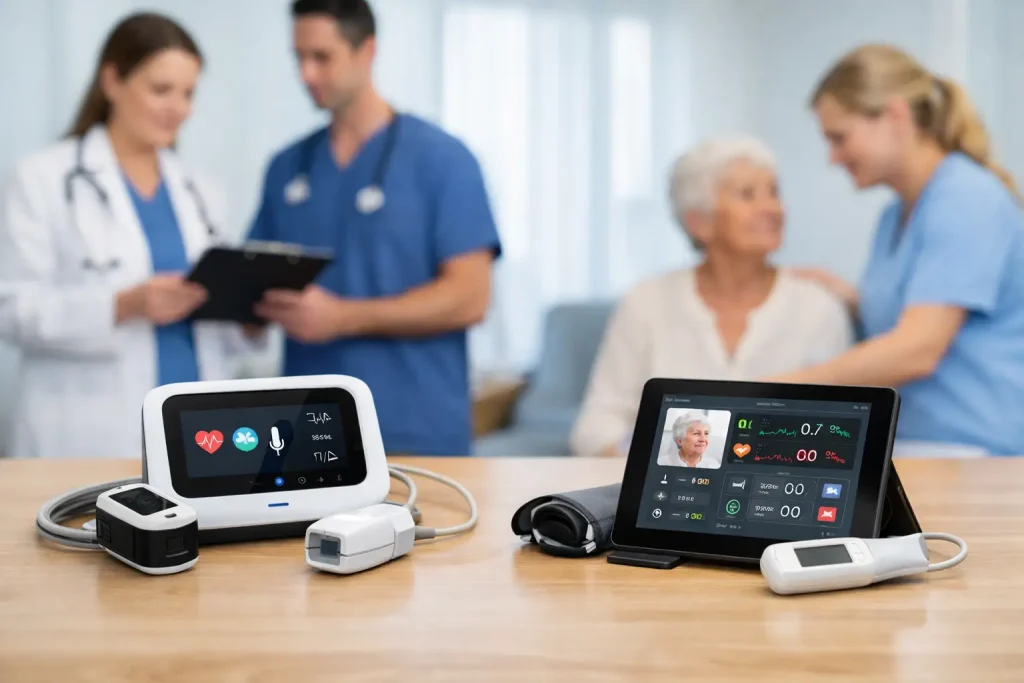
A patient’s oxygen saturation, weight, or blood pressure can tell a care team that follow-up is needed. It cannot always tell a clinician why a child is breathing differently, whether an ear appears inflamed, or whether a caregiver is concerned about a new symptom. That distinction matters when organizations compare Dr. Miltie N9+ vs. RPM. The N9+ and remote patient monitoring are not interchangeable solutions. They address different clinical questions, and they can be more effective when designed together.
For hospitals, pediatric practices, rural health clinics, federally qualified health centers, and community-based care organizations, the practical question is not simply which technology to buy. It is which model enables clinicians to deliver the right level of care in the right setting, while supporting workflow, patient engagement, documentation, and financially sustainable operations.
Dr. Miltie N9+ vs. RPM: The Core Difference
Remote patient monitoring, or RPM, is a care delivery model built around collecting and reviewing physiologic data outside the traditional care setting. Depending on the program, patients may use connected devices to transmit information such as blood pressure, blood glucose, pulse oximetry, weight, or other relevant measurements. Care teams establish enrollment processes, review protocols, escalation pathways, patient communication practices, and documentation workflows.
The Dr. Miltie N9+ is a mobile wireless virtual examination and patient monitoring system. Its role extends beyond the ongoing collection of a single set of vital signs. It helps clinicians conduct a more clinically meaningful remote interaction by supporting virtual physical assessments and capturing relevant patient data when an in-person visit is impractical, burdensome, or unnecessary.
In plain terms, RPM helps answer, “What is changing over time?” A device-enabled virtual exam can help answer, “What is happening with this patient now?” Both questions matter. A well-designed connected-care strategy recognizes that trend data and clinical observation serve different purposes.
RPM Is a Program, Not Just a Connected Device
Organizations sometimes evaluate RPM as though it were a simple device deployment. In reality, the device is only one part of a functioning RPM program. The program also requires patient selection criteria, consent and enrollment workflows, clinical thresholds, staffing responsibilities, follow-up protocols, data review processes, and a clear approach to reimbursement and documentation.
RPM can be particularly valuable for chronic disease management, post-discharge follow-up, preventive interventions, and patients who benefit from frequent measurement between appointments. A patient with hypertension, heart failure, diabetes, or pulmonary disease may need ongoing monitoring that allows a care team to identify concerning patterns early. The benefit is not the data volume. The benefit is timely clinical action when the data indicates that action is needed.
That model has limits. A concerning reading can prompt outreach, but it may not give a clinician enough information to make a confident assessment remotely. If the next step is automatically an emergency department referral or a long-distance clinic visit, the organization may miss an opportunity to extend appropriate care closer to home.
Where the N9+ Adds Clinical Context
The Dr. Miltie N9+ is designed for organizations that need to bring clinician-directed assessment into homes, schools, pediatric practices, community clinics, and other distributed sites of care. Rather than treating telehealth as a video encounter alone, the model supports a more complete virtual physical exam and a stronger connection between the clinician, the patient, and the local caregiver or facilitator.
This distinction is especially relevant in pediatrics. A parent may recognize that a child is not acting like themselves but struggle to describe symptoms in clinical terms. Children with autism or special healthcare needs may also experience substantial stress when travel, unfamiliar environments, crowded waiting rooms, and disrupted routines are required for every follow-up concern. When appropriate clinical tools and a trained support person are available in a familiar setting, the virtual encounter can be more accessible for the child and more informative for the clinician.
For rural and underserved communities, the same principle applies. A patient may live hours from a specialist or face transportation, work, caregiving, and weather-related barriers that make routine follow-up difficult. Remote examination capability does not replace every in-person evaluation. It can, however, help organizations reserve travel and clinic capacity for the situations that truly require them.
Choosing the Right Model by Use Case
The best choice depends on the care pathway, patient population, and operational objective. RPM may be the primary need when an organization is managing a defined chronic condition and needs reliable longitudinal data, regular outreach, and early intervention. This is often the case when care teams already know what they are tracking and have established thresholds for response.
A device-enabled virtual exam may be the stronger starting point when clinicians need to assess symptoms, support episodic follow-up, extend primary care into community settings, or make a more informed decision about the next level of care. It can be particularly useful where access barriers make every in-person assessment costly for patients and operationally difficult for providers.
Many organizations will benefit from a combined approach. RPM can surface a change in condition, while a virtual examination can provide the context needed to determine whether the patient needs medication adjustment, closer follow-up, an in-person appointment, or urgent escalation. This is not technology for technology’s sake. It is a way to build a more responsive clinical pathway.
Pediatric and School-Based Care
In pediatric and school-based settings, care teams often need more than passive data capture. They need a way to involve caregivers, school personnel, and clinicians without making families choose between missed work, missed school, and delayed care. The N9+ can support clinician-directed virtual assessments when a child develops symptoms or needs follow-up in a setting that feels more manageable.
RPM may still have a role for pediatric patients with specific chronic monitoring needs. But program design should account for caregiver capacity, device adherence, connectivity, clinical appropriateness, and the child’s comfort with repeated measurements. Pediatric engagement is not a minor implementation detail. It directly affects data quality and continuity of care.
Rural, Safety-Net, and Community Care
Rural health clinics, critical access hospitals, FQHCs, and community health centers often operate with constrained specialist access and limited workforce capacity. For these organizations, the comparison between Dr. Miltie N9+ and RPM should begin with an access analysis: Which patients are delayed, traveling too far, missing follow-up, or using higher-cost settings because timely assessment is unavailable?
RPM can create a structured pathway for high-risk patients who require ongoing observation. The N9+ can help extend clinical reach for patients who need an assessment at a particular moment. Together, these capabilities can support better care coordination across primary care, specialty care, home-based services, and community settings.
Implementation Questions Leaders Should Ask
Technology selection should follow care model design, not the other way around. Before launching RPM, virtual examination, or a blended program, clinical and operational leaders should clarify who will be served, which clinical decisions the model will support, and how work will move through the care team.
Start with patient eligibility. Identify conditions, acuity levels, care gaps, and access barriers that make remote services clinically appropriate. Then define the workflow from enrollment through follow-up. Who trains the patient or caregiver? Who reviews incoming information? What triggers clinician involvement? How are urgent concerns escalated? Where is the encounter documented?
Reimbursement planning deserves the same attention. CMS reimbursement requirements and payer policies can vary by service, setting, patient status, and documentation practices. Organizations should validate current guidance, establish compliant workflows, and avoid building a program around assumed reimbursement. A reimbursement-aware model considers both the potential revenue pathway and the staffing, device logistics, training, and care coordination required to deliver meaningful services.
Privacy and security also belong in the design phase. Connected-care programs should support HIPAA-compliant operations, appropriate access controls, clear patient communication, and reliable data governance. Clinical leaders need confidence that information can be used safely within existing care delivery processes, not held apart in an isolated technology workflow.
The Value Is in the Care Pathway
A false choice between remote patient monitoring and virtual examination can lead organizations to underbuild their programs. RPM is highly effective when longitudinal data will change care. Virtual examination is highly effective when clinicians need actionable context beyond video and self-reported symptoms. Neither should be evaluated only by device features.
Dr. Miltie approaches connected care through a Circle of Care™ model that brings patients, caregivers, local support staff, and remote clinicians into a more coordinated pathway. For organizations serving children, rural communities, and patients with complex access needs, that coordination can make the difference between a remote service that exists and a remote service that patients can actually use.
The most useful next step is to map one high-friction patient journey – from the first concern to clinical follow-up – and identify where monitoring data, virtual assessment, caregiver participation, and in-person care each add value. That is where a connected-care strategy becomes practical for patients and sustainable for the organization.
Move from information to action
See how the N9+ can fit your organization.
Explore the remote physical exam platform or request a focused demonstration.