
How Telehealth Supports Children With Autism
Learn how telehealth supports children with autism through lower-stress visits, remote exams, caregiver participation, and coordinated follow-up care today.
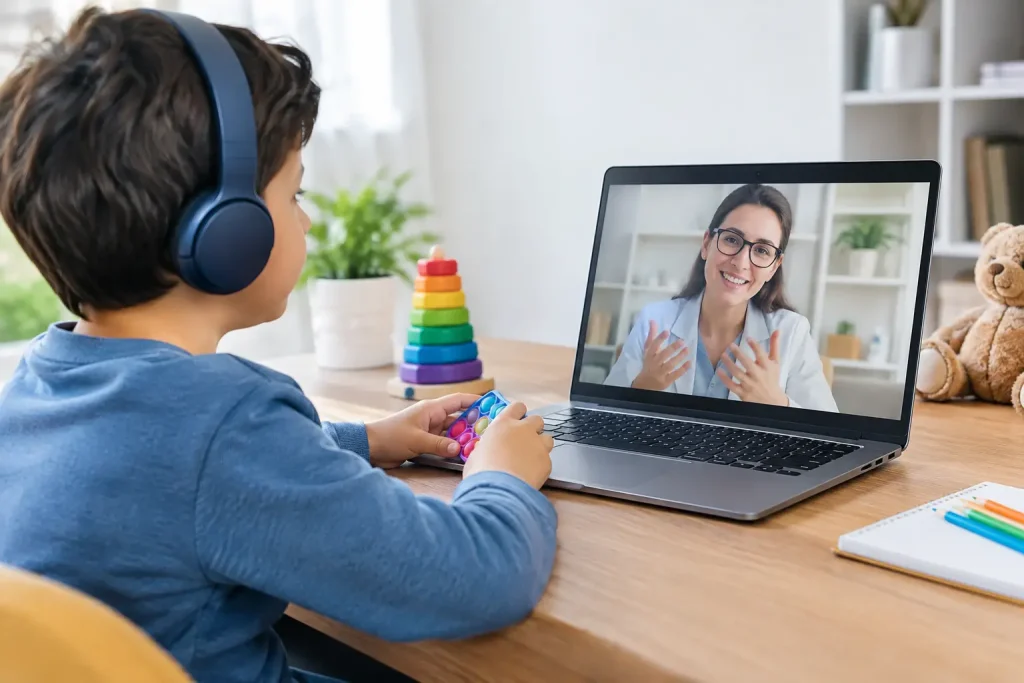
A child who becomes distressed in a crowded waiting room may arrive at a virtual appointment calmer, more regulated, and better able to participate. That difference can change the quality of information a clinician receives. Understanding how telehealth supports children with autism starts with recognizing that access is not only about whether an appointment is available. It is also about whether the care setting, timing, communication approach, and follow-up process work for the child and family.
For pediatric practices, community health centers, rural clinics, and health systems, telehealth can create a more flexible pathway for appropriate autism-related and general pediatric care. It can reduce avoidable travel, bring caregivers more fully into the visit, and extend clinician reach into homes, schools, and community settings. Its value is greatest when it is designed as part of a coordinated care model rather than treated as a video call alone.
How Telehealth Supports Children With Autism in Practice
Autistic children have varied communication styles, sensory needs, health conditions, and support requirements. A virtual care program should not assume one model fits every patient. Instead, it should give care teams options to match the visit to the clinical need and the family’s circumstances.
For some children, a familiar environment can reduce sensory overload associated with transportation, unfamiliar rooms, bright lights, long waits, or unexpected transitions. Caregivers can prepare the child using familiar routines, visual schedules, preferred communication tools, or a brief practice call. A clinician may also observe behaviors, sleep routines, feeding concerns, mobility, medication effects, or environmental triggers in context that would be difficult to see in a conventional exam room.
Telehealth can be particularly useful for follow-up visits, care coordination, medication check-ins, behavioral health support, parent coaching, chronic condition monitoring, and triage of new concerns. It can also help organizations maintain continuity when a family faces distance, transportation barriers, missed work, weather disruptions, or limited availability of pediatric specialists.
That said, virtual care is not appropriate for every concern. A child with urgent symptoms, a need for hands-on assessment, a diagnostic procedure, or a condition requiring in-person evaluation should receive care in the setting that supports safe clinical decision-making. The operational goal is not to replace in-person pediatrics. It is to use virtual and in-person services together, with clear escalation pathways.
A Lower-Stress Setting Can Improve Clinical Engagement
The home, school, or community clinic can offer valuable clinical context. When a child is comfortable enough to communicate or engage in a preferred activity, clinicians may gain a more representative view of function and daily routines. Caregivers can show the clinician relevant items, such as medication packaging, adaptive equipment, foods connected to feeding concerns, skin changes, or the home setup affecting sleep and safety.
This setting can also support more productive caregiver conversations. Rather than trying to cover every concern during a rushed office visit, families may have an opportunity to discuss changes in behavior, treatment adherence, constipation, sleep, anxiety, nutrition, or challenges coordinating services. For families of children with complex needs, these details are often central to the care plan.
Clinical teams should still make accommodations intentionally. Offer a predictable appointment window when possible, explain what will happen before the visit, allow extra time for communication, and ask the caregiver about sensory or behavioral supports that help. A successful virtual visit may not look like a traditional visit. The child may move around, avoid eye contact, use an augmentative communication device, or participate only briefly. Care teams should define success by whether they obtained the information needed to make a safe, useful clinical decision.
Connected Virtual Exams Extend What Clinicians Can Assess
Video alone has limits. It can support observation and conversation, but it may not provide the clinical data needed for a complete assessment. Device-enabled telehealth can help close that gap by enabling clinician-directed virtual physical exams and the capture of relevant patient data from a remote location.
Depending on the care model and the available equipment, a trained caregiver, school nurse, medical assistant, or community health worker can support the clinician in obtaining vital signs and conducting portions of an exam under real-time guidance. This approach can be especially meaningful for rural health clinics, federally qualified health centers, and school-based programs that need to extend pediatric capacity without asking every family to travel long distances.
The Dr. Miltie N9+ is designed to support this type of connected care by giving clinicians tools for remote examination and patient monitoring beyond the traditional exam room. When paired with appropriate workflows, training, documentation, and clinical governance, technology can help organizations bring more clinically meaningful care closer to children and families.
The distinction matters. A virtual care program should be built around the clinical question: What must the clinician see, hear, measure, or monitor to make a safe decision? For some visits, secure video may be sufficient. For others, connected exam tools, local clinical support, or an in-person appointment will be necessary.
Caregiver Participation Becomes a Clinical Asset
Caregivers are often the most consistent observers of a child’s health, routines, communication changes, and response to treatment. Telehealth can make it easier for multiple caregivers to join when appropriate, including a parent at home and another family member who manages medication or transportation. It can also enable participation by care coordinators, behavioral health professionals, primary care teams, and specialists when consent and privacy requirements are met.
This broader participation can reduce fragmented care. A family should not have to repeat the same history across disconnected appointments when a coordinated team can align on goals, responsibilities, and next steps. Dr. Miltie’s Circle of Care™ model reflects this principle by supporting communication and care delivery across the people and settings involved in a patient’s health.
For organizations, the operational work is just as important as the technology. Teams need processes for scheduling, informed consent, identity verification, HIPAA-compliant communication, interpreter access, documentation, referral management, and escalation. They also need to identify who will assist the child during the visit and what that person needs to know before the clinician connects.
Telehealth Can Strengthen Access in Rural and Underserved Communities
Specialty pediatric services are often concentrated in urban areas, while families in rural and underserved communities may travel hours for appointments. Travel can be expensive, disruptive to school and work, and particularly difficult for children who struggle with changes in routine. Telehealth can reduce the number of trips required for appropriate follow-up care while helping local organizations keep families connected to a broader clinical network.
In a community clinic or school-based setting, a supported virtual visit may give families access to a clinician while retaining the assistance of trusted local staff. This hybrid approach can be valuable when a home connection is unreliable, when the family prefers in-person support, or when clinical equipment is needed for the visit.
Access must also include digital equity. Organizations should assess whether families have adequate broadband, compatible devices, private space, language support, and confidence using the platform. A telehealth offering that assumes every family can connect independently may unintentionally widen gaps. Flexible deployment models, technical support, community access points, and alternatives to video-only care are practical parts of an equitable program.
Build Autism-Informed Telehealth Pathways, Not One-Off Visits
A scalable pediatric telehealth service begins with defined use cases. Clinical leaders can identify which visit types are suitable for virtual delivery, what information each visit requires, and when in-person escalation is mandatory. From there, teams can develop autism-informed workflows that respect individual needs while remaining efficient and compliant.
A strong pathway addresses four operational questions: how the family is prepared; how the visit is supported; how clinical data is collected; and how follow-up is closed. Preparation may include a plain-language appointment guide and sensory accommodations. Support may include a caregiver or trained staff member at the child’s location. Data collection may involve connected examination tools or remote patient monitoring when clinically appropriate. Closing the loop means documenting the plan, arranging referrals, communicating with the primary care team, and confirming that the family understands next steps.
Organizations should also measure what matters. No-show rates, completed follow-ups, travel avoided, time to appointment, caregiver satisfaction, clinical escalation patterns, and documentation quality can reveal whether the program is improving access without compromising care. Reimbursement-aware implementation is essential as well. Services, documentation requirements, payer policies, staffing models, and applicable CMS rules should be evaluated before expansion.
Telehealth is most effective when it gives clinicians more ways to deliver the right level of care, in the right setting, at the right time. For children with autism and their families, that can mean fewer unnecessary disruptions and a care experience designed around real life rather than the limits of a waiting room.
Move from information to action
See how the N9+ can fit your organization.
Explore the remote physical exam platform or request a focused demonstration.