
Dr. Miltie N9+ vs. Teladoc: What Care Teams Need
Compare Dr. Miltie N9+ vs. Teladoc for virtual exams, pediatric access, rural workflows, and connected care planning for distributed care teams nationwide.
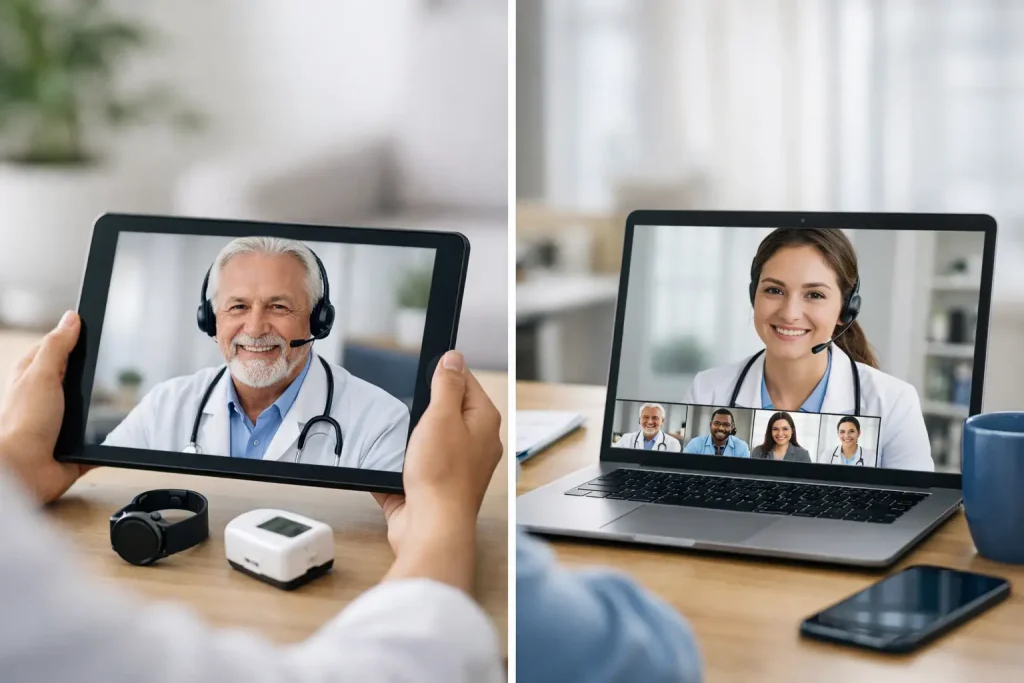
A virtual visit can solve the problem of distance, but it does not always solve the problem of clinical visibility. That distinction sits at the center of the Dr. Miltie N9+ vs. Teladoc discussion. Healthcare organizations should not treat this as a simple product comparison. The two solutions can address different layers of virtual care delivery, and the right decision depends on whether the immediate need is access to a virtual encounter, a clinician-directed remote physical assessment, or an operational model that connects patients, caregivers, and care teams over time.
For pediatric practices, rural health clinics, federally qualified health centers, critical access hospitals, and community-based providers, the question is especially practical: Can a remote-care strategy help clinicians make informed decisions without requiring every patient to travel to a clinic or emergency department? The answer often depends on the clinical data available during the visit, the workflow around that data, and the organization’s ability to support patients in the settings where they live, learn, and receive support.
Dr. Miltie N9+ vs. Teladoc: Start With the Care Model
Teladoc is widely recognized as a virtual care company offering telehealth services and programs across a range of care needs. Depending on the arrangement and service line, organizations and members may use Teladoc for virtual visits, access to clinicians, and broader digital health support. This type of model may be a strong fit when an organization is focused on making virtual consultations available at scale or expanding convenient access to appropriate care.
The Dr. Miltie N9+ is a mobile wireless virtual examination and patient monitoring system designed to extend the clinician’s ability to assess a patient beyond a video conversation. It supports clinician-directed virtual exams and the capture of clinically relevant patient data in settings such as homes, schools, pediatric practices, rural clinics, and community sites. It is part of a connected-care approach built for provider organizations that want to deliver and coordinate care through their own clinical teams and workflows.
That difference matters. A telehealth visit may be sufficient for medication follow-up, behavioral health, triage, education, or a straightforward concern where visual observation and patient history provide enough information. A remote assessment may require more. When a clinician needs objective data to evaluate a symptom, monitor a chronic condition, determine the next level of care, or guide a caregiver through an examination, a device-enabled model can add meaningful clinical context.
Virtual Visits and Virtual Physical Exams Are Not the Same
Video is valuable, particularly when it removes access barriers. It can help a parent speak with a pediatric clinician from home, allow a rural patient to consult a specialist, or create a faster path to triage. Yet video alone has limits. Camera quality, lighting, patient positioning, caregiver confidence, and the absence of clinical measurements can narrow what a clinician can safely assess.
A virtual physical exam is designed to close more of that gap. With the N9+, care teams can conduct remote, clinician-directed assessments while gathering relevant patient information that supports clinical decision-making. The goal is not to suggest that every in-person examination can or should be replaced. Some patients need hands-on care, diagnostic testing, urgent intervention, or a direct examination by a local clinician. The goal is to make more encounters clinically useful before travel, between visits, or when access is constrained.
For an organization comparing Dr. Miltie N9+ vs. Teladoc, this is the pivotal question: Is the care challenge primarily one of appointment access, or is it a need to bring elements of the exam and monitoring process into a remote setting? The answer may differ by service line, patient population, and acuity level.
Why Pediatric and Special Needs Care Changes the Evaluation
Children are not simply smaller adult telehealth patients. Pediatric care frequently relies on caregiver participation, observation over time, comfort with the care setting, and communication adapted to the child’s developmental needs. These factors can be even more significant for autistic children and pediatric patients with special healthcare needs.
For some families, a virtual visit from a familiar environment can reduce anxiety and avoid a disruptive trip to a busy clinic. For caregivers, it can make participation easier and provide a clearer role in the care process. For clinicians, the ability to guide an assessment and review relevant data can create a more complete picture than video alone.
This does not mean remote care is the right choice for every pediatric encounter. A child with concerning symptoms may need immediate in-person evaluation, and organizations need protocols that clearly identify escalation pathways. But for follow-up care, chronic condition monitoring, care coordination, preventive outreach, and selected acute concerns, a connected virtual exam model can help teams preserve continuity while reducing avoidable burdens on families.
The N9+ is particularly relevant when a health system or pediatric organization wants to equip its own clinicians and partner locations with a repeatable approach to remote assessment. A broad telehealth service may offer convenient virtual access, while a device-enabled system can help the organization deepen its own clinical reach in homes, schools, or distributed care sites.
Rural and Community Health Workflows Require More Than Technology
Rural and safety-net organizations must assess technology through an operational lens. The question is not merely whether a platform can host a virtual visit. Leaders must consider staffing, training, connectivity, patient support, documentation, care coordination, reimbursement, and the ability to scale across widely distributed locations.
In a rural health clinic or community health center, the N9+ can support a model in which staff, caregivers, or trained partners help facilitate a clinician-directed remote exam. This may allow organizations to extend services to satellite sites, school-based programs, community clinics, and homes while keeping the patient connected to an established care team. It can also create more options when workforce capacity or specialist access is limited.
Teladoc may be considered where an organization wants to offer virtual care access through an external service model or complement its existing care pathways. The trade-off is that a virtual-care vendor’s clinician network, care model, and integration approach may not be the same as enabling the organization’s own providers to perform a more data-informed remote assessment. Neither approach is universally better. The critical issue is ownership of the clinical relationship, the desired level of examination capability, and the workflow required after the encounter.
Assessing Implementation, Reimbursement, and Scale
A credible virtual care program requires more than a device or a video interface. Healthcare leaders should evaluate implementation support, HIPAA compliance, staff adoption, clinical governance, patient onboarding, and how data will be used inside existing care processes. A program that works in a pilot can still struggle if teams lack clear roles or if patients are unsure when and how to use the service.
Organizations should also evaluate reimbursement early. CMS reimbursement pathways and payer policies can vary by service, setting, provider type, patient eligibility, and documentation requirements. Remote patient monitoring, chronic care management, virtual visits, and other technology-enabled services each carry distinct operational and billing considerations. Reimbursement-aware deployment helps organizations design workflows that are clinically appropriate and financially sustainable rather than adding a disconnected technology layer.
Dr. Miltie approaches this challenge through connected devices, SaaS-enabled care coordination, customizable pathways of care, training, and its Circle of Care™ model. The emphasis is on helping organizations organize participation among clinicians, patients, caregivers, and community partners around a shared care process. For a pediatric patient, that circle may include a parent, school staff, a primary care clinician, and a specialty team. For a rural adult managing chronic disease, it may include a local clinic, remote specialist, home health staff, and family caregiver.
Questions Decision-Makers Should Ask
Before selecting a solution, care leaders should define the clinical encounters they are trying to improve. Are they seeking after-hours access, specialty coverage, chronic condition follow-up, post-discharge support, school-based services, or remote pediatric assessment? These use cases require different combinations of video, connected examination capability, monitoring, staffing, and escalation protocols.
They should also ask whether the organization wants to deliver care through its own clinicians, supplement capacity through external virtual-care services, or use both approaches. A hybrid strategy can make sense. For example, a health system may use broad virtual access for selected needs while deploying clinician-directed virtual exam capabilities in high-priority pediatric, rural, or community health programs.
Finally, leaders should measure success beyond visit volume. Useful indicators include travel avoided, time to appointment, caregiver participation, follow-up completion, clinician confidence in remote decisions, emergency department diversion when clinically appropriate, patient experience, and continuity of care. The strongest programs make access easier without lowering the standard for clinical judgment.
The most productive comparison is not about choosing video over devices or one vendor category over another. It is about designing a care model that gives clinicians the information, workflows, and patient connection needed to bring high-quality care closer to the communities they serve.
Move from information to action
See how the N9+ can fit your organization.
Explore the remote physical exam platform or request a focused demonstration.