
Telehealth With Exams for CAHS Dr. Miltie N9+
Telehealth with exams for CAHS Dr. Miltie N9+ helps care organizations extend clinician-directed virtual exams, monitoring, and coordinated care delivery.
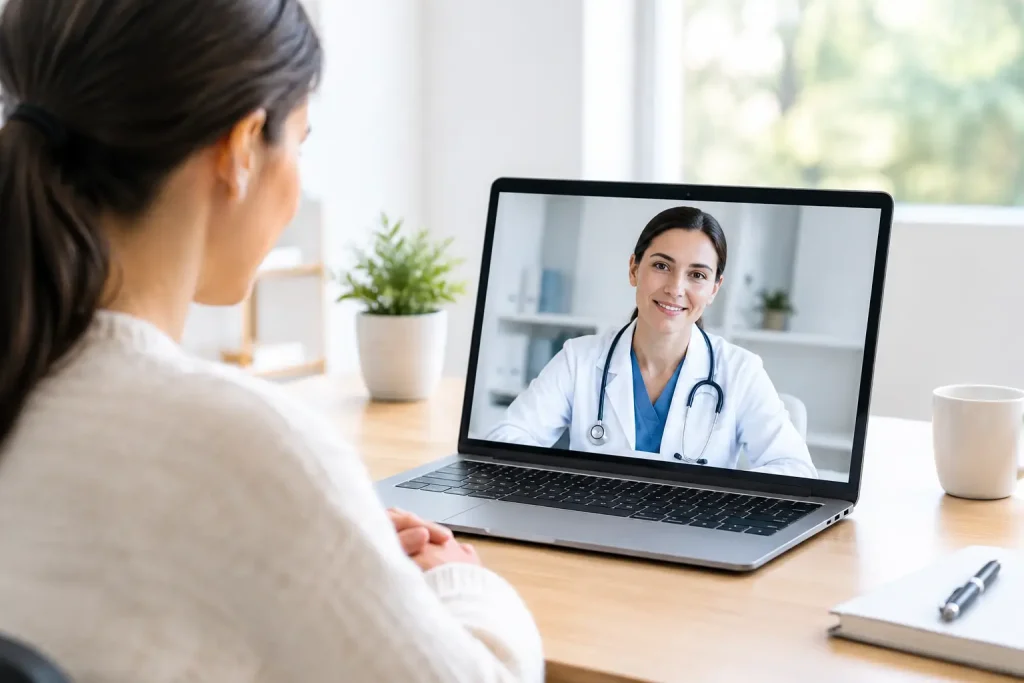
A video visit can establish connection, review symptoms, and support counseling. It cannot always give a clinician the clinical information needed to make a confident decision. The phrase telehealth with exams for cahs dr. miltie n9+ reflects a more capable model: virtual care that combines clinician direction, remote physical assessment, patient data capture, and coordinated follow-up.
For organizations serving children, rural communities, and patients with complex needs, that distinction matters. A virtual visit without clinically relevant exam data may create another touchpoint, but it may not prevent a delayed diagnosis, an unnecessary trip, or a repeat visit. Device-enabled telehealth can help extend the clinical encounter beyond the exam room while keeping the provider, care team, family, and patient connected.
Why Telehealth With Exams for CAHS Requires More Than Video
Telehealth programs often begin with access. Patients can meet with clinicians without long drives, missed work, or scheduling barriers. That is valuable, particularly in areas with limited specialist availability. Yet clinical leaders quickly encounter the limits of video-only care when a provider needs more than visual observation and patient-reported symptoms.
A meaningful virtual physical exam requires an intentional workflow. The right person needs to be present with the patient. Connected tools must be available when they are needed. The clinician must be able to guide the assessment, interpret the information, document findings, and determine the next step in care. Technology should support that clinical process rather than add a disconnected layer of work.
This is especially relevant for CAHS programs and other care organizations building services across schools, homes, community clinics, and distributed care sites. The goal is not to replace every in-person evaluation. The goal is to determine which assessments can be delivered safely and effectively closer to the patient, and which findings should trigger escalation to an in-person setting.
The Dr. Miltie N9+ Supports Clinician-Directed Virtual Exams
The Dr. Miltie N9+ is designed as a mobile, wireless virtual examination and patient monitoring system. It helps clinicians conduct remote assessments by bringing clinically relevant data into the virtual encounter. Instead of asking families or local staff to describe a concern without support, the provider can direct the assessment in real time and make decisions using information captured through connected examination tools.
The operating model is important. A remote clinician remains responsible for clinical judgment, while a caregiver, school nurse, medical assistant, community health worker, or other authorized on-site participant can help facilitate the examination. This creates a practical bridge between the patient’s location and the clinician’s expertise.
The exact workflow should reflect the organization’s clinical protocols, staffing model, patient population, and scope of services. Some programs may use the N9+ for scheduled primary care follow-ups or specialty consultations. Others may use it to support triage, chronic disease monitoring, post-discharge follow-up, or care coordination across multiple sites. The technology is most effective when it is tied to a clearly defined care pathway rather than deployed as a stand-alone device.
A better experience for pediatric patients and caregivers
For many children, the familiar setting can be as meaningful as the technology. A remote exam conducted at home, school, or a trusted community location may reduce the anxiety associated with travel and unfamiliar clinical environments. This can be particularly helpful for autistic children and pediatric patients with special healthcare needs, whose care may require more time, predictability, and caregiver participation.
Caregivers also gain a more active role in the encounter. They can share observations in context, ask questions while the clinician is present, and better understand the follow-up plan. That does not eliminate the need for in-person pediatric care. It can, however, make appropriate follow-up more accessible and reduce avoidable burdens on families.
Extending the reach of rural and safety-net care teams
Rural health clinics, federally qualified health centers, critical access hospitals, and community health centers often serve patients across large geographic areas with limited workforce capacity. A clinician may be responsible for patients in several communities, while patients face transportation barriers, weather disruptions, and long travel times for routine follow-up.
Device-enabled telehealth gives these organizations another way to distribute clinical expertise. A local care team can support the patient encounter while a remote clinician conducts the assessment and determines whether the patient can remain in the local care setting, needs a referral, or requires a higher level of care. The value is not simply convenience. It is a more deliberate use of scarce clinical capacity.
Building an Operational Model That Can Scale
Successful virtual examination programs are designed around care delivery, not around a device shipment. Before implementation, leaders should identify the patient populations and encounter types where remote exams can create measurable value. A pediatric follow-up workflow will look different from a chronic care management program, and a school-based service will have different consent, privacy, staffing, and scheduling considerations than an outpatient clinic.
Clinical governance should establish which conditions are appropriate for virtual examination, who can facilitate the on-site portion of the visit, how findings are documented, and when an in-person referral is required. Teams also need practical processes for device availability, charging, cleaning, connectivity, technical support, training, and escalation.
A well-designed program should answer a simple question for frontline staff: what happens before, during, and after the virtual visit? If that answer is unclear, clinicians may default to video-only care or avoid the workflow altogether. If it is clear, the virtual exam becomes a repeatable part of service delivery.
Integrating remote patient monitoring and chronic care management
The strongest use cases often extend beyond a single encounter. Remote patient monitoring can support longitudinal visibility for patients with chronic conditions, while chronic care management workflows can help teams identify gaps, reinforce care plans, and coordinate interventions between visits.
Not every patient needs the same intensity of monitoring. A sustainable program stratifies patients according to clinical risk, access barriers, caregiver capacity, and likely benefit. For a patient with stable needs, periodic virtual follow-up may be enough. For a patient whose condition is changing, the care team may need more frequent data review and faster outreach.
This is where connected-care technology must work with, not against, clinical operations. Data that arrives without ownership can increase workload. Data connected to a defined pathway, a responsible care team member, and a documented response process can improve continuity of care.
Compliance, Documentation, and Reimbursement Must Be Considered Early
Healthcare organizations should evaluate telehealth with exams through the same operational lens they apply to any clinical service. HIPAA compliance, privacy safeguards, informed consent processes, documentation standards, security controls, and clinical policies are foundational. Requirements can vary by care setting, payer, state, and service type, so legal, compliance, and revenue cycle teams should participate early in program design.
Reimbursement also depends on the details. CMS and payer policies may affect which services are billable, which practitioners can furnish them, the documentation required, and whether remote patient monitoring or chronic care management services fit the organization’s model. Technology alone does not create a reimbursable service. A reimbursement-aware deployment aligns clinical workflows, staffing, documentation, and coding processes before volume increases.
Organizations should be equally realistic about trade-offs. Some examinations still require hands-on evaluation, laboratory testing, imaging, or immediate intervention. Connectivity can be inconsistent in rural settings. Staff training takes time. The right strategy is not to promise that virtual care can do everything, but to build a reliable process for the situations it can improve.
Creating a Connected Circle of Care
A virtual exam creates the most value when it strengthens relationships across the care journey. The patient, caregiver, clinician, local facilitator, specialist, and care coordinator should not be operating in separate channels. Dr. Miltie’s Circle of Care™ model is built around this need for connected participation, helping organizations customize pathways that link virtual assessments, monitoring, follow-up, and patient engagement.
For a CAHS-focused program, success may be measured in more than visit volume. Leaders can assess reduced travel burden, faster access to clinical review, caregiver participation, completion of follow-up plans, avoided escalation, staff efficiency, and patient experience. Those measures help determine where the model is working and where the pathway needs adjustment.
The most effective telehealth programs do not ask patients to adapt to a technology-first service. They bring the right clinical tools, the right people, and the right next steps closer to where patients already live, learn, and receive support.
Move from information to action
See how the N9+ can fit your organization.
Explore the remote physical exam platform or request a focused demonstration.