
Connected Exam Device for Employer Worksites: Dr. Miltie N9+
Connected exam device for employer worksites, Dr. Miltie N9+, supports clinician-led virtual exams, care coordination, and access for employees nationwide.
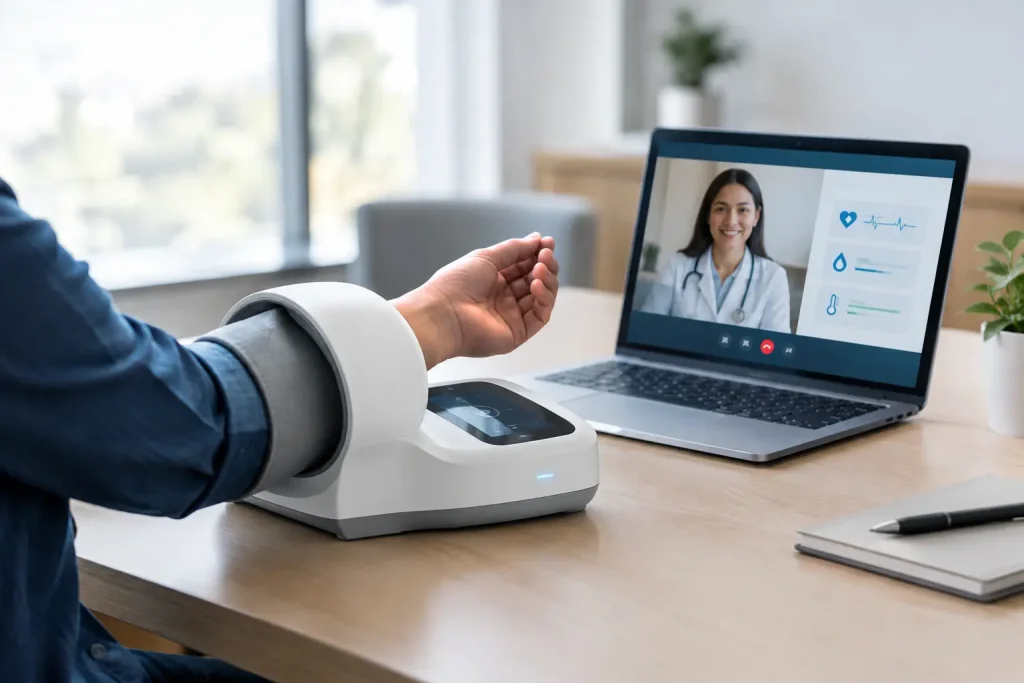
A connected exam device for employer worksites, Dr. Miltie N9+, can help bring clinician-directed assessment closer to employees who face distance, scheduling, mobility, or access barriers. For employers and care delivery organizations, the value is not a device placed in a break room. It is a defined care pathway that connects the employee, an on-site support person when appropriate, and a licensed clinician who can make informed next-step decisions.
That distinction matters. Employer-based care should never blur clinical care with employment management. The strongest programs establish clear consent, privacy, clinical governance, and escalation protocols before the first virtual exam takes place. When those foundations are in place, connected examination technology can extend access to primary, preventive, chronic, and follow-up care without asking every employee to travel to a traditional clinic.
Why worksite care needs more than a video visit
A standard video visit can be useful for medication follow-up, counseling, triage, and many routine conversations. Yet clinicians often need more clinical context before they can confidently assess a new complaint or determine whether an employee needs urgent in-person evaluation. Visual observation alone may not answer questions about temperature, heart and lung sounds, oxygen saturation, blood pressure, ear findings, or skin concerns.
A connected exam device for employer worksites adds clinically relevant data to the virtual encounter. The clinician remains responsible for directing the exam, interpreting findings, documenting care, and deciding whether the employee can be treated virtually, needs a scheduled in-person visit, or should be escalated for urgent or emergency evaluation.
This approach is particularly relevant to dispersed workforces, rural operations, manufacturing facilities, agricultural settings, distribution centers, and organizations serving employees in communities with limited local clinician capacity. It can also support employer-sponsored clinics and occupational health programs that need a practical way to connect with remote clinicians.
The model is not intended to replace emergency services, a full diagnostic workup, or every hands-on examination. Its appropriate role depends on the presenting concern, available peripherals, staff training, patient preference, clinician licensure, and the organization’s established protocol.
How the Dr. Miltie N9+ supports clinician-directed exams
The Dr. Miltie N9+ is a mobile wireless virtual examination and patient monitoring system designed to bring examination capabilities beyond the traditional exam room. In a worksite setting, it can support a clinician-directed virtual physical exam by helping capture and share selected patient data during the encounter.
The practical workflow starts before the appointment. The care organization defines which employee populations and visit types are appropriate, identifies who may facilitate the encounter, and confirms how scheduling, consent, identity verification, documentation, and follow-up will work. A trained on-site health professional may assist with device handling when needed, while the clinician directs the assessment remotely.
During the visit, the clinician can combine the employee’s history, visual assessment, and relevant connected exam data to make a more informed decision. This can be especially useful when a complaint cannot be responsibly resolved through conversation alone. The goal is not to make every visit more complex. It is to reserve a higher-acuity virtual exam pathway for situations where additional clinical information may change the plan of care.
For organizations with existing remote patient monitoring or chronic care management programs, the device-enabled visit can also complement longitudinal care. An employee managing hypertension, diabetes, respiratory disease, or another chronic condition may need timely follow-up that is difficult to obtain around shift work and transportation constraints. Care teams can use scheduled touchpoints and escalation criteria to keep care connected to the employee’s established provider relationship.
Build the worksite workflow around trust and clinical boundaries
The technology is only one part of an employer worksite program. Implementation succeeds when clinical operations and employee trust are treated as central design requirements.
Protect privacy from the start
Employees must understand that participation is voluntary where applicable, what information is collected, who receives it, and how it is protected. Personal health information belongs in the clinical record and should be governed by applicable privacy and security requirements. Employers should receive only the information necessary for their role, such as aggregate utilization or approved operational reporting, rather than clinical details that could affect an employee’s sense of safety.
A private setting is equally important. A virtual physical exam conducted near a production floor or shared office can undermine confidentiality even when the technology itself is secure. Programs should designate a confidential space, establish procedures for cleaning and maintaining equipment, and account for language access and accessibility needs.
Define who does what
A worksite facilitator is not a substitute for a clinician. Their responsibilities may include preparing the device, confirming connection quality, assisting with basic positioning under clinician direction, and helping the employee understand next steps. Clinical judgment, diagnosis, prescribing, and escalation decisions remain with the licensed care team.
Organizations should also document what happens when the virtual visit is not enough. A reliable pathway may include same-day in-person referral, coordination with primary care, occupational health follow-up, or emergency services for red-flag symptoms. Clear handoffs reduce the risk that a virtual encounter becomes an isolated event with no accountable follow-through.
Match the model to the workforce
A 24-hour distribution site has different needs from a corporate campus. A rural employer may prioritize access to primary and specialty care, while an employer-sponsored clinic may focus on triage and continuity after an on-site nurse identifies a concern. Shift patterns, local referral availability, workforce language needs, and broadband conditions should shape the program design.
For employers whose workers are also caregivers, worksite access can have broader value. A care organization may be able to coordinate support for an employee’s family needs through separate, appropriate clinical pathways. Dr. Miltie’s experience in pediatric, special needs, rural, and community-based care reinforces a simple principle: care is more effective when it accounts for the realities surrounding the patient, not just the appointment itself.
Where reimbursement and sustainability enter the conversation
A connected-care program should be evaluated as a clinical and operational model, not as a device purchase. Healthcare organizations need to determine which services can be delivered under their payer contracts, state rules, credentialing arrangements, and reimbursement policies. Medicare, Medicaid, commercial payer requirements, and employer-funded benefit structures can differ substantially.
Some organizations may use virtual exams within reimbursable telehealth, remote patient monitoring, chronic care management, or care coordination workflows when program requirements are met. Others may support the service through employer contracts, grant-funded rural access initiatives, or a blended model. The right approach depends on the patient population, service line, documentation standards, and financial strategy.
Implementation planning should include clinical leadership, compliance, billing, information technology, operations, and frontline staff. This cross-functional work is not administrative overhead. It is how an organization ensures that the care pathway is appropriate, measurable, and financially responsible.
What leaders should measure after launch
Utilization alone does not show whether a worksite virtual care program is working. Leaders should look at access indicators such as time to appointment, appointment completion, and the share of employees who would otherwise have delayed care. They should also examine clinical process measures, including appropriate escalation, completed follow-up, care-plan adherence, and continuity with the employee’s usual source of care.
Employee experience deserves equal attention. Was the setting private? Did the visit fit the employee’s schedule? Did the patient understand the care plan? Were language and accessibility needs met? These questions help distinguish a convenient technology deployment from a genuinely patient-centered service.
Financial measures should be interpreted carefully. Reduced travel time and fewer avoidable off-site visits can be meaningful, but cost should not be the only lens. For rural and underserved workforces, earlier access to clinician-guided assessment may be valuable because it helps employees act before a health concern becomes harder to manage.
A worksite program earns trust one well-coordinated encounter at a time. Start with a clearly defined use case, give clinicians the information they need to practice confidently, and make every employee’s privacy and next step unmistakably clear.
Move from information to action
See how the N9+ can fit your organization.
Explore the remote physical exam platform or request a focused demonstration.