
Benefits of Virtual Examinations for Rural Care
Learn the benefits of virtual examinations for rural healthcare providers, from broader access and faster triage to stronger follow-up and care.
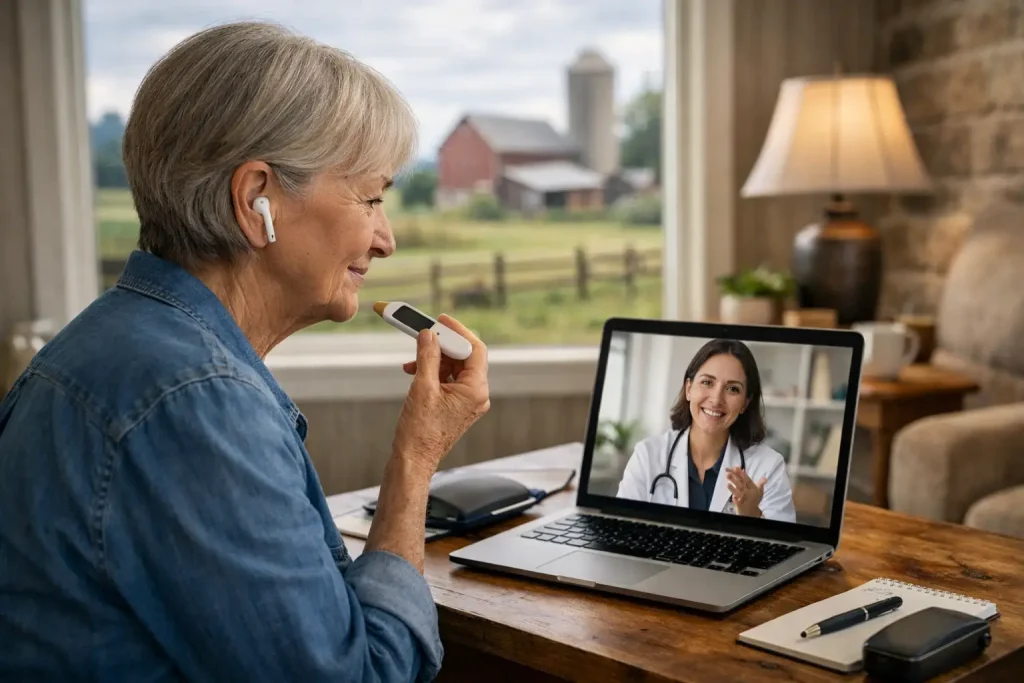
A patient with shortness of breath should not have to spend half a day on the road before a clinician can hear lung sounds, review vitals, and decide what happens next. That reality is why the benefits of virtual examinations for rural healthcare providers are no longer theoretical. For rural clinics, critical access hospitals, community health centers, and school-based programs, virtual examination tools can change how access, triage, follow-up, and continuity of care actually work.
This matters because rural care delivery has always been shaped by distance, staffing constraints, transportation barriers, and uneven specialty access. Standard video visits helped address part of the problem, but many organizations quickly ran into the same limitation: video alone is not a physical exam. If a provider cannot capture clinically relevant findings, the visit may still end with uncertainty, delayed treatment, or an unnecessary transfer.
Why the benefits of virtual examinations for rural healthcare providers stand out
Virtual examinations are different from basic telehealth visits because they are designed to support clinician-directed assessment. Depending on the model and deployment, that can include live visualization, connected medical devices, and data capture that allows the remote clinician to make a more informed decision. In rural settings, that shift is significant.
A rural organization is often balancing too few providers across too many sites. It may be supporting school health, primary care, chronic disease management, urgent same-day concerns, and specialty coordination with limited workforce depth. Virtual examination technology helps those teams extend scarce clinical expertise without pretending that every visit can or should be handled remotely. That distinction matters. The value is not in replacing in-person care across the board. The value is in getting the right level of assessment to the right patient at the right time.
Better access without lowering clinical standards
The most visible benefit is access, but access only helps if the visit is clinically useful. Rural providers already know that basic telehealth can improve convenience. The stronger case for virtual examinations is that they can support more complete evaluation than a phone call or standard video session alone.
That can improve same-day decision-making for acute concerns and make follow-up care more practical for patients managing chronic conditions. It can also reduce the number of visits that begin remotely but still require a second appointment simply because the clinician did not have enough information the first time.
For organizations serving children, this can be especially meaningful. Pediatric patients, including autistic children and children with special healthcare needs, may do better in familiar settings such as home, school, or a trusted community clinic. A lower-stress environment can improve participation and reduce the disruption that often comes with travel to a distant facility. At the same time, caregivers can be more involved in the encounter, which often improves history-taking, adherence, and follow-through.
Faster triage and smarter use of limited workforce
Rural workforce shortages are not just a recruitment issue. They affect how every hour of the clinical day is used. When experienced clinicians spend time on cases that could have been managed locally with remote support, capacity shrinks for everyone else.
Virtual examinations can help organizations route patients more effectively. A nurse or onsite staff member can support the encounter while a remote physician, advanced practice provider, or specialist reviews findings in real time. In some cases, the patient can remain in the local setting with a treatment plan. In others, the virtual exam helps confirm that escalation is necessary. Either way, the organization is making a better decision sooner.
That has operational consequences. It can reduce avoidable emergency department utilization, unnecessary transfers, and missed opportunities for early intervention. It can also help rural sites retain more care locally, which supports both patient trust and organizational sustainability.
More clinically relevant follow-up between visits
One of the quieter benefits of virtual examinations for rural healthcare providers is better follow-up. Rural patients often miss return visits for reasons that have little to do with motivation. Transportation may be unreliable. Work schedules may be inflexible. Weather may make travel impractical. For families caring for children or older adults, the logistics can be even harder.
When providers can conduct more meaningful follow-up virtually, they are better positioned to monitor symptoms, evaluate response to treatment, and adjust care plans before a condition worsens. This is particularly useful in chronic care management and remote patient monitoring programs, where trends matter and small changes can signal the need for intervention.
There is a practical limit here. Not every follow-up can or should be virtual. Some patients need hands-on assessment, imaging, lab work, or procedures. But many rural organizations are finding that a blended model works better than an all-or-nothing approach. Virtual examinations fill the space between simple check-in calls and full in-person visits.
Stronger care coordination across the Circle of Care
Rural care is often distributed across primary care clinics, schools, community sites, hospitals, specialists, and caregivers. Coordination failures are common because information lives in different places and the patient physically moves between settings. Virtual examination platforms can strengthen that coordination by allowing clinically relevant data and observations to travel with the patient encounter.
This is where connected-care models become more valuable than standalone devices. The real goal is not just collecting vitals or visual data. It is helping care teams act on that information across workflows, roles, and sites of care. When that happens, virtual exams support continuity rather than becoming one more disconnected tool.
For pediatric populations, caregiver involvement is central. Parents, guardians, school nurses, therapists, and pediatric specialists may all have a role in the patient journey. Virtual examination workflows that support this broader circle of care can improve communication and reduce the fragmentation families often feel.
Financial and reimbursement advantages – if implementation is disciplined
Rural leaders rarely have the luxury of adopting technology based on promise alone. The model has to work operationally and financially. Virtual examinations can support reimbursement opportunities tied to telehealth, remote patient monitoring, chronic care management, and related services, but only when deployment aligns with payer requirements, documentation standards, and clinical workflows.
This is one area where organizations need to be realistic. Buying equipment is not the same as launching a sustainable program. The financial upside depends on training, patient selection, coding discipline, and clear protocols for when virtual assessment is appropriate. Without that structure, utilization may stay low and clinical teams may revert to less effective workflows.
When implementation is reimbursement-aware from the start, the picture changes. Rural organizations can build programs that support access and margin at the same time, rather than treating virtual care as a cost center.
Technology can reduce burden, but only if it fits the setting
Not every rural site has the same broadband reliability, staffing model, or patient population. That is why the best virtual examination strategy is rarely the most complex one. It is the one that fits the realities of the care environment.
An FQHC managing high volumes of primary care and chronic disease may prioritize tools that support repeatable workflows and longitudinal monitoring. A critical access hospital may focus on triage support, discharge follow-up, and specialist collaboration. A pediatric program may need mobile, lower-stress exam capabilities that work across homes, schools, and community locations.
The trade-off is straightforward. More advanced virtual examination capability can improve clinical confidence, but it also requires onboarding, support, and process design. Rural organizations should evaluate technology not just for features, but for how well it can be adopted by frontline teams with limited time and staffing.
Virtual examinations can improve equity, not just convenience
Rural health equity is often discussed in broad terms, but virtual examinations make it operational. They can bring clinician-directed assessment closer to patients who otherwise delay care because travel is expensive, time-consuming, or physically difficult. They can support communities where specialty access is thin and provider shortages are persistent. They can also make care more workable for families who cannot easily leave work, school, or caregiving responsibilities.
That does not mean virtual care solves every access problem. Digital literacy, connectivity gaps, and workflow variation still matter. But when rural providers have the right tools, virtual examinations can move care closer to where people live, learn, and receive support. That is a meaningful shift.
For organizations looking to expand virtual care, the strongest case is not that technology is changing healthcare. It is that rural providers need better ways to examine, monitor, and support patients across distance without sacrificing clinical quality. Solutions such as the Dr. Miltie N9+ are most effective when they are treated as part of a connected-care strategy, built around real workflows, real reimbursement pathways, and the realities of rural practice. The goal is simple: help the care team see more, decide sooner, and keep more patients connected to care close to home.
Move from information to action
See how the N9+ can fit your organization.
Explore the remote physical exam platform or request a focused demonstration.