
What Is a Virtual Examination and How It Works
Learn what is a virtual examination and how does it work, including tools, workflows, and where remote physical exams add value in care delivery.
A pediatric follow-up should not always require a two-hour drive, missed work, a dysregulated child in a crowded waiting room, and a rushed in-person visit. For many healthcare organizations, that reality is what makes the question what is a virtual examination and how does it work more than a definitional exercise. It is a care delivery question tied to access, staffing, reimbursement, continuity, and patient experience.
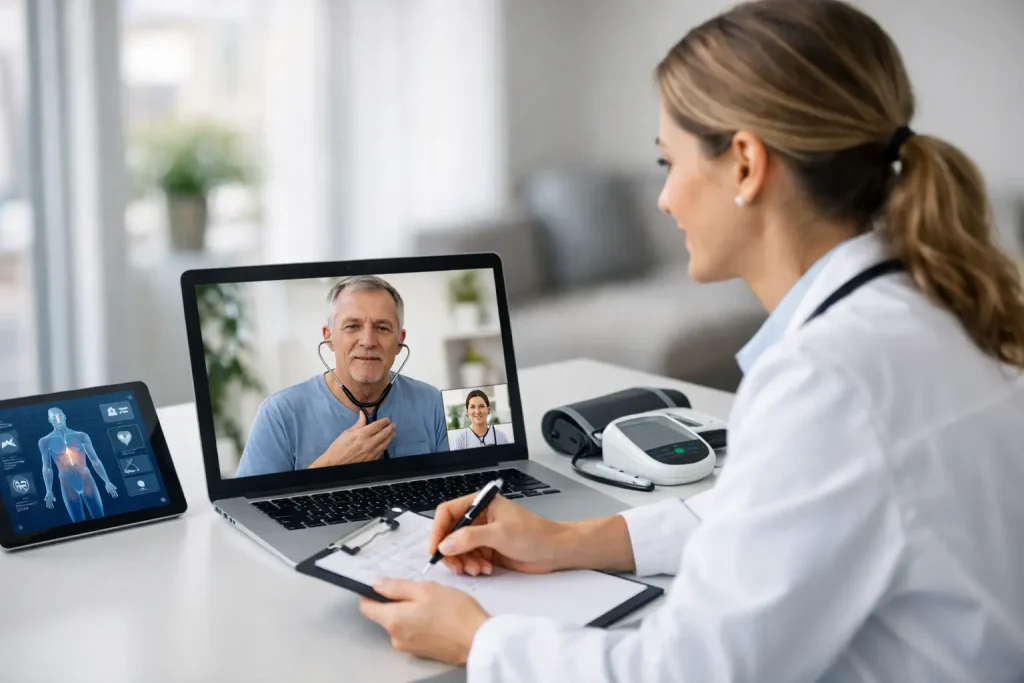
A virtual examination is a clinician-directed remote physical assessment performed with telehealth technology, connected medical devices, and structured clinical workflows. It goes beyond a standard video call. Instead of relying only on what a patient can describe or what a clinician can observe on screen, a virtual examination adds clinically relevant data such as heart and lung sounds, temperature, oxygen saturation, blood pressure, weight, images, or video-assisted visualization of the ear, throat, or skin.
That distinction matters. Basic telehealth is valuable for many conversations, medication reviews, and behavioral health visits. But when a provider needs physical findings to support clinical decision-making, a virtual examination can extend the reach of care in a more meaningful way.
What is a virtual examination in practical terms?
In practical terms, a virtual examination recreates key parts of the physical exam outside the traditional exam room. The patient may be at home, in a school-based setting, at a rural clinic, in a community health center, or at another spoke site. The clinician may be in a hospital, specialty clinic, pediatric practice, or centralized telehealth hub.
Using a combination of real-time video and connected exam tools, the provider can guide the assessment and capture objective findings. Depending on the clinical use case and equipment available, that may include listening to heart or lung sounds through a digital stethoscope, reviewing otoscope images, checking vital signs, evaluating respiratory effort, inspecting a rash, or assessing follow-up needs for a chronic condition.
The most effective virtual examinations are not improvised. They are built around protocols, device workflows, documentation standards, and care pathways that fit the organization’s service lines and patient population.
What is a virtual examination and how does it work?
A virtual examination works by combining synchronous communication with medical-grade data capture. The workflow usually starts with patient scheduling, triage, and confirmation that the visit type is appropriate for remote evaluation. Some encounters are well suited for virtual examination. Others still require hands-on in-person care, imaging, labs, or urgent escalation.
At the time of the visit, the patient connects with the care team through a secure telehealth platform. A clinician, medical assistant, school nurse, caregiver, or trained telepresenter may help position the patient and operate the connected tools. The remote provider directs the exam in real time, just as they would in an exam room, but with device-enabled support.
The technology layer is what makes the model clinically useful. Connected exam tools capture data and transmit it to the provider during the visit or upload it into the care platform for review. The provider interprets those findings in context, documents the encounter, and determines next steps. Those next steps may include treatment, monitoring, specialist referral, follow-up scheduling, or escalation to in-person care.
This is why virtual examination is best understood as a care model, not just a device feature. Video is one part of the encounter. Clinical workflow, trained support, data quality, and reimbursement-aware implementation are what make it operationally viable.
The core components behind a virtual exam
Most virtual examination programs rely on four elements working together: secure telehealth communication, connected medical devices, clinical protocols, and documentation or integration workflows.
Secure communication supports live interaction between the remote clinician and the patient or telepresenter. Connected devices add data that can improve clinical confidence. Protocols help teams know when virtual examination is appropriate, what exam steps are required, and when escalation is needed. Documentation and integration make sure the encounter supports continuity of care, quality reporting, and billing requirements.
If one of those pieces is weak, the encounter may still happen, but it may not function as a dependable clinical service line.
Where virtual examinations add the most value
Virtual examinations are especially useful where access barriers are high and follow-up needs are frequent. Pediatric care is a strong example. Children often do better in familiar environments, and that is even more true for autistic children and pediatric patients with special healthcare needs. A lower-stress setting can improve participation, reduce sensory overload, and make caregiver involvement easier.
Rural and safety-net settings also benefit because virtual examination can reduce travel burdens while extending the reach of limited clinical staff. A rural health clinic, federally qualified health center, critical access hospital, or community-based program may use virtual exams to connect patients with remote primary care, pediatric expertise, or specialty support without requiring every provider to be physically onsite.
Chronic care management and remote patient monitoring programs can also gain value when a patient’s reported symptoms need visual review or device-assisted assessment. Rather than waiting for deterioration or sending every patient to the emergency department, care teams can use a virtual exam to add context and support earlier intervention.
Common use cases
The exact use cases depend on equipment, staffing, and state or provincial practice requirements, but common applications include pediatric follow-ups, respiratory assessments, chronic disease check-ins, post-discharge reviews, school-based evaluations, urgent care triage support, and community-based specialty access.
The trade-off is that not every complaint can be resolved this way. Abdominal pain with concerning findings, trauma, severe respiratory distress, or conditions requiring palpation, procedural care, or immediate diagnostics may still need in-person evaluation.
How the patient and caregiver experience changes
For healthcare leaders, virtual examination is often discussed in terms of access and efficiency. Those are important metrics, but the patient and caregiver experience should not be underestimated.
When care happens closer to home or within a trusted community setting, adherence often improves. Caregivers are more likely to participate. Follow-up can happen sooner. Patients who struggle with transportation, mobility, childcare, or work disruption face fewer obstacles.
In pediatrics, this can be especially meaningful. Some children are more cooperative when they are not in a busy clinic. Caregivers may be better able to share concerns when they are not rushed or juggling a difficult travel day. The clinical outcome is not guaranteed to be better in every case, but the conditions for consistent care often are.
Operational considerations healthcare organizations should plan for
A successful virtual examination program depends on more than purchasing equipment. Clinical leaders and administrators need to think through workflow design, staff training, governance, reimbursement, and patient selection.
Training is a major factor. A virtual examination may involve nurses, medical assistants, school staff, community health workers, or family caregivers supporting portions of the encounter. The provider still directs the exam, but the quality of the visit often depends on whether the person onsite knows how to position a camera, use the device correctly, and respond to clinician prompts.
Reimbursement also matters. Organizations should evaluate which visit types align with payer policies, what documentation standards apply, and how remote patient monitoring, chronic care management, or telehealth billing pathways fit the program design. Financial sustainability is rarely achieved by technology alone. It usually requires intentional service-line planning.
Integration is another practical issue. If device data lives outside the care workflow, adoption can stall. Programs scale more effectively when virtual exams fit naturally into scheduling, charting, care coordination, and follow-up processes.
One reason platforms such as the Dr. Miltie N9+ are designed around connected-care workflows, not just standalone hardware, is that healthcare organizations need a model that supports both clinical use and operational reality.
What a virtual examination is not
It helps to be clear about the limits. A virtual examination is not a replacement for every in-person visit. It is not just consumer video chat with a medical label. And it is not automatically effective simply because devices are available.
The strongest programs use virtual examination where remote clinical insight can meaningfully change care decisions. They also maintain clear escalation pathways for patients who need hands-on assessment, imaging, lab work, or emergency intervention.
That balanced view is important for executive teams. Overpromising can undermine clinician trust. Underusing the model can leave access gains unrealized.
Why this model matters now
Healthcare organizations are under pressure to improve access, manage workforce shortages, support value-based care goals, and serve patients across wider geographic footprints. Virtual examination helps address those pressures when it is deployed with the right clinical intent.
For pediatric programs, it can make care less disruptive and more inclusive. For rural providers, it can extend scarce expertise. For safety-net organizations, it can support care continuity in settings where barriers are often logistical, economic, and structural at the same time.
The more useful question is not whether virtual examination will replace the exam room. It is where remote physical assessment can responsibly expand the reach of the exam room. Organizations that answer that question well are often the ones that build more flexible, patient-centered care models without lowering clinical standards.
As virtual care matures, the healthcare systems that benefit most will be the ones that treat virtual examination as part of a broader care strategy – one designed to bring the right level of clinical insight closer to the patient, not farther from it.
Move from information to action
See how the N9+ can fit your organization.
Explore the remote physical exam platform or request a focused demonstration.