Dr. Miltie N9+ vs. Epic/MyChart Video Care
Compare Dr. Miltie N9+ vs. Epic/MyChart video for virtual exams, pediatric access, rural workflows, remote monitoring, and connected care planning now.
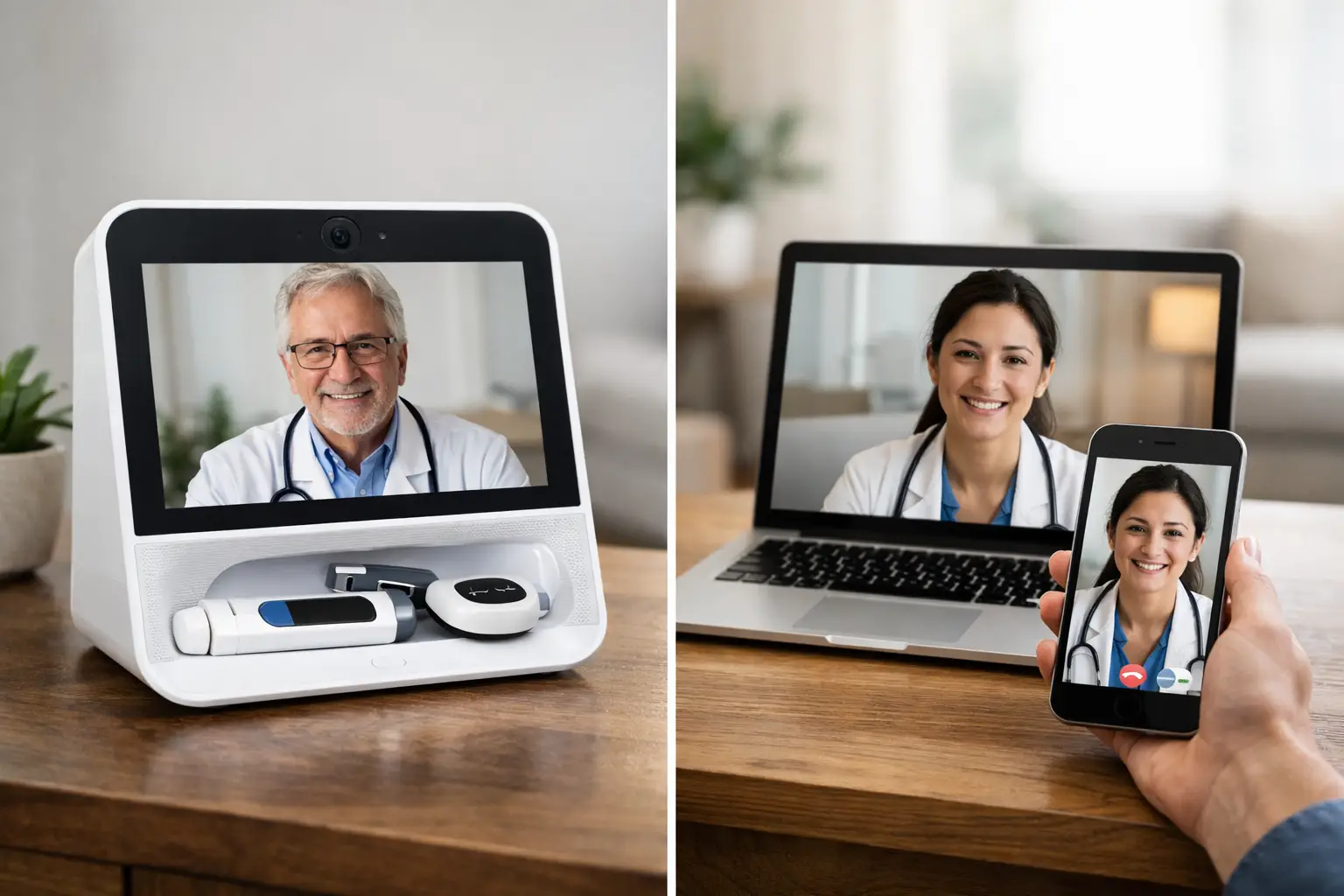
A video visit can solve the access problem without solving the clinical problem. A clinician may be able to see and speak with a patient through a familiar portal, yet still lack the physical findings needed to confidently assess an ear complaint, respiratory symptoms, a skin concern, or a change in chronic condition. That distinction is central to the Dr. Miltie N9+ vs. Epic/MyChart video comparison. These approaches can support the same care organization, but they serve different roles in a virtual care strategy.
For health systems, pediatric practices, rural health clinics, federally qualified health centers, and community-based programs, the question is not simply which video tool to deploy. It is whether the organization needs appointment access alone or a more clinically enabled model for examining, monitoring, coordinating, and following patients beyond the exam room.
Dr. Miltie N9+ vs. Epic/MyChart Video: The Core Difference
Epic and MyChart video capabilities are generally designed to help organizations conduct scheduled virtual encounters through the workflows patients and staff already know. When configured within an organization’s Epic environment, video visits can support convenient access, documentation continuity, scheduling, patient communication, and care delivered through an established digital front door.
The Dr. Miltie N9+ is designed for a different clinical gap: enabling clinician-directed virtual physical examinations and connected patient monitoring outside the traditional care setting. Rather than treating video as the complete encounter, it supports a model in which a clinician can guide an on-site caregiver, staff member, or other trained participant in capturing clinically relevant examination data. The goal is to bring more of the assessment into the remote encounter when appropriate.
That does not make one approach a replacement for the other. A standard MyChart video visit may be exactly right for medication follow-up, counseling, behavioral health, care planning, or a straightforward conversation that does not require additional physical findings. A device-enabled virtual exam may be more appropriate when the clinician’s decision depends on objective observations that video alone cannot provide.
What Standard Video Visits Do Well
A mature patient portal and video workflow can be highly valuable for organizations seeking to reduce friction around routine care. Patients may already use MyChart for appointment information, messages, records access, questionnaires, and other interactions. Keeping virtual visits in that environment can simplify adoption and preserve familiar administrative workflows.
For clinicians, portal-based video can be an efficient option when the clinical objective is primarily conversational or visual at a general level. It can support follow-up after an established diagnosis, medication management, care coordination, education, discharge planning, and many behavioral health encounters. It may also be a practical first step for organizations building telehealth capacity across a broad provider base.
The limitation is inherent to video, not necessarily to the portal. Camera quality, lighting, connectivity, patient positioning, and the absence of examination instruments can restrict what a clinician can reliably assess. A caregiver may describe breathing sounds, fever patterns, pain, or ear symptoms, but a description is not always a substitute for clinician-directed data capture.
For teams serving rural communities, this can create an unsatisfying middle ground: the patient avoids travel for the video visit but may still need an in-person appointment, urgent care visit, or emergency department evaluation because the assessment could not be completed remotely. That outcome is sometimes clinically necessary. It should not, however, be the default result of every virtual encounter with a physical-exam need.
Where the N9+ Changes the Virtual Care Model
The N9+ is intended to extend the clinical utility of virtual care by supporting a more complete remote assessment. The platform combines mobile, wireless examination and patient-monitoring capabilities with clinician-directed workflows, allowing care teams to collect relevant patient information in locations such as homes, schools, community clinics, pediatric practices, and distributed care sites.
This matters when the remote location includes a capable participant who can support the encounter. That may be a parent or caregiver, a school nurse, a community health worker, a medical assistant, or staff at a partner site. The clinician remains responsible for directing the exam and interpreting the findings, while the local participant helps make the patient and relevant tools available at the point of care.
For a child with recurrent respiratory symptoms, for example, the care team may need more than a face-to-face conversation to determine the right next step. For a patient with a chronic condition, the need may be longitudinal monitoring and a pathway for escalation rather than another isolated video check-in. A connected-care model can give organizations a way to structure these encounters around clinical pathways, documentation needs, care coordination, and operational accountability.
The value is especially clear for pediatric populations that experience travel, unfamiliar settings, or prolonged waiting as meaningful barriers to care. Autistic children and children with special healthcare needs may engage more comfortably from a familiar environment with trusted caregivers nearby. Remote examination does not eliminate the need for in-person care when it is clinically indicated. It can help organizations reserve in-person visits for circumstances where they add the greatest value.
Integration Is Not the Same as Clinical Capability
Technology selection discussions often blur two separate questions: Can the solution fit our current enterprise environment? And can it support the clinical encounter we want to deliver?
Epic and MyChart are central systems of record and patient engagement for many organizations. That role is consequential. Any virtual care program needs clear workflows for scheduling, documentation, consent, communications, clinical review, privacy, and follow-up. Health systems should assess how any device-enabled program will align with those workflows, including interoperability requirements, governance standards, HIPAA obligations, and local policies.
But a well-integrated video visit remains a video visit unless the care model also enables collection of the data needed for a remote physical assessment. Conversely, a connected device platform requires thoughtful operational design even when it offers stronger examination capability. Teams must define who supports the patient, how clinicians are trained, what situations are appropriate for virtual examination, when escalation occurs, and how results become part of the care plan.
The strongest model may combine these assets rather than force an either-or choice. Epic/MyChart can remain the familiar engagement and workflow layer, while the N9+ adds a clinically enabled examination and monitoring pathway for populations and use cases where video alone is insufficient. The appropriate architecture depends on each organization’s technology environment and implementation priorities.
Operational Trade-Offs Leaders Should Evaluate
A conventional video program is often simpler to launch at scale because it relies on consumer devices and familiar appointment processes. Its low operational burden is a real advantage for use cases that do not require physical examination. Organizations should not introduce additional devices or workflows just because they are available.
The trade-off is clinical scope. If a program regularly encounters patients whose care decisions require more than conversation and observation, a video-only model can generate repeat visits, unnecessary travel, delayed decisions, or avoidable escalation. Those downstream effects should be part of the financial and clinical evaluation, particularly for safety-net and rural organizations managing limited workforce capacity.
A device-enabled approach requires more intentional deployment. Sites need training, role clarity, inventory processes, connectivity planning, infection-control procedures where applicable, and defined pathways for device use. Leaders should also evaluate reimbursement alignment and the documentation necessary to support the services delivered. These requirements add planning, but they can create a more durable program when remote exams, remote patient monitoring, chronic care management, and coordinated follow-up are core objectives.
Dr. Miltie’s Circle of Care™ model is built around this operational reality. It recognizes that high-quality virtual care is rarely a two-person video call. It often involves patients, families, caregivers, clinicians, coordinators, schools, local partners, and specialty teams working from a shared pathway of care.
Choosing the Right Model by Use Case
Organizations evaluating Dr. Miltie N9+ versus Epic/MyChart video should begin with their highest-priority clinical scenarios, not a generic telehealth feature list. For routine medication follow-up, post-visit questions, counseling, behavioral health, and care coordination, portal-based video may be fully sufficient. The familiar patient experience and administrative efficiency can make it the practical choice.
For pediatric acute concerns, chronic disease monitoring, post-discharge follow-up, rural outreach, school-based services, or patients who have difficulty reaching an exam room, leaders should ask a more demanding question: What information must the clinician obtain to make a safe, timely decision? If the answer requires clinician-directed examination data, a connected examination platform deserves consideration.
The decision should also account for the care setting. A family home may need a simple, guided workflow and strong caregiver support. A school-based clinic may have trained staff who can help facilitate structured encounters. A rural clinic or critical access hospital may use virtual examination to extend specialty access while retaining a local care presence. Each setting has different staffing, connectivity, governance, and reimbursement considerations.
The most effective virtual care programs do not measure success by the number of video visits completed. They measure whether patients receive appropriate care sooner, whether clinicians have the information they need, whether families avoid unnecessary disruption, and whether the organization can sustain the model across the communities it serves. Start with that standard, then select the video, examination, monitoring, and coordination capabilities that allow care teams to meet it.
Move from information to action
See how the N9+ can fit your organization.
Explore the remote physical exam platform or request a focused demonstration.