
Virtual Examination Technology for Community Health Centers
Virtual examination technology for community health centers helps clinicians extend access, capture exam data, and build sustainable care pathways today.
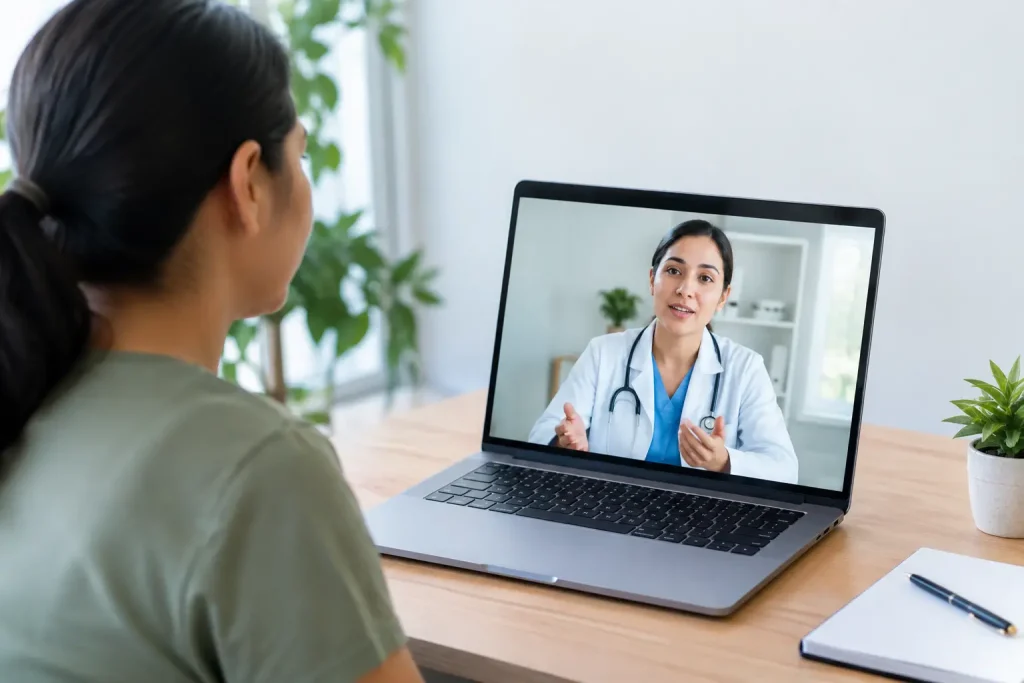
A missed appointment is rarely just a missed appointment for a community health center. It can mean a parent without transportation, a rural patient facing a long drive, a child overwhelmed by an unfamiliar setting, or a clinician who lacks the information needed to make a confident decision remotely. Virtual examination technology for community health centers addresses that gap by bringing clinician-directed assessment capabilities closer to where patients already live, learn, and receive support.
A video visit alone can be valuable for counseling, triage, medication follow-up, and care coordination. But video cannot reliably capture heart and lung sounds, images of the ear or throat, vital signs, or other clinical data that often determines whether a patient needs an in-person visit, urgent escalation, or continued treatment at home. Community health centers need a model that preserves the relationship and convenience of virtual care while supporting a more complete clinical encounter.
Why virtual visits need examination capability
Community health centers carry a broad and complex responsibility. They often care for patients across pediatric, adult, behavioral health, chronic disease, and preventive care programs while managing workforce constraints, transportation barriers, and uneven specialist availability. A virtual care program that only supports conversation can help, but it may leave clinical teams with an incomplete picture.
Virtual physical examination technology expands what a remote clinician can assess. Connected tools can transmit clinically relevant findings from a patient site to a qualified provider, allowing the provider to guide the encounter and make decisions based on more than visual observation. Depending on the program and device configuration, this may include vital signs, heart and lung sounds, otoscopic images, oral images, or other patient data needed for the specific pathway of care.
The distinction matters operationally. When an encounter produces meaningful clinical information, the care team can reduce unnecessary referrals, prioritize patients who truly need in-person evaluation, and document care in a way that supports continuity. It does not eliminate the need for hands-on care. Instead, it helps centers use their in-person capacity where it has the greatest clinical value.
Virtual examination technology for community health centers
The strongest programs do not treat technology as a stand-alone cart, tablet, or set of peripherals. They design a connected workflow around people: the remote clinician, the on-site facilitator or caregiver, the patient, and the care coordination team. That is especially important in federally qualified health centers, rural clinics, school-based programs, and other distributed environments where care may happen outside the main clinic.
A practical virtual examination workflow begins with a defined use case. A center may start with pediatric sick visits from a school health office, chronic condition follow-up in a patient home, or virtual access points at satellite locations. The clinician should know what data can be captured, who will support the patient, how findings will be documented, and when the encounter should convert to in-person care.
For example, a school-based program may have a trained staff member support a child during a clinician-directed remote exam. The clinician can speak directly with the caregiver when appropriate, review relevant findings, and determine whether the child can remain at school, needs a same-day clinic visit, or requires a higher level of care. This model can reduce disruption for families while preserving clinical oversight.
Pediatric care requires a lower-stress approach
Pediatric virtual examination programs should be designed around the child, not merely adapted from adult telehealth. For autistic children and pediatric patients with special healthcare needs, a familiar environment can reduce sensory stress and improve cooperation. A caregiver who understands the child’s communication style may also be better positioned to support the encounter than an unfamiliar clinical setting.
That does not mean every pediatric visit is appropriate for virtual care. Acute distress, concerning symptoms, a need for procedures, or uncertainty that cannot be resolved remotely should lead to an in-person evaluation. The value of virtual examination technology is its ability to give clinicians better information earlier, so that escalation decisions are based on data rather than guesswork.
Caregiver inclusion is another clinical advantage. Families can participate from home, work, or another convenient location, hear the plan directly from the clinician, and ask questions while decisions are being made. For children who receive services across primary care, school programs, and specialty settings, this can strengthen follow-up and reduce fragmented communication.
What an implementation must solve
Successful deployment depends on more than purchasing devices. Community health centers should assess the care model, staffing model, connectivity, privacy requirements, documentation processes, and reimbursement strategy before expanding. The right approach varies by patient population, state requirements, payer mix, and clinical service line.
Clinical governance comes first. Centers should establish which visit types are appropriate, what findings must be collected, who may assist with the technology, and what escalation protocols apply. Clinical leaders should also define training and competency expectations for on-site staff and caregivers who may facilitate a visit. A connected device cannot replace clinical judgment, and clear protocols help the team use it consistently.
HIPAA-compliant workflows are equally essential. Patient data must move through approved systems, access controls must be appropriate to each role, and documentation must be incorporated into the organization’s clinical record. Technology vendors should support the organization’s compliance posture, but the health center remains responsible for ensuring its policies, agreements, and workflows meet applicable requirements.
Operational details determine whether a program becomes a burden or a reliable service. Who charges and cleans devices? Who verifies connectivity before a scheduled session? Who contacts families if a visit must be rescheduled? Who follows up after an abnormal finding? These questions may seem basic, yet they are often where promising pilots lose momentum.
Reimbursement-aware planning protects sustainability
A virtual care program should be financially intentional from the beginning. CMS reimbursement policies, state Medicaid rules, commercial payer requirements, eligible practitioner rules, and site-specific billing guidance can differ significantly. Community health centers should involve billing, compliance, finance, and clinical leadership early rather than treating reimbursement as a later administrative task.
The objective is not to force every virtual encounter into the same billing structure. It is to align the care model with allowable services, complete documentation, and the center’s broader goals for access, quality, and workforce capacity. Remote patient monitoring and chronic care management may also create opportunities for appropriate programs when eligibility, consent, monitoring activities, and documentation requirements are met.
A reimbursement-aware partner can help organizations evaluate where virtual examination fits alongside existing telehealth, care management, and population health efforts. Sustainable programs are built on clinical need first, then supported by a realistic operating and financial model.
Choosing technology that fits the care model
The most useful question is not, “What device has the most features?” It is, “What information does our care team need to make safe, timely decisions in the settings we serve?” A pediatric access program may prioritize clinician-guided exam tools and simple caregiver participation. A rural chronic care program may place greater emphasis on recurring physiologic monitoring, alerts, and care coordination.
Health centers should look for technology that supports dependable capture of clinically relevant data, intuitive workflows for patients and facilitators, and integration with the team’s existing operating model. Mobility matters when care moves between homes, schools, mobile units, satellite clinics, and community sites. So does training. A complex system that requires extensive technical intervention can undermine access instead of improving it.
Dr. Miltie’s N9+ is designed for this kind of clinician-directed virtual examination and patient monitoring model, pairing connected medical devices with configurable care pathways and coordination capabilities. For organizations serving dispersed populations, the goal is not simply a remote encounter. It is a connected care experience that gives the right clinician the right information at the right time.
Measuring what changes for patients and care teams
Volume alone does not demonstrate value. Community health centers should measure whether the program improves access and clinical operations. Useful indicators can include time to appointment, completed visit rates, avoided travel, successful follow-up, patient and caregiver experience, referral patterns, staff utilization, and the proportion of encounters appropriately resolved without unnecessary escalation.
For chronic disease programs, teams may also track adherence, trend visibility, timely intervention, and gaps in monitoring. For pediatric programs, it can be useful to evaluate school attendance, caregiver participation, and whether children receive follow-up before a concern becomes more serious. Metrics should reflect the original problem the program was meant to solve.
The most effective programs also invite feedback from frontline staff. Medical assistants, nurses, care coordinators, school personnel, and caregivers can identify friction that leadership dashboards may not reveal. Their experience helps refine workflows, training, and patient instructions before expansion.
Community health centers do not need to choose between a traditional exam room and a less capable video visit. With thoughtful clinical design, connected virtual examination technology can extend the reach of trusted care teams into the places where access is hardest to achieve. The next useful step is to identify one high-friction patient journey and design a virtual pathway that gives clinicians enough information to act with confidence.
Move from information to action
See how the N9+ can fit your organization.
Explore the remote physical exam platform or request a focused demonstration.