
Virtual Primary Care for Families With Dr. Miltie N9+
Virtual primary care for families with Dr. Miltie N9+ helps care teams conduct informed remote exams, engage caregivers, and extend pediatric access near home.
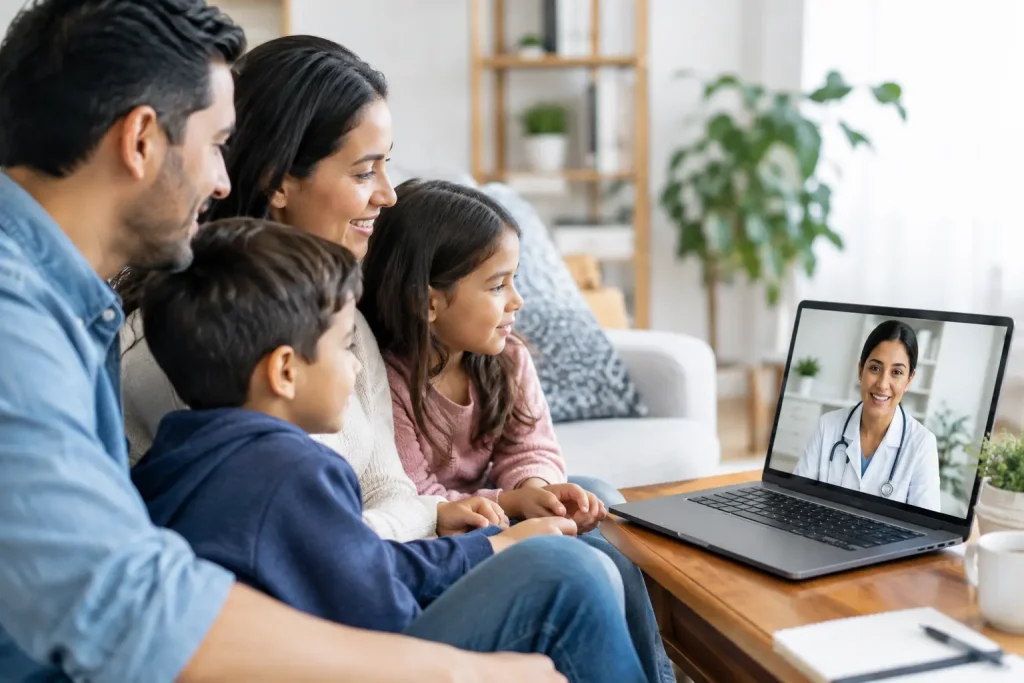
A parent should not have to choose between a child’s escalating symptoms and a three-hour drive to the nearest pediatric provider. Yet that is the practical reality for many rural families, families with limited transportation, and caregivers supporting children whose sensory, behavioral, or medical needs make clinic visits difficult. Virtual primary care for families with Dr. Miltie N9+ gives care organizations a more clinically informed way to reach patients where they are – at home, in school-based settings, in community clinics, or within partner care sites.
A video visit alone can create connection, but it may leave clinicians without the physical findings needed to make timely decisions. The difference is the ability to bring guided examination and actionable patient data into the virtual encounter. For healthcare organizations, this changes virtual care from a convenience feature into a durable primary care access strategy.
Why family virtual care needs more than video
Primary care depends on continuity, context, and clinical judgment. Families need a care model that can support preventive visits, acute concerns, medication follow-up, chronic condition management, and coordination with specialists or community services. A conventional virtual visit can address some of these needs, particularly when the clinical question is straightforward. It is less effective when the provider needs to assess physical signs that caregivers cannot reliably describe or capture on a consumer device.
That gap is especially significant in pediatric care. A child may not be able to explain whether an ear hurts, describe shortness of breath, remain comfortable in an unfamiliar exam room, or tolerate a long trip followed by an extended wait. For autistic children and pediatric patients with special healthcare needs, the clinical setting itself can introduce stress that affects participation and the quality of the encounter.
A device-enabled virtual exam model supports a different approach. With the appropriate connected tools and clinician direction, a trained caregiver, nurse, medical assistant, school health professional, or community-based partner can help collect relevant examination data while the clinician remains engaged in real time. The provider can see, hear, and guide the process rather than relying exclusively on recollection after the visit.
Virtual primary care for families with Dr. Miltie N9+
The Dr. Miltie N9+ is designed to support clinician-directed virtual physical exams and patient monitoring beyond the traditional exam room. It is a mobile, wireless system that enables care teams to capture clinically relevant information during a virtual encounter and incorporate that information into a coordinated care pathway.
The value is not simply that a device is present. Value comes from connecting examination capability to a defined clinical workflow: who initiates the visit, who assists the patient, what data are collected, how the provider documents findings, when the patient is escalated to in-person care, and how follow-up is managed. For organizations serving families across dispersed geographies, those operational details determine whether a program can be adopted, measured, and sustained.
In a pediatric practice, the system may support a follow-up for a child with a respiratory concern when travel is burdensome. In a rural health clinic, it may help a provider assess a patient at a satellite location where on-site clinical coverage is limited. In a school-based program, it can strengthen communication among the school nurse, family, and primary care team. Each setting has different staffing and workflow needs, but the goal is consistent: help the clinician make a better-informed decision without making the family overcome unnecessary barriers to care.
A more complete view of the child and family
Care delivered in familiar settings can also reveal information that is not always visible in a clinic. A caregiver may be better positioned to explain changes in sleep, appetite, behavior, medication adherence, or daily functioning. A clinician can observe how a child communicates in a comfortable environment and involve caregivers directly in the plan of care.
This does not mean remote care replaces hands-on care in every circumstance. It should not. A child with severe symptoms, urgent diagnostic needs, trauma, or findings that require direct intervention must be evaluated at the appropriate in-person or emergency setting. A responsible virtual primary care program makes those escalation pathways explicit. Its purpose is to improve access and continuity where virtual assessment is clinically appropriate, not to defer necessary care.
Building a care model around the family
Technology adoption often stalls when it is treated as an isolated deployment. Healthcare leaders should begin with the patient populations and care gaps they intend to address. Families may need easier access to sick visits, chronic care follow-up, developmental support, post-discharge monitoring, preventive counseling, or coordination with school and community partners. The highest-value pathway depends on the organization’s clinical priorities, staffing model, and local access challenges.
A practical implementation plan should define four elements:
- the patient cohorts and visit types appropriate for virtual examination;
- the roles of clinicians, care coordinators, caregivers, and on-site assistants;
- the clinical protocols for documentation, triage, escalation, and follow-up; and
- the reimbursement, compliance, and reporting requirements that shape program sustainability.
These decisions should be made with clinical, operational, financial, and technology stakeholders at the same table. A telehealth director may focus on workflow and adoption. A medical director may focus on clinical appropriateness and quality. Revenue cycle leaders need clarity on coding, documentation, and applicable CMS or payer requirements. Privacy and security teams need confidence that the model supports HIPAA-compliant care delivery. Programs work best when these considerations are integrated before the first patient encounter.
The Circle of Care™ model in practice
Family-centered virtual care is rarely a one-to-one interaction between a clinician and a patient. The child’s circle may include parents or guardians, a primary care provider, specialists, school personnel, home health staff, behavioral health professionals, and care coordinators. Without intentional coordination, families can become the messenger between disconnected services.
Dr. Miltie’s Circle of Care™ model is designed to support connected participation across that care network. It helps organizations create customized pathways that account for where patients receive care and who can support a virtual examination or monitoring activity. This is particularly relevant for rural and safety-net providers that serve patients across large areas with limited workforce capacity.
For example, a federally qualified health center may use a community-based location to support a family that has difficulty reaching the main clinic. A critical access hospital may extend follow-up support after discharge while maintaining clear criteria for escalation. A pediatric practice may engage caregivers in monitoring a known condition between appointments. The model is flexible, but flexibility must remain clinically governed. Standardized protocols, training, and quality review are essential.
Measuring what access actually changes
The strongest virtual primary care programs do not measure success only by visit volume. Leaders should evaluate whether the model reduces missed appointments, shortens time to clinical assessment, improves follow-up completion, supports preventive and chronic care goals, and decreases avoidable travel burdens. For pediatric populations, organizations may also examine caregiver experience, school absence, care-plan adherence, and continuity after an acute episode.
Clinical teams need feedback on the quality of the data collected during remote exams and the percentage of encounters appropriately resolved, referred, or escalated. Operations teams need visibility into staffing demands, device utilization, training needs, and appointment flow. Finance teams need to understand reimbursement performance and the total cost of delivering care across sites.
There is no single benchmark that applies to every organization. A rural health clinic may prioritize access to a clinician within a defined time window. A pediatric specialty partner may prioritize follow-up adherence. A community health center may focus on reaching families who historically miss preventive care because transportation, work schedules, language needs, or caregiving responsibilities create barriers. The measures should reflect the population and the care pathway, not merely the technology.
A practical extension of primary care
For families, the most meaningful innovation is often simple: a clinician who can assess a child sooner, involve the caregiver, and determine the next right step without creating another difficult trip. For providers, that requires more than a video platform. It requires clinically relevant virtual examination capability, connected care coordination, trained teams, and workflows designed around real family circumstances.
The Dr. Miltie N9+ gives healthcare organizations a way to extend the reach of primary care while keeping the clinician at the center of decision-making. When deployed with clear protocols and a family-centered care pathway, virtual care can become a dependable front door to timely assessment, continuity, and support closer to home.
Move from information to action
See how the N9+ can fit your organization.
Explore the remote physical exam platform or request a focused demonstration.