
Chronic Care Management Services That Scale
Learn how chronic care management services improve access, coordination, and reimbursement for pediatric, rural, and community-based care.
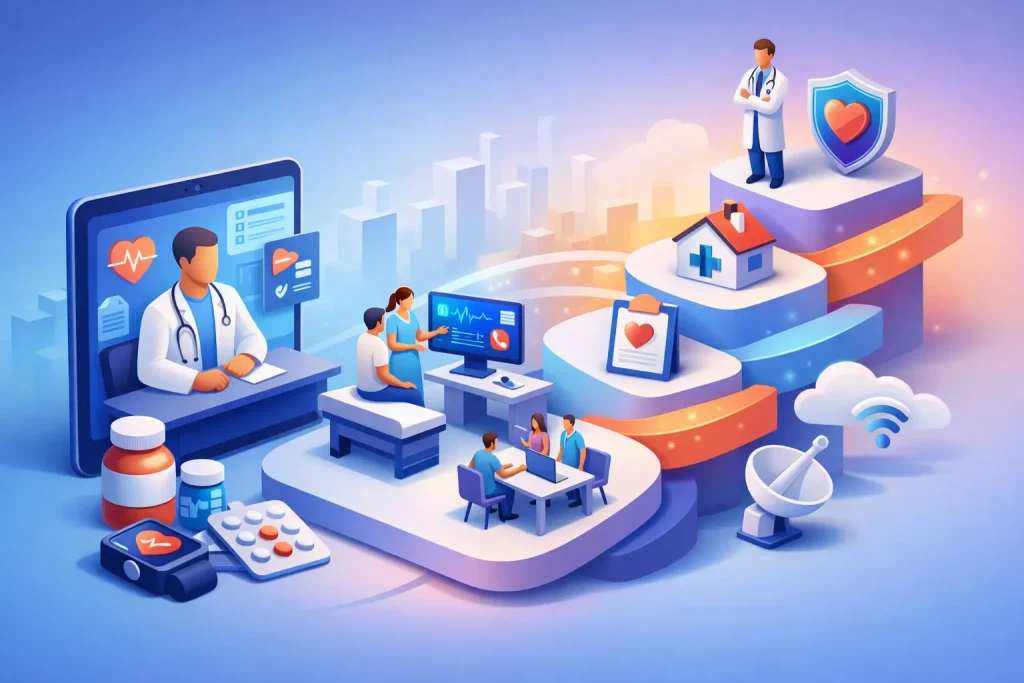
A patient with diabetes misses follow-up because transportation fell through. A child with complex medical needs needs closer monitoring, but every in-person visit adds stress for the family. A rural clinic has the clinical intent to stay engaged between appointments, yet limited staff and distance make continuity difficult. These are exactly the gaps chronic care management services are meant to address.
For healthcare organizations, the question is no longer whether longitudinal care matters. It is whether the model in place can support it consistently, document it correctly, and extend it beyond the walls of the clinic. Chronic care management works best when it is not treated as an isolated billing program, but as part of a broader connected-care strategy that helps clinicians maintain visibility, coordinate interventions, and keep patients and caregivers engaged over time.
What chronic care management services actually need to do
At a policy level, chronic care management is familiar territory. Most healthcare leaders understand the CMS framework, the documentation expectations, and the basic idea of non-face-to-face care coordination for patients with multiple chronic conditions. The harder part is operational reality.
A sustainable program has to do more than log minutes. It has to support medication reconciliation, care plan oversight, follow-up after hospitalizations, communication with caregivers, and coordination across multiple providers and settings. If the workflow stops at outreach calls and manual chart updates, the service may technically exist, but it will struggle to scale.
That challenge is even more pronounced in pediatric and community-based settings. Children with special healthcare needs, autistic children, and patients with developmental or medically complex conditions often require a more connected model of care. The patient may not be managing the condition alone. Parents, school nurses, specialists, home-based supports, and primary care teams may all play a role. In those cases, chronic care management is less about a narrow monthly task list and more about maintaining a functional Circle of Care.
Why chronic care management services often stall
Many programs begin with the right clinical goals and still underperform. Usually, the barrier is not lack of demand. It is friction in execution.
In some organizations, care managers are working across disconnected systems. Patient data sits in one place, outreach documentation in another, and remote monitoring results somewhere else entirely. Staff spend valuable time chasing information rather than acting on it. In other organizations, the technology supports scheduling or messaging but does not help clinicians gather clinically relevant data between visits.
There is also the issue of patient access. Chronic care management assumes regular contact, but patients in rural areas, underserved communities, and high-burden households may face transportation issues, device limitations, staffing shortages at community sites, or reduced ability to attend traditional follow-up visits. When the care model depends too heavily on in-person touchpoints, continuity breaks down.
Reimbursement can create another pressure point. Organizations may understand the opportunity around CMS reimbursement, but still hesitate if implementation feels administratively heavy or clinically fragmented. The result is a program that is technically eligible yet difficult to operationalize at scale.
Building chronic care management around connected care
The organizations seeing the strongest results are usually the ones that treat chronic care management as a connected workflow, not a stand-alone code set.
That means combining care coordination with tools that help the clinical team assess patient status remotely, capture actionable data, and involve caregivers in a structured way. When a provider can do more than send reminders – when they can support virtual physical assessments, review device-enabled patient information, and follow customized care pathways – the service becomes more clinically meaningful.
This is especially valuable in distributed care environments. Rural health clinics, federally qualified health centers, critical access hospitals, community clinics, and school-based programs often need to extend services across distance without compromising quality. In those settings, chronic care management becomes stronger when paired with remote patient monitoring, virtual examination capabilities, and communication pathways that support both the clinician and the caregiver.
For pediatric populations, the value can be even greater. Familiar environments such as the home, school, or local clinic may reduce stress and improve participation, particularly for children who struggle with travel, sensory overload, or fragmented follow-up. A connected model allows care teams to stay involved without asking families to absorb the full burden of access.
Where virtual tools improve the model
Not every chronic care management program needs the same level of technology, and more technology is not automatically better. The right fit depends on patient acuity, care setting, staffing model, and reimbursement strategy. Still, several capabilities tend to make a measurable difference.
First, remote patient monitoring can add context that monthly phone outreach alone cannot provide. For patients managing hypertension, diabetes, weight-related conditions, respiratory issues, or other ongoing needs, trend data can help care teams identify changes earlier and prioritize intervention.
Second, virtual examination tools can elevate the clinical quality of remote touchpoints. When clinicians can capture more relevant findings between office visits, they are in a stronger position to adjust care plans, support follow-up, and reduce unnecessary escalation. This matters for adult chronic disease management, but it also matters in pediatrics, where reassurance, observation, and caregiver-guided assessments can help bridge access gaps.
Third, workflow customization is not optional. A community health center, pediatric specialty program, and rural hospital will not run chronic care management the same way. Staffing patterns differ. Patient populations differ. Reporting needs differ. The technology and operational model need to adapt to those realities rather than forcing every organization into the same template.
The pediatric and caregiver dimension
Chronic care management is often discussed through an adult Medicare lens, but many health systems and community-based providers are also trying to solve long-term coordination challenges for children with chronic and complex needs. That requires a different level of sensitivity.
Children are rarely navigating care independently. Caregivers need clear communication, practical follow-up pathways, and tools that fit real life. For families of autistic children or children with special healthcare needs, the setting of care can shape whether follow-up is manageable at all. Frequent travel, unfamiliar environments, and repeated disruptions can interfere with adherence even when the family is highly engaged.
A more flexible virtual care model can ease that burden. It can help clinicians gather information in lower-stress environments, include caregivers more directly in ongoing management, and support continuity without requiring every concern to become an in-person event. That is not a replacement for hands-on care when hands-on care is needed. It is a way to use clinical capacity more intelligently and compassionately.
What healthcare leaders should evaluate before expanding services
The strongest chronic care management programs usually begin with operational honesty. Leaders should ask whether their current model gives the care team timely visibility into patient status, whether documentation supports reimbursement cleanly, and whether the workflow is realistic for current staffing levels.
They should also examine who is being left out. If a program works well for patients who can easily return to clinic but poorly for rural families, medically complex children, or underserved populations, the issue may be the delivery model rather than the care plan itself.
Technology selection should follow those questions, not lead them. The best platform is one that supports clinician-directed care, fits regulated environments, and helps organizations extend access while preserving clinical credibility. That may include remote exam capability, device-enabled monitoring, customizable pathways, caregiver engagement tools, and implementation support that reflects reimbursement realities.
For many organizations, that is where a connected-care partner becomes more valuable than a single-purpose tool. Dr. Miltie approaches this through a model designed to support virtual examinations, remote monitoring, care coordination, and community-based deployment in one framework, which is often what scalable chronic care management actually requires.
Chronic care management services as an access strategy
There is a tendency to frame chronic care management as an administrative program with financial upside. Reimbursement matters, and sustainable funding is essential, but the larger opportunity is strategic. These services can help organizations extend clinical reach, reduce avoidable disruption, and maintain continuity for patients who are most likely to fall through the cracks.
That is particularly relevant for health systems and community providers trying to serve rural regions, safety-net populations, and families managing complex pediatric needs. In those settings, chronic care management is not just about checking in. It is about creating a practical structure for ongoing, clinician-directed support across homes, schools, clinics, and community sites.
The organizations that will benefit most are the ones willing to design around real patient journeys rather than traditional facility boundaries. When chronic care management is supported by the right workflows, the right technology, and the right caregiver connections, it becomes far more than a billing category. It becomes a more dependable way to keep care present between visits, where many of the most meaningful outcomes are shaped.
Move from information to action
See how the N9+ can fit your organization.
Explore the remote physical exam platform or request a focused demonstration.