Tytocare Requires WiFi, Dr. Miltie N9+ Does Not
Tytocare requires a WiFi connection, the Dr. Miltie N9+ does not - a practical difference for pediatric, rural, and mobile care teams.
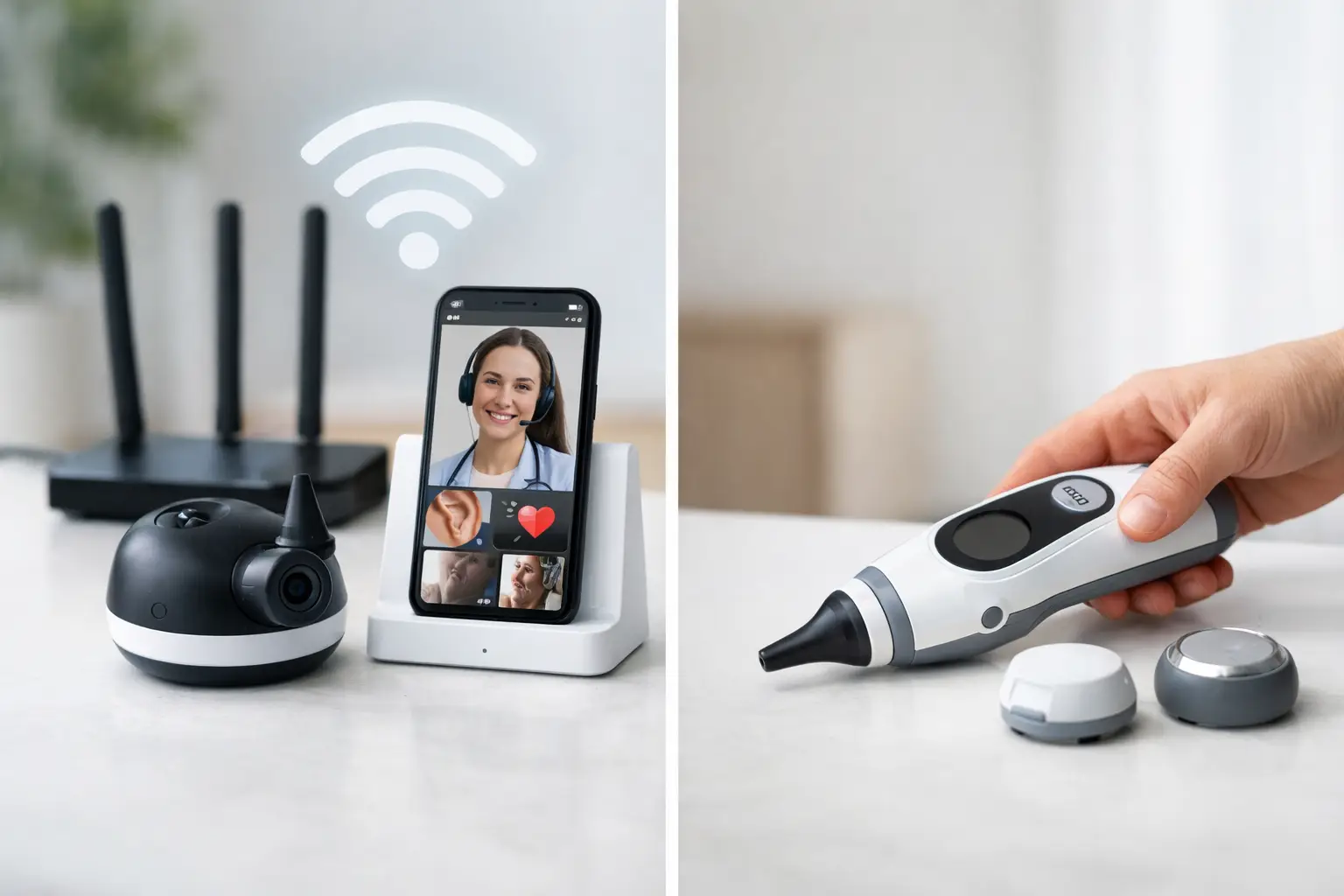
When a remote exam stalls because the patient location has weak internet, the technology decision stops being about features and starts being about access. That is why the distinction matters: Tytocare requires a WiFi connection, while the Dr. Miltie N9+ does not. For healthcare organizations serving pediatric populations, rural communities, schools, home-based settings, and safety-net environments, that difference can shape whether care happens at all.
This is not a small technical detail. In telehealth procurement, connectivity assumptions often hide inside product demos and specification sheets. A platform may perform well in a controlled office or a well-connected household, yet become harder to use in homes with unstable broadband, school-based programs with inconsistent network policies, community outreach settings, or rural areas where connectivity varies by block or by building.
Why connectivity changes the care model
A device that depends on local WiFi assumes the care environment can support it. Sometimes that is true. In a suburban household with reliable broadband and a caregiver who is comfortable troubleshooting connections, WiFi dependence may not create much friction. In many real-world care settings, though, that assumption breaks down quickly.
Home visits, school nurse offices, mobile clinics, transitional care programs, and community-based screenings are often built around flexibility. Staff may move from one location to another. Patients may not know their network credentials. Institutional guest networks may block device pairing. Rural broadband may be slow, unstable, or simply unavailable in the moment care is needed. In those cases, a WiFi-dependent virtual exam platform can add operational steps at exactly the wrong time.
By contrast, a platform designed to function without relying on local WiFi can reduce those points of failure. That matters for clinicians, but it matters just as much for operations leaders responsible for implementation success, workflow consistency, staff training, and patient adoption.
Tytocare requires a WiFi connection. The Dr. Miltie N9+ does not.
This comparison speaks directly to care delivery outside traditional brick-and-mortar environments. If Tytocare requires a WiFi connection, organizations must plan around network availability at the site of care. That may mean pre-visit connectivity checks, patient or caregiver education, backup procedures when pairing fails, and a narrower definition of where virtual physical exams can be performed reliably.
If the Dr. Miltie N9+ does not require WiFi in the same way, the deployment model becomes more flexible. A clinician-directed remote exam can be brought into settings where connectivity is less predictable, without making the patient or caregiver solve an infrastructure problem first. For many health systems, that changes the conversation from “Can the patient connect?” to “Can we deliver care where the patient is?”
That shift is especially relevant when organizations are trying to extend services into underserved communities. Access barriers are rarely limited to clinician shortages alone. They also include transportation, caregiver work schedules, school absence, broadband instability, and the complexity of coordinating follow-up visits. A virtual care model that is less dependent on site-based WiFi can help remove one more barrier from an already complicated process.
What this means in pediatric care
Pediatric telehealth has different demands than adult virtual care. Children do not always tolerate long setup times. Caregivers may be juggling siblings, work demands, and limited time windows. Autistic children and pediatric patients with special healthcare needs may benefit from care that happens in familiar, lower-stress environments, but those environments are not always technically optimized for connected devices.
In practice, every added setup step can affect the quality of the encounter. If a caregiver has to switch networks, reset a router, locate passwords, or troubleshoot device pairing before an exam starts, the stress level rises for everyone involved. That can reduce engagement and shorten the clinical interaction.
A more mobile approach helps care teams preserve what matters most in pediatrics: attention, calm, and continuity. If the exam system is easier to deploy in homes, schools, pediatric practices, or community clinics without depending on local WiFi, clinicians can focus more on symptoms, physical findings, and caregiver concerns rather than technical workarounds.
This also supports follow-up care. Pediatric chronic disease management, post-discharge monitoring, and symptom checks often work best when the technology fits into family life rather than asking families to adapt to the technology.
Rural and community-based programs feel the difference first
Rural health leaders do not need a reminder that coverage maps and real-life connectivity are not the same thing. A county may appear served on paper while households still struggle with unstable access, dead zones, or limited bandwidth. Community sites may have internet, but not the kind of reliable, open network a medical device expects.
That is why the statement “Tytocare requires a WiFi connection, the Dr. Miltie N9+ does not” carries operational weight for rural health clinics, federally qualified health centers, critical access hospitals, and community-based care organizations. It speaks to the reality of distributed care.
For these organizations, virtual examination technology is not just a convenience layer. It is part of how they expand specialty access, reduce unnecessary travel, support local staff, and keep care closer to home. A solution that is less constrained by site-based WiFi can be easier to scale across outreach programs, school-linked services, care transitions, and remote monitoring workflows.
There is also a staffing angle. Rural and safety-net organizations often operate with lean teams. They need tools that reduce support burden, not tools that generate more calls about connectivity. When implementation teams can standardize workflows without depending on each care site’s local network conditions, adoption tends to be smoother and training becomes more practical.
The real issue is reliability under real conditions
Technology buying decisions in healthcare are rarely about one feature in isolation. They are about how a set of technical choices affects clinical reliability, patient access, workflow design, reimbursement readiness, and staff burden.
A WiFi requirement is not automatically a flaw. In some settings it may be entirely manageable. Large health systems with tightly controlled deployment environments, strong patient tech support, and consistent home connectivity across the populations they serve may find that WiFi dependence does not materially limit performance.
But many organizations are not operating in that kind of environment. They are trying to reach patients in homes with uneven broadband, schools with restrictive IT policies, outreach locations with variable infrastructure, and communities where digital access cannot be taken for granted. In those settings, a non-WiFi-dependent model can be a meaningful advantage.
That advantage extends beyond convenience. It can improve visit completion rates, reduce delays, and support more equitable access to clinician-directed virtual exams. If the technology works across a broader range of environments, the care program itself becomes more resilient.
Questions decision-makers should ask before choosing
Healthcare leaders comparing remote exam platforms should look past the feature checklist and ask harder operational questions. Where will this tool actually be used? Who will set it up? What happens when the internet at the point of care is weak, restricted, or unavailable? How much staff time will be spent troubleshooting? Which patient populations are most likely to be excluded by a connectivity assumption?
They should also consider the broader care model. Is the organization building a telehealth program that stays mostly within conventional outpatient settings, or one that extends into homes, schools, rural communities, and distributed care environments? The answer changes how important network independence becomes.
For programs focused on pediatric access, rural transformation, chronic care management, and caregiver-supported virtual exams, connectivity flexibility often becomes central rather than secondary. It affects scale, equity, and day-to-day usability.
One reason institution-facing buyers increasingly scrutinize this issue is that virtual care no longer lives at the margins. It is now tied to care coordination, patient engagement, quality goals, and financial sustainability. A platform that performs reliably across real-world environments supports those goals more effectively than one that works well only when the local infrastructure cooperates.
In that context, the distinction between Tytocare and the Dr. Miltie N9+ is not merely about internet preference. It is about whether your care model depends on the patient site being technically ready before the exam can begin. For many organizations, especially those serving children, rural communities, and underserved populations, that is a strategic difference worth taking seriously.
The best virtual care technology is not the one that looks simplest in a demo. It is the one that keeps care moving when the environment is less than ideal, because that is often where access matters most.
Move from information to action
See how the N9+ can fit your organization.
Explore the remote physical exam platform or request a focused demonstration.