
Family Telehealth Solution for Households: Dr. Miltie N9+
See how a family telehealth solution for households Dr. Miltie N9+ supports virtual exams, pediatric care, RPM, and caregiver-centered access.
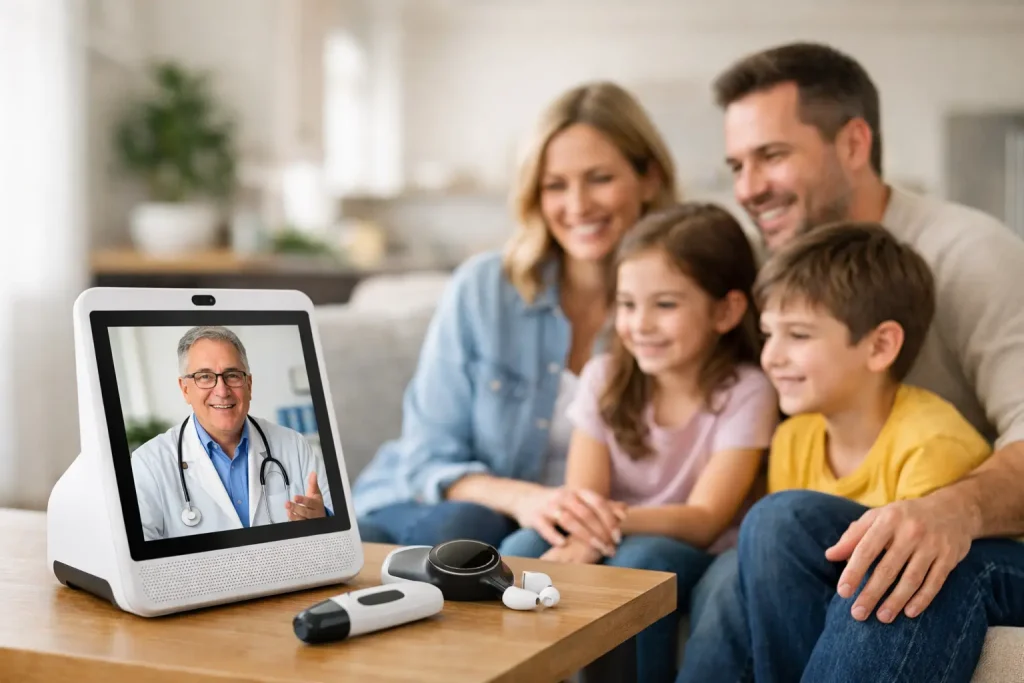
When a child needs a follow-up visit, a medication check, or ongoing monitoring, the hardest part is often everything around the appointment. Parents miss work. Siblings come along. Long drives turn a routine visit into a full-day event. A family telehealth solution for households Dr. Miltie N9+ changes that equation by bringing clinician-directed virtual examination and connected monitoring closer to where families already are.
For healthcare organizations, that shift is not just about convenience. It affects access, continuity, caregiver participation, and the quality of information available between visits. In pediatric care, rural care, and community-based models, the home is often the most practical setting for ongoing engagement. The challenge is making remote care clinically useful rather than limiting it to a basic video call.
Why a family telehealth solution for households matters
Most households do not experience healthcare as a single event. They experience it as a series of logistics, trade-offs, and follow-ups. That is especially true for families managing asthma, ADHD, developmental conditions, diabetes, post-discharge needs, or complex pediatric care plans. A standard virtual visit can help with conversation, but it may fall short when clinicians need more objective data or a better view of the patient’s current condition.
That gap matters. If providers cannot capture clinically relevant information remotely, families still end up traveling for issues that could have been handled closer to home. When the patient is a young child, an autistic child, or a pediatric patient with special healthcare needs, the burden becomes even more significant. A familiar setting can reduce stress and improve cooperation, but only if the technology supports a real exam workflow.
A household-focused telehealth model works best when it supports three goals at once. It should help clinicians assess patients with confidence, help caregivers participate in care decisions, and help organizations build a financially sustainable virtual care pathway. If one of those pieces is missing, adoption tends to stall.
What makes the Dr. Miltie N9+ different
The Dr. Miltie N9+ is not designed as a consumer wellness gadget. It is built for healthcare delivery, with connected tools that support virtual physical exams, remote patient monitoring, and care coordination beyond the exam room. That distinction is important for provider organizations evaluating telehealth infrastructure.
In practice, a family telehealth solution for households like the Dr. Miltie N9+ supports a more complete remote encounter. Instead of relying only on a camera and conversation, clinicians can access device-enabled exam capabilities and clinically relevant patient data during a virtual interaction. For organizations expanding hospital-at-home workflows, pediatric follow-up, chronic care management, or rural outreach, that creates a different level of clinical utility.
It also changes how care teams think about the household. The home becomes an active care site rather than a passive location where a patient logs into a call. That supports more timely interventions, better follow-up, and stronger visibility into how patients are doing between in-person visits.
Better fit for pediatric and special needs care
Pediatric telehealth often fails when the technology is designed around adult assumptions. Children may not tolerate rushed workflows, unfamiliar environments, or long waits. For autistic children and pediatric patients with special healthcare needs, sensory stress and transitions can be as disruptive as the medical issue itself.
A household-based virtual exam model can reduce those barriers. Children are often more regulated at home, and caregivers can participate more fully without the pressure of travel, waiting rooms, and compressed appointment timing. That can improve the quality of observation and the consistency of follow-up.
There is nuance here. Not every pediatric encounter should move into the home. Acute emergencies, procedures, and cases requiring immediate hands-on intervention still need in-person care. But for many follow-ups, chronic condition check-ins, medication management, developmental support, and clinician-directed assessments, home-based telehealth can be the more appropriate setting.
This is where connected exam and monitoring capabilities matter. Pediatric clinicians do not need telehealth that merely replicates a video conference. They need tools that help them evaluate, document, monitor, and engage families in ways that support continuity of care.
How households become part of the Circle of Care
A strong telehealth program does not stop with the patient and one provider. It connects caregivers, clinicians, care coordinators, and community-based support around a shared plan. That is particularly relevant in pediatrics and in underserved communities, where care often spans school settings, primary care, specialty services, and home-based support.
A household-centered model fits this broader Circle of Care approach. Caregivers can be present during the visit, reinforce treatment plans, and help collect ongoing information between encounters. Care teams can monitor progress more consistently and adjust care pathways when a family’s needs change.
For healthcare organizations, this improves more than the patient experience. It can support reduced missed appointments, better adherence, stronger patient engagement, and more effective chronic care management. It may also help organizations create more consistent touchpoints with families who otherwise struggle to maintain regular follow-up due to transportation, work schedules, or distance.
Operational value for rural and safety-net providers
Rural health clinics, federally qualified health centers, critical access hospitals, and community health centers face a specific challenge. They are expected to expand access while managing workforce constraints, reimbursement pressure, and geographic barriers. Telehealth is often positioned as the answer, but many programs underperform because they do not provide enough clinical depth.
A family telehealth solution for households Dr. Miltie N9+ is more compelling in these settings because it supports care delivery beyond simple video triage. It can help organizations extend clinical reach into homes, schools, and distributed community settings while maintaining a clinician-directed model of care.
That matters in underserved areas where patients may delay care because of travel time, fuel cost, caregiver availability, or weather. It also matters for workforce efficiency. If the right encounters can be managed remotely with better data capture and monitoring, scarce clinical resources can be used more effectively.
Still, implementation should be realistic. Organizations need workflow design, training, and reimbursement awareness, not just hardware. The most successful virtual care programs are built around clinical use cases, staffing models, and documentation requirements from the start.
What healthcare leaders should evaluate
For decision-makers, the right question is not whether telehealth belongs in the household. It is whether the model supports real clinical workflows, real reimbursement pathways, and real family needs.
Start with the patient populations. If your organization serves children with chronic conditions, families in rural catchment areas, patients with high no-show risk, or pediatric populations that benefit from lower-stress care environments, household-based telehealth deserves serious consideration. The same is true for organizations trying to reduce avoidable travel and improve post-discharge follow-up.
Next, evaluate exam quality and data relevance. Can clinicians do more than talk? Can they gather the information needed for meaningful assessment and treatment planning? If not, the program may generate volume without generating value.
Then look at operational fit. Telehealth tools should support onboarding, staff training, care coordination, and reimbursement-aware deployment. Programs fail when they create parallel processes that burden already stretched teams. They succeed when the technology fits into care delivery, documentation, and population health strategy.
Finally, consider caregiver participation. In household care, the caregiver is often central to success. A useful telehealth model should make it easier for caregivers to join visits, understand next steps, and stay connected to the care team. That is especially important in pediatrics, where outcomes often depend on what happens after the appointment.
From virtual visits to virtual care delivery
There is a meaningful difference between offering telehealth and building a virtual care capability. Video alone may solve one access problem, but it does not necessarily support examination, monitoring, or continuity. Healthcare organizations that want to extend care into households need a model that is clinically credible, operationally practical, and adaptable across populations.
That is why device-enabled virtual exams and connected monitoring are becoming more relevant. They move telehealth closer to actual care delivery and farther away from the limitations of a basic digital front door. For provider organizations focused on pediatric access, rural health equity, and community-based care, that difference is not minor. It shapes whether virtual programs can scale and whether families will actually benefit from them over time.
The household is already where care management, symptom observation, and caregiver decision-making happen. The next step is giving clinical teams a better way to participate in that reality, with tools that respect both the complexity of healthcare operations and the lived experience of families.
Move from information to action
See how the N9+ can fit your organization.
Explore the remote physical exam platform or request a focused demonstration.