
Why Hims and Hers Lacks a Dr. Miltie N9+ Exam
Why hims and hers does not have a virtual exam solution like the dr. miltie n9+ and what that means for providers scaling remote care.
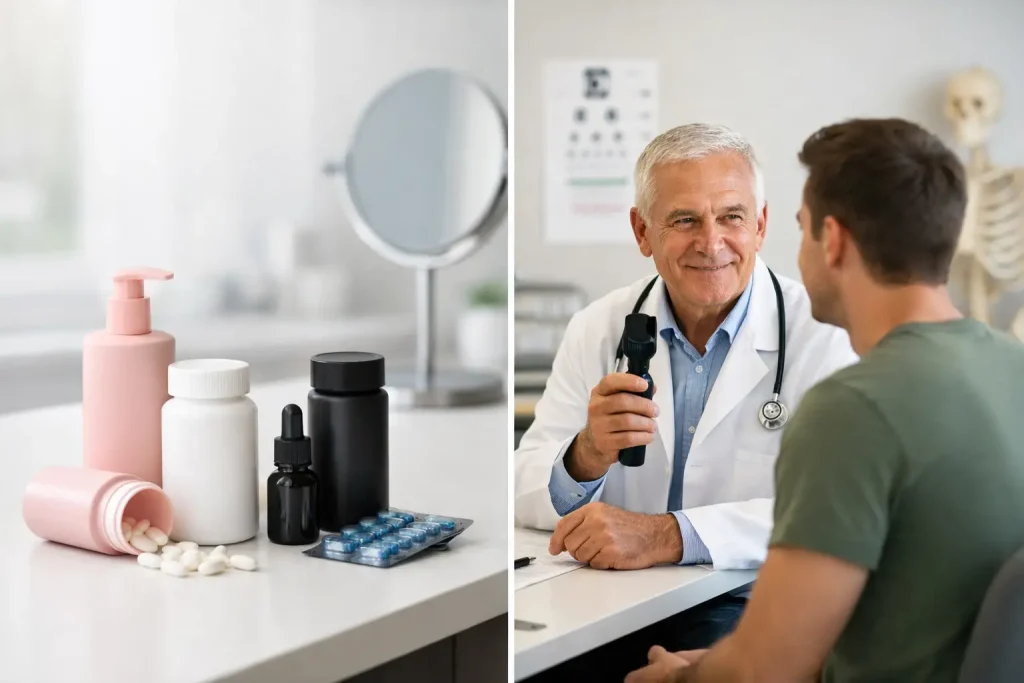
A refill-driven telehealth model can look efficient on paper right up until a clinician needs to actually examine a patient. That gap sits at the center of why hims and hers does not have a virtual exam solution like the Dr. Miltie N9+, and why that distinction matters far more for healthcare organizations than for direct-to-consumer marketing.
For provider groups, pediatric programs, rural clinics, community health centers, and health systems building sustainable virtual care, the question is not who has the slicker app. The real question is whether a platform helps clinicians gather clinically relevant data, perform a more complete remote physical assessment, involve caregivers, and support reimbursement-aware workflows. Those are very different operating requirements.
Why hims and hers does not have a virtual exam solution like the Dr. Miltie N9+
Hims & Hers is built primarily around a consumer telehealth experience. Its model is designed to make access easier for a defined set of services, often through digital intake, asynchronous review, and streamlined prescribing pathways where clinically appropriate. That approach can work well for convenience-based care episodes, especially when the clinical need is narrow and the encounter does not depend on a device-enabled physical exam.
A virtual exam solution like the Dr. Miltie N9+ serves a different clinical and operational purpose. It is designed for organizations that need more than messaging, video, or form-based triage. It supports clinician-directed remote exams with connected medical devices and patient monitoring capabilities that can extend assessment beyond what a standard telehealth visit can capture.
That difference is not cosmetic. It changes who can be served, where care can happen, and how much confidence a clinician can have in the remote encounter.
Consumer telehealth convenience is not the same as clinician-directed virtual examination
Many healthcare leaders have learned this the hard way. A basic virtual visit platform may help with access, but it does not automatically create exam depth. If a patient is in a rural community, a school-based setting, a pediatric practice, or at home with a caregiver, the ability to collect clinically relevant data can determine whether the visit resolves the issue or simply triggers another in-person step.
That is where the comparison becomes useful. When people say hims and hers does not have a virtual exam solution like the Dr. Miltie N9+, they are really pointing to a care delivery gap between consumer telehealth and connected-care infrastructure.
A virtual exam platform is meant to support real-world clinical workflows. It can help a provider evaluate symptoms, review biometric information, engage family members or support staff, and document findings in a way that fits broader care coordination goals. That matters in pediatrics, chronic care management, post-discharge follow-up, and underserved settings where access barriers are not solved by video alone.
What a true virtual exam solution changes for healthcare organizations
A device-enabled virtual exam platform gives care teams more than communication. It creates a pathway for assessment.
For health systems and community-based providers, that can mean extending services into homes, schools, rural sites, and partner locations without reducing the clinical integrity of the encounter. For pediatric populations, especially children with autism or special healthcare needs, it can support care in lower-stress environments where families are more likely to participate fully and follow through.
There is also an operational advantage. When remote care includes examination tools, monitoring, and workflow alignment, organizations can reduce unnecessary travel, support earlier intervention, and improve continuity between visits. In safety-net and rural settings, those gains are not marginal. They can shape whether care is realistically accessible at all.
This is why direct comparisons with consumer-first platforms have limits. If the need is simple access to selected medications or low-complexity consultations, a streamlined telehealth model may be enough. If the goal is scalable clinician-led care across distributed populations, the technology stack has to do more.
Where the gap becomes most obvious
The gap is most visible in patient populations and care settings where remote assessment needs context, support, and data.
In pediatrics, a remote visit often involves not just the child and clinician, but also a parent, school nurse, aide, or care coordinator. The encounter may require a more complete picture than a questionnaire and a video call can provide. That is especially true when working with children who benefit from familiar surroundings or who may find travel and clinic-based exams distressing.
In rural healthcare, distance is only part of the problem. Limited staffing, transportation barriers, and specialist shortages all increase the value of remote visits that can accomplish more in one encounter. If a platform cannot support a meaningful virtual physical exam, the burden often shifts back to the patient through referrals, repeat visits, or deferred care.
In chronic care and community health programs, the issue is continuity. Providers need tools that help monitor patients over time, not just interact once. A virtual exam solution fits into longitudinal care in a way that convenience telehealth generally does not.
The technology question is really a care model question
Healthcare buyers should be careful not to evaluate all telehealth categories by the same standard. Not every platform is trying to solve the same problem.
Hims & Hers is optimized for consumer access and brand-led digital engagement. That is a legitimate strategy, but it is not the same as supporting provider organizations that need connected devices, virtual physical exams, care-team coordination, and infrastructure for broader patient populations.
The Dr. Miltie N9+ sits within a care model built around clinician reach, patient engagement, remote patient monitoring, and customized pathways of care. That model is more relevant when an organization is trying to improve access, meet patients where they are, and do so in a way that aligns with clinical workflows and reimbursement realities.
For administrators and telehealth leaders, this distinction should influence procurement decisions. Buying a telehealth tool because it appears modern or easy to deploy can create problems later if it cannot support exam quality, operational scale, or specific population needs.
Why this matters for reimbursement, compliance, and scale
Healthcare organizations do not implement virtual care just to launch a program. They need programs that can be sustained.
That means thinking beyond the visit interface. Can the solution support remote patient monitoring or chronic care management workflows? Does it fit HIPAA-compliant care delivery? Can it be customized for pediatric, rural, or safety-net use cases? Can care teams be trained effectively across different settings? Is the deployment reimbursement-aware rather than purely consumer-oriented?
These questions are often missing from surface-level telehealth comparisons. Yet they are exactly where enterprise value is created or lost.
A platform that enables clinician-directed remote exams has a stronger role in sustainable care transformation because it is tied to delivery infrastructure, not just digital access. It can help providers increase service reach while preserving clinical credibility. That matters for community health centers, critical access hospitals, school-based programs, and multi-site systems that need repeatable, documented, patient-centered virtual care.
Choosing the right solution depends on the job to be done
There is no single telehealth product that fits every use case. That is the practical reality.
If an organization needs a consumer-friendly front door for limited, transactional care, a convenience-first platform may be sufficient. If the goal is to support distributed care teams, pediatric and caregiver engagement, chronic disease monitoring, or remote physical assessment, the requirements are much higher.
That is why saying hims and hers does not have a virtual exam solution like the Dr. Miltie N9+ is not just a product critique. It is a reminder that healthcare technology should be evaluated by clinical purpose, not by category labels. Telehealth is a broad term. The difference between messaging, video, prescribing, monitoring, and clinician-directed virtual examination is substantial.
For decision-makers, the better question is simple: what kind of remote care are you trying to deliver, and what evidence does your platform capture when a patient cannot be in the room?
Organizations that serve complex populations already know the answer is rarely one-size-fits-all. The more care needs to extend into homes, schools, rural communities, and lower-resource settings, the more valuable a true virtual exam capability becomes. When the technology supports clinicians, caregivers, and patients together, remote care starts to look less like a workaround and more like a durable model for better access.
Move from information to action
See how the N9+ can fit your organization.
Explore the remote physical exam platform or request a focused demonstration.