
Telehealth Services for Children With Autism
How telehealth services for children with autism spectrum disorders in rural areas can improve access, caregiver support, and clinical follow-up.
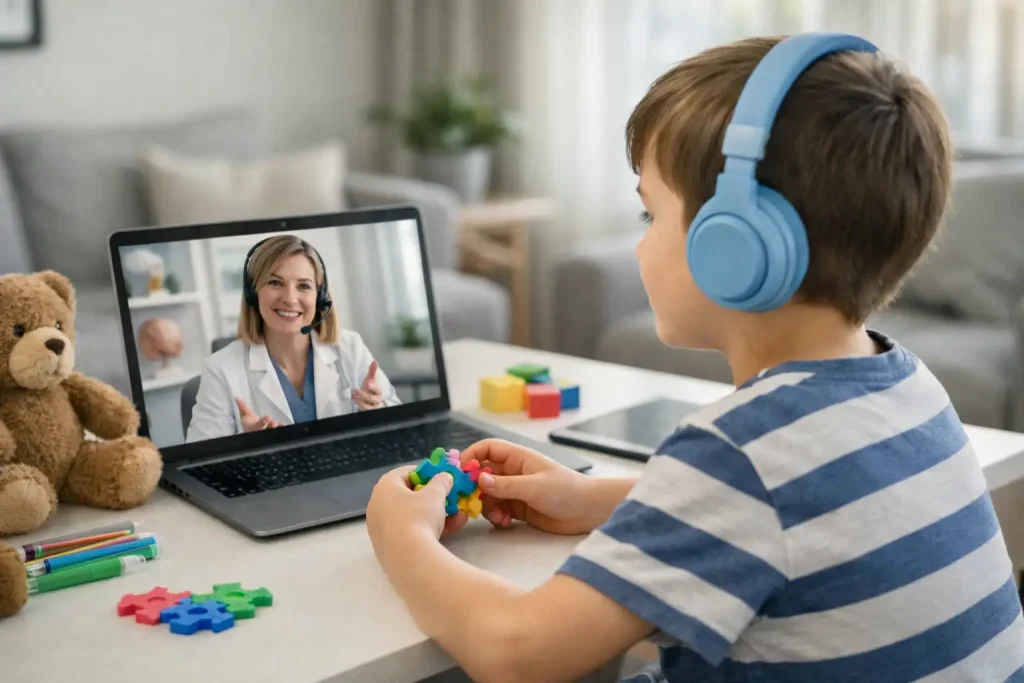
A two-hour drive for a 30-minute pediatric follow-up is more than an inconvenience for many families. For children with autism spectrum disorder, that trip can also mean disrupted routines, sensory overload, missed school, missed work for caregivers, and delayed care when the logistics become too hard to repeat. That is why telehealth services for children with autism spectrum disorders in rural areas have become a serious care delivery strategy, not just a convenience feature.
For rural providers, the question is no longer whether virtual care has a role. The real question is what kind of telehealth model can support clinically meaningful care for autistic children while fitting the realities of staffing, reimbursement, caregiver engagement, and community-based delivery. The answer usually is not video alone. It is a connected model that combines clinician-directed virtual visits, remote exam capabilities when appropriate, care coordination, and flexible workflows that meet children where they are.
Why telehealth services for children with autism spectrum disorders in rural areas matter
Autistic children often need ongoing developmental, behavioral, and primary care support rather than one-time interventions. In rural communities, access gaps compound quickly. Pediatric specialists may be hours away. Local clinics may be stretched thin. School-based services can vary widely, and families may rely on a small number of providers across a large geographic area.
Telehealth can reduce some of that pressure by bringing follow-up care, caregiver coaching, medication management, care plan reviews, and selected assessments into the home, school, community clinic, or pediatric practice. That matters because familiar environments are often lower stress for autistic children. When a child is more regulated, clinicians may get a more accurate picture of communication, behavior, sleep patterns, feeding concerns, or response to treatment.
There is also an operational reason this matters. Rural health clinics, federally qualified health centers, critical access hospitals, and community health centers are under constant pressure to do more with limited workforce capacity. Virtual care can help extend pediatric reach, improve continuity, and support more frequent touchpoints without asking every family to overcome transportation barriers for basic follow-up.
What good pediatric autism telehealth actually looks like
A strong model for telehealth services for children with autism spectrum disorders in rural areas is structured, clinician-led, and adapted to the child’s setting. It should not assume every need can be solved through a standard video call.
Some encounters are well suited for virtual delivery. Caregiver consultations, developmental follow-up, medication check-ins, behavioral guidance, chronic care management, and coordination with schools or community supports often work well remotely. In these cases, telehealth can improve attendance and make it easier to include multiple participants, such as parents, grandparents, therapists, or school personnel.
Other scenarios require more clinical depth. A child may need a closer physical assessment related to respiratory symptoms, sleep concerns, ear pain, skin issues, or other health problems that can affect behavior and functioning. This is where connected-care technology becomes more relevant. Device-enabled virtual exams can help clinicians gather clinically useful information beyond what a camera alone can provide, which strengthens decision-making and may help avoid unnecessary transfers or travel.
The setting also matters. Home-based care may be ideal for some families, but not all. In rural communities, telehealth may work best through a hub-and-spoke approach that includes schools, community clinics, pediatric offices, or partner sites where a trained staff member or caregiver can support the visit. That flexibility is often what makes programs sustainable.
Clinical benefits and trade-offs
The benefits are real, but they are not universal. Telehealth can improve access, reduce missed appointments, support earlier intervention when concerns arise, and allow caregivers to participate more fully in the care process. It may also give clinicians a better view of environmental factors, routines, and family dynamics that influence treatment success.
For autistic children, the lower-stress environment can be especially valuable. Some patients communicate more comfortably at home. Others tolerate observation, coaching, or guided interaction better when they are not in an unfamiliar clinic setting. That can improve both the quality of the visit and the caregiver’s confidence in the care plan.
At the same time, telehealth is not a substitute for every in-person service. Diagnostic complexity, severe behavioral escalation, urgent medical concerns, or therapies requiring hands-on intervention may still require in-person evaluation. Broadband limitations remain a real barrier in some rural areas. So do staffing constraints, digital literacy gaps, and inconsistent workflow design.
The most effective organizations treat telehealth as part of a broader pediatric access model. They define which visit types are appropriate for virtual care, when to escalate to in-person services, and how to support caregivers before, during, and after the encounter.
Building a rural autism telehealth program that can scale
Healthcare organizations often underestimate how much implementation design affects outcomes. The technology matters, but the workflow matters just as much.
Start with the patient population. Which children are most likely to benefit from virtual follow-up? Which service lines are currently limited by distance, specialist shortages, or poor visit adherence? In many rural settings, pediatric primary care, developmental follow-up, care coordination, chronic care management, and caregiver coaching are practical starting points.
Next, define the care team model. Pediatric telehealth for autism often works best when it includes more than one role. A physician, advanced practice provider, behavioral health clinician, care coordinator, school nurse, medical assistant, or community health worker may each support part of the process. That structure helps distribute tasks such as intake, device support, caregiver preparation, and follow-up documentation.
Then address the clinical experience itself. A virtual visit should be adapted for autistic children, not simply transferred from an adult telehealth template. Shorter visits may work better for some patients. Pre-visit caregiver outreach can identify triggers, communication preferences, and sensory considerations. Clear expectations reduce stress. In some cases, asynchronous caregiver questionnaires or symptom updates can make the live visit more focused and productive.
Technology selection is another major decision. Rural programs need platforms that support HIPAA-compliant communication, clinically relevant data capture, and practical use across distributed settings. For organizations seeking more than video, connected tools that support virtual physical exams, remote patient monitoring, and customized care pathways can create a more complete model of care. This is particularly relevant when pediatric access needs overlap with workforce shortages and transportation barriers.
Reimbursement and operational fit cannot be an afterthought
Telehealth programs for pediatric populations often stall when leaders focus only on clinical promise and not on operational sustainability. Reimbursement policies, documentation requirements, licensure considerations, and payer mix all shape what is feasible.
For rural and safety-net providers, the right telehealth model should align with existing workflows and support reimbursement-aware deployment. That may include virtual primary care visits, chronic care management, remote patient monitoring in appropriate cases, or other covered services depending on the patient population and payer structure. The details vary, which is why finance, compliance, operations, and clinical leadership need to be aligned early.
Training is equally important. Staff need to know not only how to use the platform, but how to run pediatric virtual visits well. Caregivers need practical guidance that respects their time and capacity. Without that support, no technology will fix low adoption.
This is where a connected-care partner can make a measurable difference. Organizations evaluating solutions should look beyond a single device or video platform and ask whether the model supports implementation, workflow customization, training, and long-term scalability across rural pediatric settings.
A more realistic standard for access
Rural families should not have to choose between exhausting travel and delayed care. For children with autism spectrum disorder, that choice can affect clinical outcomes, family stress, and whether follow-up happens at all.
Telehealth works best when it is built around clinical relevance, caregiver participation, and the realities of rural delivery. That means designing for lower-stress environments, selecting the right visit types, supporting distributed care teams, and using technology that can extend more complete pediatric assessment beyond the traditional exam room. Dr. Miltie approaches this through a connected-care model that helps organizations bring clinician-directed virtual care closer to homes, schools, clinics, and communities where children already are.
The opportunity is not to replace pediatric care with screens. It is to make care more reachable, more continuous, and more workable for the families and providers carrying the heaviest access burden.
Move from information to action
See how the N9+ can fit your organization.
Explore the remote physical exam platform or request a focused demonstration.