
Telehealth for Children With Autism Spectrum Disorder
Telehealth for children with autism spectrum disorder can expand access, reduce stress, and support caregiver-centered pediatric care delivery.
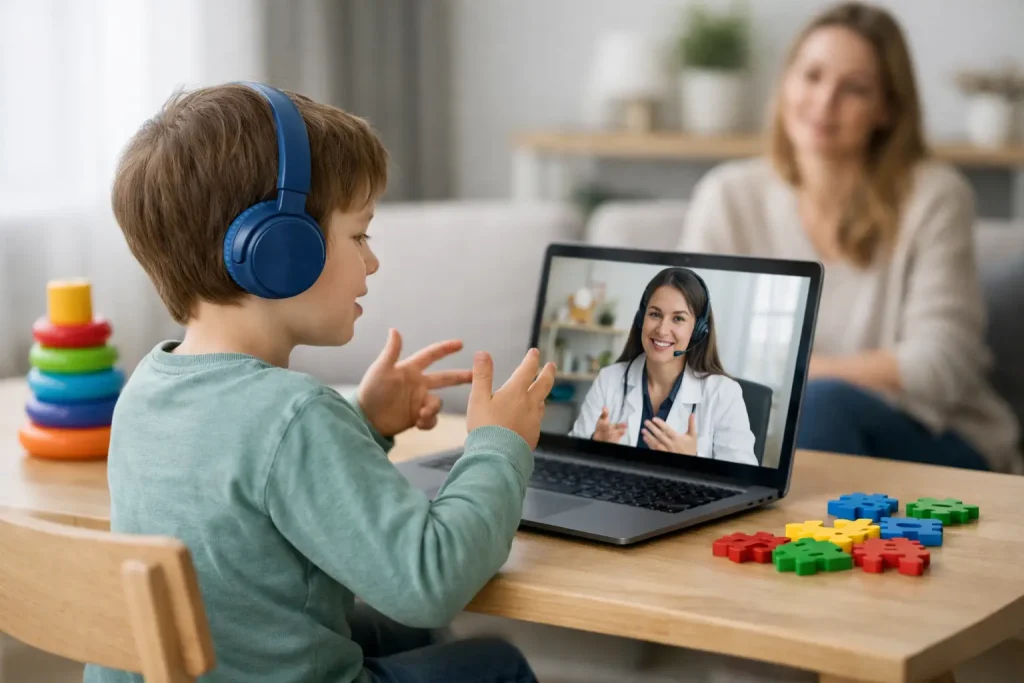
A child who struggles with bright lights, waiting rooms, unfamiliar sounds, or long car rides may never show up to an appointment in the same state they started the day. That reality is one reason telehealth for children with autism spectrum disorder has become a strategic care delivery model, not just a convenience feature. For many pediatric organizations, virtual care creates a more clinically useful encounter because the child is seen in an environment that is familiar, lower stress, and more reflective of daily functioning.
For providers and healthcare leaders, the question is no longer whether telehealth can play a role in autism care. The more useful question is where it fits, where it does not, and what infrastructure is required to make it clinically sound, operationally practical, and financially sustainable.
Where telehealth for children with autism spectrum disorder works best
Children on the autism spectrum often benefit from predictability, caregiver presence, and reduced sensory disruption. A home-based or school-based virtual visit can support all three. That does not mean every service should shift online, but it does mean telehealth can improve access and care continuity in ways traditional models often cannot.
Routine follow-up is one of the clearest use cases. When a clinician needs to review behavior changes, discuss sleep concerns, assess medication response, support care planning, or coach caregivers on daily strategies, a virtual encounter can be highly effective. In many cases, the home environment gives the care team better context than an exam room ever could. Providers may observe communication patterns, transitions, eating behaviors, sleep setup, or environmental triggers that would otherwise be described secondhand.
Telehealth also supports interdisciplinary coordination. Many children with autism spectrum disorder receive care across pediatrics, behavioral health, developmental services, therapy programs, school support teams, and family caregivers. Virtual care can make it easier to bring those voices together without requiring every participant to travel, take time off work, or navigate separate appointments.
For rural clinics, community health centers, and pediatric programs serving medically underserved areas, this matters even more. Access barriers are not only about provider shortages. They also include transportation, caregiver work schedules, distance from specialty care, and the cumulative burden of repeated visits.
The clinical value is access plus better observation
Telehealth is sometimes framed as a compromise when in-person care is hard to reach. In pediatric autism care, that framing is too narrow. In the right scenario, virtual encounters can improve the quality of observation.
A child may communicate more naturally from home. A caregiver may be more comfortable raising concerns in a familiar setting. A clinician may get a clearer picture of routines, sensory triggers, adherence challenges, and caregiver capacity. Those details can shape more realistic care plans.
This is especially relevant for follow-up and chronic care management. Autism-related care often includes ongoing adjustment rather than one-time intervention. Progress can be uneven. Symptoms can shift with developmental stage, school transitions, family stress, or changes in coexisting conditions such as anxiety, sleep disruption, or gastrointestinal issues. Telehealth gives organizations a practical way to stay connected between higher-acuity visits and reduce gaps in oversight.
Where virtual care has limits
Telehealth is not a blanket replacement for in-person pediatric care, and strong programs are clear about that. There are times when a hands-on exam, in-person developmental assessment, urgent evaluation, or procedural care is necessary. Children with complex medical needs may require physical examination findings that cannot be adequately captured through a basic video platform alone.
This is where telehealth design matters. A standard consumer video call is very different from a clinician-directed virtual exam supported by connected devices and structured workflows. If an organization wants to use virtual care for more than conversation, it needs tools that help clinicians assess, document, and act on clinically relevant data.
That is particularly important for children with autism spectrum disorder who may have coexisting pediatric health issues that are difficult to assess when the visit is limited to screen-based observation alone. Depending on the clinical objective, teams may need visibility into vital signs, remote exam inputs, longitudinal monitoring data, or caregiver-assisted assessments.
Building a pediatric-ready model
The most successful telehealth programs for autistic children are not technology-first. They are care-model first. They start with the needs of the child, the caregiver, and the clinical team, then align workflows and tools around those realities.
That begins with visit selection. Not every encounter belongs on a virtual schedule. Organizations need clear criteria for which visits can be managed remotely, which require hybrid escalation, and which should remain in person from the start. Follow-up care, caregiver coaching, medication review, school coordination, and selected symptom check-ins are often strong candidates.
Preparation is equally important. Families should know what to expect before the visit, how long it will last, who should be present, and what data or observations may be helpful. For children who are sensitive to transitions, even the way a visit is introduced can affect success. A rushed connection and unfamiliar face on a screen may create distress. A predictable routine with caregiver support can produce a very different outcome.
Healthcare organizations also need telehealth workflows that account for caregiver participation as a clinical asset, not an afterthought. In autism care, caregivers often provide essential context on communication, behavior, routines, sleep, diet, adherence, and environmental stressors. Virtual care can make that input easier to gather, but only if the workflow leaves room for it.
Why device-enabled telehealth matters
For enterprise healthcare organizations, scale and clinical credibility depend on more than video access. A stronger model includes clinician-directed virtual examination capability, remote patient monitoring when appropriate, and documentation processes that support quality and reimbursement.
This is where platforms such as Dr. Miltie can add value. Device-enabled telehealth can help clinicians move beyond a limited visual encounter and support more complete pediatric assessments in homes, schools, community clinics, and other distributed settings. That matters for organizations serving autistic children because lower-stress environments often improve engagement, while connected tools help preserve clinical rigor.
The operational benefit is just as important. Telehealth programs often stall when the technology creates extra work, unclear protocols, or documentation gaps. A connected-care model should support customized workflows, caregiver engagement, and care coordination across the broader Circle of Care™. That is especially relevant when pediatric patients are moving between primary care, specialists, school-based services, and community-based supports.
Operational and reimbursement realities
Clinical leaders may see the value of telehealth for children with autism spectrum disorder quickly. Operations and finance teams still need a workable path to implementation.
That means asking practical questions early. Which visit types are eligible for telehealth under current payer rules? What documentation is required? Where does remote patient monitoring fit, if at all? How will staff be trained? Who owns triage, scheduling, technical support, and follow-up? What metrics will define success in the first six to twelve months?
There is no universal answer because payer mix, state policy, service line mix, and staffing model all shape the program. Still, reimbursement-aware deployment is essential. Programs that treat billing, compliance, and workflow as secondary concerns often struggle to scale, even when the clinical case is strong.
For rural and safety-net organizations, that challenge is paired with a significant opportunity. Telehealth can extend scarce pediatric expertise, reduce avoidable travel, and improve continuity for families who might otherwise defer care. But sustainability depends on selecting a model that aligns technology, staffing, and reimbursement from the beginning.
What healthcare leaders should evaluate
When evaluating a telehealth strategy for autistic children, the strongest organizations look beyond platform features and ask whether the model supports pediatric complexity. Can the technology support virtual physical exams when needed? Can caregivers participate easily? Can care teams coordinate across settings? Can the organization adapt workflows for school-based, community-based, or home-based encounters? Can the model support compliance and reporting requirements without overloading staff?
They also look at the child experience. A telehealth program may be technically functional and still fail if it adds sensory stress, creates rigid scheduling friction, or places too much burden on families. Pediatric success often comes from flexibility, not standardization alone.
That is the real promise of telehealth in autism care. It is not simply remote access. It is the ability to bring clinically credible care closer to the child, in a setting where observation may be more authentic, caregiver participation may be stronger, and follow-up may be more consistent.
For healthcare organizations trying to improve pediatric access, strengthen rural reach, and support more connected care delivery, telehealth can be a meaningful part of the answer when it is built with the child, the family, and the full care team in mind.
Move from information to action
See how the N9+ can fit your organization.
Explore the remote physical exam platform or request a focused demonstration.