
Virtual Examinations for Home Health Agencies
Learn how virtual examinations for home health agencies improve access, support clinicians, capture better data, and strengthen care at home.
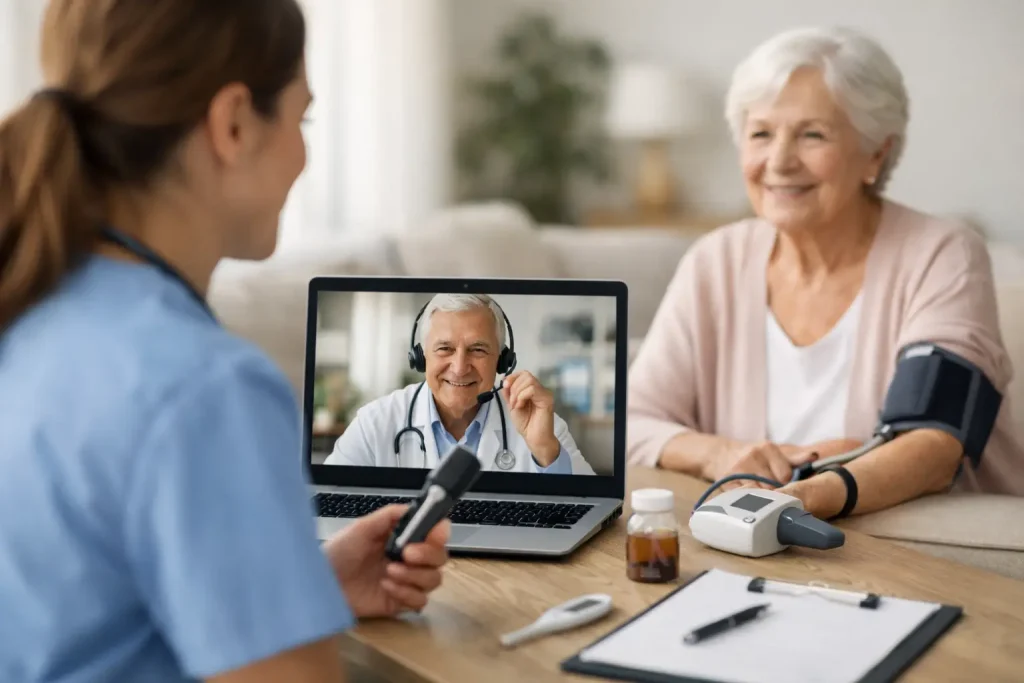
A home health nurse is in the living room with a patient who is short of breath, a caregiver is worried, and the ordering clinician is miles away. That gap is where virtual examinations for home health agencies become far more than a telehealth convenience. When designed well, they give clinicians a way to assess, document, and guide care in the home with more clinical context than a basic video visit can provide.
For agencies under pressure to reduce avoidable hospital utilization, support sicker patients at home, and operate with limited staff, the appeal is obvious. But the real question is not whether virtual exams are useful. It is whether they can fit clinical workflows, reimbursement realities, patient needs, and compliance requirements without creating more friction than value.
Why virtual examinations for home health agencies are gaining traction
Traditional home health has always depended on in-person observation, skilled judgment, and strong coordination with physicians and specialists. That model still matters. What has changed is the acuity of patients being managed at home and the expectation that care teams respond faster when status changes.
A phone call can describe symptoms. A standard video visit can add visual cues. Neither consistently delivers the clinically relevant data needed for a remote physical assessment. Virtual examination models are gaining traction because they move beyond conversation and into guided clinical evaluation. Depending on the setup, a remote clinician may be able to review heart and lung sounds, inspect the throat or skin, capture temperature and oxygen saturation, and support a more informed decision about escalation, follow-up, or treatment changes.
For home health agencies, that has operational value. It can help determine whether a patient needs an emergency department visit, an urgent office follow-up, or a same-day care plan adjustment at home. It can also strengthen communication between field staff and supervising clinicians by replacing vague symptom descriptions with documented findings.
What makes a virtual exam clinically meaningful
Not every telehealth interaction qualifies as a virtual examination. In home health, the difference matters because the stakes are higher. Agencies are often caring for patients with heart failure, COPD, wound concerns, post-acute needs, pediatric complexity, or multiple chronic conditions that can change quickly.
A clinically meaningful virtual exam usually includes three elements. First, there is a reliable way to connect the patient, caregiver, home health staff member, and remote clinician. Second, there are tools to capture exam data that support clinical decision-making rather than casual observation. Third, the process fits existing documentation, triage, and physician communication workflows.
That last point is often overlooked. Agencies do not need another disconnected platform that sits outside care management. They need a system that helps the nurse in the home, the clinician reviewing findings, and the organization responsible for quality and reimbursement all work from the same picture.
Where home health agencies see the strongest use cases
The best use cases are usually the ones where time, travel, and uncertainty create the greatest burden. Respiratory complaints are an obvious example. A patient with COPD symptoms may need more than a symptom check. Hearing lung sounds, reviewing oxygen levels, and visually assessing work of breathing can lead to a more confident next step.
Cardiac and chronic disease management are also strong fits. Weight changes, blood pressure trends, edema, medication adherence concerns, and caregiver observations often need clinical interpretation in context. A virtual examination can support that interpretation earlier, before a patient deteriorates enough to require acute care.
Pediatrics deserves special attention. Families caring for children with complex medical needs, autism, or other special healthcare needs often face a high burden when travel is required for follow-up assessment. In-home virtual exams can reduce that strain while keeping caregivers actively involved. For many children, being assessed in a familiar environment lowers stress and improves cooperation, which can make the encounter more clinically useful.
Wound follow-up, medication concerns, symptom changes after discharge, and hospice support can also benefit, though the value depends on how the agency structures care pathways. Some scenarios still require hands-on assessment. Virtual capability works best when it extends clinical reach, not when it tries to replace every in-person visit.
The operational case for adoption
Home health leaders usually evaluate new technology through three lenses: clinical value, staff burden, and financial sustainability. Virtual exams need to hold up in all three.
Clinically, they can improve the quality of decision-making by giving physicians and advanced practice clinicians better visibility into what is happening in the home. That may reduce unnecessary escalations while helping teams act faster when deterioration is real.
Operationally, virtual exams can support field staff who would otherwise have to rely on phone tag, delayed callbacks, or incomplete documentation. When the right tools are available at the point of care, the home visit becomes more productive. Staff are not just reporting findings. They are helping facilitate an immediate clinical review.
Financially, the picture depends on payer mix, program design, and documentation discipline. Agencies should look closely at where virtual exams fit alongside remote patient monitoring, chronic care management, transitional care efforts, and value-based initiatives. The strongest business case often comes from reduced avoidable utilization, better resource allocation, and improved clinician efficiency rather than from a single reimbursement pathway alone.
What to evaluate before choosing a solution
Technology decisions in home health rarely fail because the concept is weak. They fail because implementation is treated as a device purchase instead of a care delivery redesign.
Agencies should first ask what kinds of exams they need to support. A program focused on post-acute cardiopulmonary patients may require different capabilities than one serving pediatric populations or rural communities with limited access to specialists. The answer will shape device requirements, staffing models, and training needs.
Next comes workflow. Who initiates the exam? Is it triggered during a routine visit, after a symptom alert, or through a triage protocol? Who documents findings, and where? How are orders, follow-up actions, and escalation pathways handled? If those questions are not clear, even strong technology will feel cumbersome.
Compliance and reimbursement also need early attention. HIPAA compliance is table stakes, but agencies should go further and assess data governance, user controls, documentation standards, and integration with existing care processes. Reimbursement-aware deployment matters because a clinically strong model still has to be financially workable over time.
Training is another make-or-break issue. Field staff need confidence using connected exam tools in real patient homes, often under time pressure. Clinicians on the receiving end need consistent exam protocols so they can interpret findings appropriately. Without that shared clinical language, variability creeps in quickly.
The rural and community care advantage
For rural agencies and community-based providers, virtual examination capability can be especially valuable. Travel times are longer, specialist access is thinner, and staffing constraints are often more severe. In those settings, a home visit supported by a connected virtual exam can bring a broader level of clinical expertise into the encounter without asking the patient to leave home.
This is where a connected-care approach becomes more meaningful than a standalone telehealth tool. Agencies need technology that supports examination, patient monitoring, care coordination, and caregiver engagement across distributed settings. That is particularly relevant for safety-net organizations and programs trying to extend access in underserved areas while still meeting clinical and operational expectations.
One reason some healthcare organizations are moving in this direction is that they are no longer viewing home-based care as a downstream service. They are treating it as a strategic access point for prevention, chronic disease management, post-discharge stabilization, and pediatric support. In that model, virtual examinations are not an add-on. They are part of how care is organized.
A realistic view of the trade-offs
Virtual exams are not a cure-all. Some patients will not tolerate the technology well. Some homes have connectivity issues. Some conditions still require direct tactile assessment or procedures that cannot be replicated remotely. Agencies also need to guard against adding steps that slow staff down without delivering clear clinical benefit.
That is why selective deployment often works better than a broad, unfocused rollout. Start with high-impact use cases, define escalation criteria, and measure outcomes that matter. Look at hospital transfers, response times, clinician satisfaction, caregiver engagement, and documentation quality. The goal is not to virtualize every encounter. It is to strengthen the encounters where more timely clinical input changes the outcome.
Organizations that approach this thoughtfully tend to get better results. They match the technology to the population, align it with reimbursement and workflow, and build around the realities of home-based care. Platforms such as Dr. Miltie, which combine virtual examination capability, connected devices, care coordination support, and implementation planning, reflect that broader model.
The agencies that will benefit most from virtual examinations are the ones willing to treat them as part of care transformation rather than a quick technology layer. When home-based teams can bring more of the exam room into the home, they give patients, caregivers, and clinicians something that is often hard to create at a distance – a clearer clinical picture when timing matters most.
Move from information to action
See how the N9+ can fit your organization.
Explore the remote physical exam platform or request a focused demonstration.