Remote Patient Monitoring in Telemedicine Is Useful For
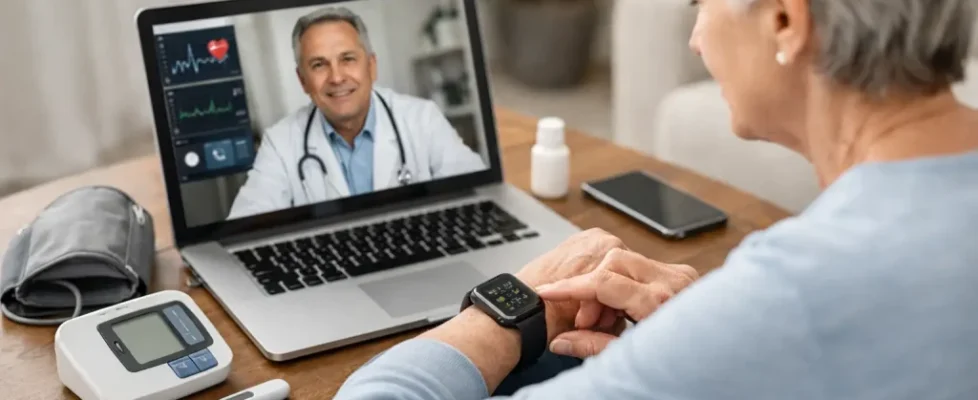
A child with asthma who develops symptoms after school, an older adult whose blood pressure trends upward between appointments, and a rural patient recovering after discharge all present the same operational challenge: the care team needs meaningful clinical information before the next office visit. Remote patient monitoring in telemedicine is useful for creating that connection between scheduled encounters, giving clinicians a clearer view of a patient’s condition while the patient remains in a familiar setting.
For healthcare organizations, remote patient monitoring (RPM) is not simply a way to collect readings. When it is clinician-directed, integrated into workflows, and paired with appropriate escalation protocols, RPM can support earlier intervention, more informed virtual visits, and continuity for patients who face barriers to in-person care. Its value depends on the clinical use case, the patient population, and the organization’s ability to act on the data it receives.
What Remote Patient Monitoring in Telemedicine Is Useful For
RPM is most useful when a care team needs repeated, actionable information that cannot be captured through an occasional visit alone. Depending on the program design, connected devices and virtual examination tools can help clinicians track physiologic measures, assess changes in symptoms, and determine whether a patient needs a medication adjustment, a virtual follow-up, an in-person evaluation, or urgent care.
For chronic disease management, this often includes conditions such as hypertension, diabetes, heart failure, chronic obstructive pulmonary disease, and asthma. A single elevated blood pressure reading may not change care. A trend of elevated readings, reviewed in the context of symptoms, medications, and adherence, may prompt the clinical team to intervene before the condition worsens.
RPM can also strengthen transitional care. After an emergency department visit or hospitalization, patients may need closer follow-up during a period when medication changes, limited mobility, and uncertainty about symptoms increase the risk of avoidable return visits. Regular monitoring gives care coordinators and clinicians a structured way to maintain contact, reinforce discharge instructions, and identify concerning changes sooner.
The model is equally valuable for preventive and ongoing primary care when access is limited by distance, transportation, work schedules, or caregiver availability. For rural health clinics, community health centers, federally qualified health centers, and critical access hospitals, the opportunity is to extend the reach of existing clinicians without treating virtual care as a substitute for every in-person service.
Pediatric Care Requires More Than Data Collection
Pediatric RPM programs should be designed around the child, the caregiver, and the clinician’s care plan. A device reading without context can be misleading. Caregivers often supply essential information about behavior, sleep, feeding, activity tolerance, medication use, and symptom changes that numbers alone cannot show.
This is especially relevant for children with asthma, diabetes, complex chronic conditions, or special healthcare needs. It can also be meaningful for autistic children who may find unfamiliar clinical environments distressing. When clinically appropriate, care delivered at home, in a school-based setting, or through a local community site can reduce travel and help clinicians observe a child in a lower-stress environment.
Virtual care does not remove the need for hands-on pediatric assessment. Rather, it can help organizations reserve in-person visits for the moments that require them while making routine follow-up more accessible. Connected virtual examination capabilities can add clinically relevant context to a video visit, allowing a clinician to guide an assessment instead of relying only on a caregiver’s description.
Caregiver participation is a core design requirement, not an optional feature. Programs succeed when instructions are clear, device use is realistic for the household, language and accessibility needs are addressed, and families know who will respond when they report a concern. A pediatric workflow that assumes every caregiver has reliable connectivity, available time, and prior technology confidence will leave patients behind.
Supporting Chronic Care Between Appointments
Chronic care management is one of the clearest RPM applications because chronic conditions change outside the exam room. The goal is not to create more alerts. It is to identify changes that matter clinically and direct the right level of response.
An effective program defines what will be monitored, who reviews the information, how often it is reviewed, and what happens when a threshold or symptom report triggers concern. For example, a care coordinator may conduct first-level outreach based on an established protocol, while a licensed clinician evaluates cases that require medication decisions or further assessment. The workflow should be documented, appropriately staffed, and aligned with the organization’s scope-of-practice policies.
Data can also make telemedicine visits more productive. Instead of spending much of a virtual visit establishing whether a patient’s condition has changed, the clinician can review relevant trends, ask focused questions, and determine next steps. That can improve the quality of the interaction without implying that every patient needs continuous monitoring.
Patient selection matters. RPM may be less appropriate when a patient cannot safely use the devices, lacks a reliable support person when one is needed, or has a condition that requires frequent in-person evaluation. Programs should offer alternatives rather than treating device participation as a requirement for receiving care.
Extending Clinical Reach in Rural and Underserved Communities
In many communities, the challenge is not a lack of need. It is the distance between patients and the services they need. A specialist may be hours away. A caregiver may have to miss work to attend an appointment. Weather, transportation availability, and limited local workforce capacity can turn routine follow-up into a substantial burden.
RPM and clinician-directed telemedicine can help organizations build more practical pathways. A patient may receive support through a local clinic, school, home health partner, or community site while the clinician remains at a central location. The model can preserve local relationships while expanding access to clinical expertise.
For safety-net providers, implementation should account for the digital divide. Cellular-enabled devices, multilingual education, accessible onboarding, and human support can be as important as the monitoring technology itself. A program that works only for patients with stable broadband and high digital literacy will not fully serve the communities most likely to benefit from expanded access.
Remote Patient Monitoring Is Useful for More Complete Virtual Visits
A basic video visit has limits. It can be effective for counseling, follow-up, behavioral health, medication discussions, and visual observation, but it may not provide enough clinical information for every decision. RPM becomes more useful when it is part of a broader virtual care model that enables clinicians to gather the right data for the encounter.
This may include connected measurements and guided virtual physical examination capabilities. The appropriate tools vary by specialty and care setting, but the principle remains consistent: technology should support a clinician’s assessment, not replace clinical judgment. Organizations should establish clear protocols for when a virtual exam is appropriate and when the patient needs in-person or emergency evaluation.
Dr. Miltie’s N9+ supports this connected-care approach by helping clinicians conduct virtual examinations and capture patient data beyond the traditional exam room. Combined with customized pathways of care and the Circle of Care™ model, the objective is to connect patients, caregivers, local support teams, and remote clinicians around a shared care plan.
The Operational Requirements Behind a Sustainable RPM Program
Technology procurement alone does not create a successful RPM service. Healthcare leaders should begin with a specific clinical problem, such as poor blood pressure control, gaps in post-discharge follow-up, limited pediatric specialty access, or excessive travel for routine care. The use case should define the patient population, success measures, staffing model, device needs, and escalation pathway.
A sustainable deployment also requires attention to HIPAA compliance, consent, device logistics, patient education, documentation, and integration with existing care coordination processes. Reimbursement may support qualifying services, including certain CMS-aligned RPM and chronic care management models, but billing rules, payer requirements, and documentation expectations vary. Organizations should validate coverage and operational requirements before projecting financial performance.
Clinical teams also need guardrails against alert fatigue. Thresholds should be individualized when appropriate, and the team should distinguish between readings that require immediate action, outreach within a defined timeframe, and routine review. More data is not automatically better care. Useful data is data that reaches the right person in time to make a difference.
The strongest programs treat RPM as an extension of relationship-based care. When clinicians can see meaningful trends, caregivers can participate more fully, and patients can receive support closer to home, telemedicine becomes more than a video connection. It becomes a practical way to keep care moving between the moments when patients can make it to the exam room.