
Teledoc Does Not Have a Virtual Exam Solution
Teledoc does not have a virtual exam solution like the Dr. Miltie N9+, which matters for providers needing clinically relevant remote assessment.
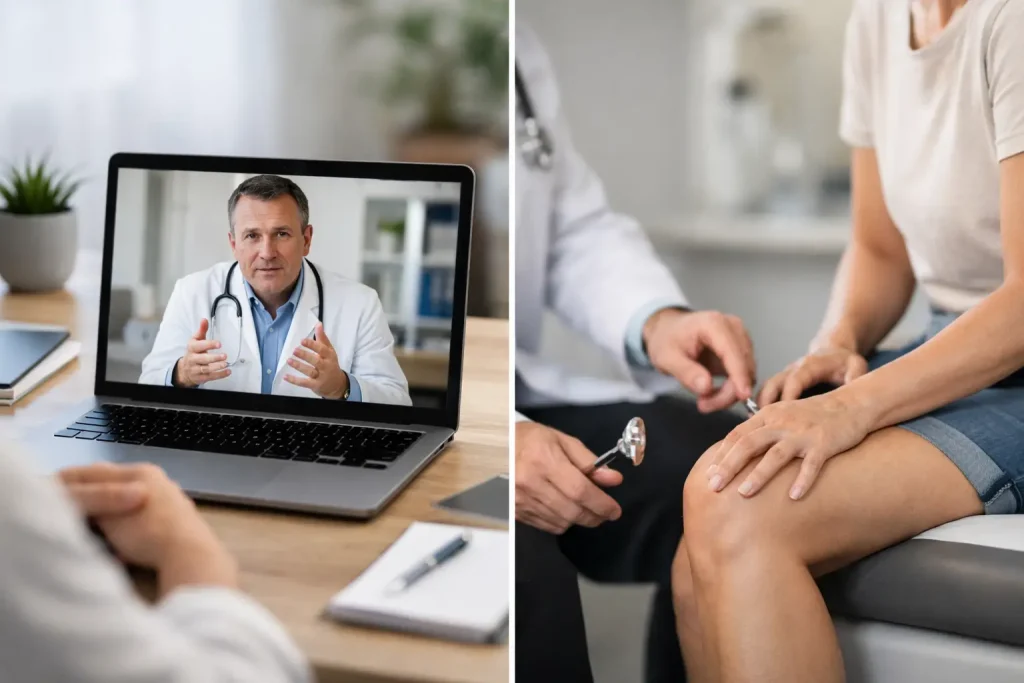
A video visit can be useful for medication refills, routine follow-up, and basic triage. But when a clinician needs to actually assess a patient, the gap becomes obvious: teledoc does not have a virtual exam solution like the Dr. Miltie N9+. For healthcare organizations building serious virtual care capacity, that is not a minor feature difference. It changes what can be evaluated, what data can be captured, and which patient populations can be served safely and effectively outside a traditional exam room.
This distinction matters most in settings where access challenges are already shaping outcomes. Pediatric programs, rural clinics, community health centers, school-based care, and safety-net organizations often need more than a video connection. They need a way to support clinician-directed virtual physical exams, involve caregivers, and gather clinically relevant information that can guide treatment, escalation, or follow-up.
Why teledoc does not have a virtual exam solution is a real operational issue
Many telehealth platforms were designed around convenience-first care. That model works well for a subset of encounters. It is far less effective when a provider needs to listen, look, measure, document, and monitor with more clinical precision.
When teledoc does not have a virtual exam solution, the visit may stop at conversation. The clinician can ask questions and observe general appearance on camera, but there are limits. Without integrated exam capabilities, organizations may still need an in-person visit to complete the assessment. That adds delay, duplicate scheduling, caregiver burden, and avoidable leakage in the care pathway.
For administrators and clinical leaders, this becomes a workflow problem as much as a technology problem. If your virtual care model cannot support meaningful remote assessment, then many encounters stay low-acuity by design. The platform may help with access on the front end, yet fail to extend clinical reach in a way that reduces unnecessary travel, supports rural access, or expands pediatric follow-up.
What a true virtual exam solution changes
A true virtual exam solution is not just video plus documentation. It is a connected-care model that allows a clinician to direct an exam remotely while receiving useful patient data. That can include real-time physiological measurements, remote visual and audio assessment support, and device-enabled exam workflows that help move the encounter beyond a conversation.
That matters in pediatrics, where children may be more comfortable at home, in school, or in a familiar clinic environment closer to where they live. It also matters for autistic children and pediatric patients with special healthcare needs, where reducing environmental stress can improve cooperation, caregiver participation, and the overall quality of the encounter.
In rural and underserved settings, the value is equally practical. Patients may live far from specialty care or even routine primary care resources. A virtual care model that includes exam support can help local teams extend access while preserving clinical oversight. That does not eliminate the need for in-person care in every case, but it can improve triage, follow-up, chronic disease management, and continuity.
Teledoc does not have a virtual exam solution like the Dr. Miltie N9+
This is where the difference becomes more than branding or feature language. Teledoc is widely recognized for telemedicine access, but teledoc does not have a virtual exam solution like the Dr. Miltie N9+ for organizations that need clinician-directed assessment supported by connected devices and care workflows.
The distinction is especially relevant for health systems, rural health clinics, federally qualified health centers, critical access hospitals, and pediatric-focused programs that are trying to build scalable virtual care with clinical depth. If the objective is simply to offer a video consult, many platforms can do that. If the objective is to examine, monitor, coordinate, and support reimbursement-aware deployment, the requirements are different.
The Dr. Miltie N9+ was built around that higher-acuity use case. It supports remote physical assessment and patient monitoring in a way that aligns better with real-world clinical operations. That includes care models where clinicians need to collect actionable information, support caregivers, and extend services into homes, schools, community clinics, and other distributed settings.
Why this difference matters for pediatric and family-centered care
Pediatric care often exposes the limits of basic telehealth faster than adult primary care. Young children may not describe symptoms clearly. Caregivers may notice changes but struggle to translate them into a clinically useful report. In many cases, the provider needs better exam support to determine whether the child can be treated remotely, monitored, or referred for urgent in-person care.
For families of children with complex conditions, every additional trip can mean missed work, school disruption, transportation stress, and fragmented follow-up. A stronger virtual exam model can reduce some of that burden while keeping the clinician in control of the encounter.
This is also where compassionate design matters. Children with sensory sensitivities or developmental differences may engage more successfully in lower-stress environments. A connected virtual exam approach can help care teams meet patients where they are, rather than forcing every clinically meaningful interaction into a brick-and-mortar setting.
The reimbursement and implementation angle cannot be ignored
Healthcare leaders do not buy telehealth tools just because they are innovative. They buy them because they can support care delivery, operational performance, and financial sustainability at the same time.
If a platform lacks virtual exam capabilities, the organization may struggle to create stronger reimbursement pathways around remote patient monitoring, chronic care management, and other structured virtual care services. The issue is not that every encounter must generate the same revenue opportunity. It is that the platform should support broader program design, not restrict it.
Implementation also matters. A telehealth tool can look appealing in a demo and still fail in practice if training, workflow alignment, device logistics, documentation expectations, and patient support are not addressed. Enterprise healthcare buyers need more than software access. They need a deployment model that fits their patient population, staffing realities, and compliance requirements.
That is why connected-care platforms tend to outperform point solutions in more complex environments. They are better positioned to support care coordination, operational consistency, and measurable program outcomes over time.
When a basic telehealth platform may still be enough
There are cases where a limited virtual visit platform is perfectly appropriate. If an organization is handling straightforward low-acuity visits, after-hours access, or simple follow-up conversations, advanced exam capability may not be essential.
That trade-off should be evaluated honestly. Not every provider needs device-enabled virtual exams for every service line. But many organizations underestimate how quickly they will need more clinical depth once they begin expanding virtual care into pediatrics, chronic disease management, rural outreach, transitional care, or community-based programs.
In other words, it depends on the care model. If your program is built around convenience visits alone, a lighter platform may suffice. If your goal is to extend clinician-directed care into distributed environments with stronger assessment capability, then platform limitations become much more significant.
Choosing technology for the care model you actually want
The better question is not whether video visits are useful. They are. The better question is whether your organization is trying to build a virtual front door or a more complete model of remote care delivery.
That choice affects everything from staffing and scheduling to patient engagement, clinical confidence, and referral patterns. It also shapes how well you can serve populations that do not fit neatly into convenience-based telehealth, including rural families, pediatric patients, safety-net populations, and individuals who benefit from care delivered closer to home.
Healthcare transformation rarely fails because leaders lack vision. It fails because the underlying tools cannot support the level of care the organization wants to deliver. When telehealth is limited to conversation, clinical reach stays limited too.
For provider organizations thinking beyond basic virtual visits, that is the central takeaway: platform selection should reflect the reality of clinical care, not just the appearance of access. If the goal is to bring more complete care into the settings where patients live, learn, and receive support, then virtual exam capability is not an extra. It is part of the foundation.
As virtual care strategy matures, the strongest programs will be the ones that treat remote assessment as a clinical function, not just a communications feature.
Move from information to action
See how the N9+ can fit your organization.
Explore the remote physical exam platform or request a focused demonstration.