
Telehealth for Pediatric Primary Care That Works
Telehealth for pediatric primary care helps organizations extend access with virtual exams, caregiver participation, and connected follow-up for children.
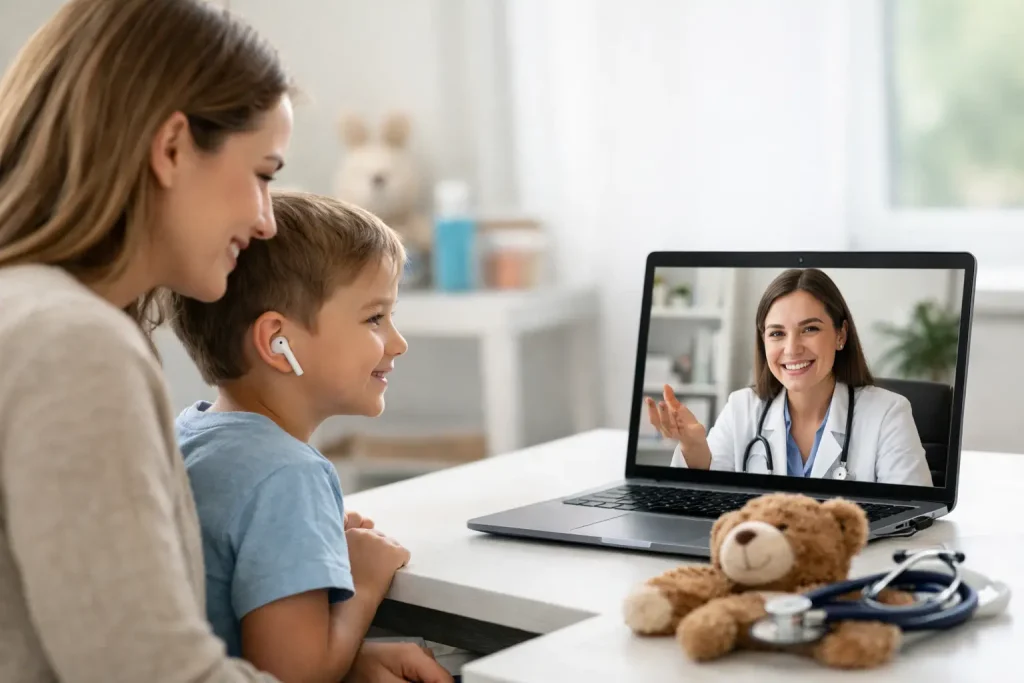
A child with a recurring earache, asthma symptoms, medication questions, or a concerning rash should not automatically require a family to miss work, arrange transportation, and travel hours for a brief primary care visit. For many communities, especially rural and underserved areas, telehealth for pediatric primary care offers a practical way to bring clinicians closer to children while keeping caregivers actively involved in care.
For healthcare organizations, however, pediatric virtual care cannot be built around video visits alone. A conversation on a screen may be appropriate for some follow-ups, education, and behavioral health needs, but primary care often depends on clinical observations and physical findings. Programs need a model that helps clinicians gather meaningful patient data, determine when an in-person evaluation is necessary, coordinate next steps, and create a reliable experience for families and staff.
Why Pediatric Primary Care Needs More Than Video
Pediatric care is relational. Clinicians assess not only symptoms, but also growth, development, family concerns, medication adherence, school challenges, and changes that may be difficult for a child to explain. Parents and caregivers are essential members of that encounter, particularly for infants, younger children, autistic children, and children with special healthcare needs.
Video can make many of these conversations more accessible. It can allow a clinician to see a child in a familiar environment, observe breathing effort or behavior, review home routines, and include a parent who may otherwise be unable to attend. Yet video alone has limits. It cannot consistently provide the clinical information needed to evaluate vital signs, hear heart or lung sounds, inspect the ears or throat, or document other findings that influence a care decision.
That distinction matters operationally. A virtual program that cannot support appropriate assessment may create avoidable referrals, duplicate visits, or clinician hesitation. Conversely, a connected-care model that enables a virtual physical exam can help organizations use telehealth where it is clinically appropriate while preserving clear escalation pathways for children who need hands-on care.
What Telehealth for Pediatric Primary Care Can Support
A well-designed program expands access across the continuum of primary care rather than attempting to replace every office encounter. The right use case depends on the child’s condition, age, risk factors, available support person, and the organization’s clinical protocols.
Virtual pediatric primary care can be particularly valuable for symptom triage, post-discharge follow-up, chronic disease check-ins, medication management, preventive counseling, care-plan reinforcement, and monitoring between in-person visits. A child with asthma, for example, may benefit from remote review of symptoms, inhaler technique, triggers, and adherence before an exacerbation becomes an emergency department visit. Families managing diabetes, complex conditions, or frequent medication changes may gain more consistent contact with the care team without repeated travel.
It can also support school-based and community-based access. When a trained facilitator is available with connected examination technology, a pediatrician or advanced practice clinician may be able to assess a child at school, in a community clinic, or in another trusted setting. This model can reduce disruption for families and help care teams act earlier when concerns arise.
Telehealth is not the answer for every encounter. Emergencies, serious respiratory distress, suspected acute abdomen, injuries requiring imaging or procedures, and situations requiring immediate hands-on intervention need prompt in-person or emergency evaluation. Strong programs make these boundaries explicit rather than treating virtual care as a universal substitute.
The Value of a Clinician-Directed Virtual Exam
Clinician-directed virtual examination changes the role of telehealth from a communication channel to a more clinically capable care modality. Connected devices can help care teams capture relevant data during the encounter, allowing the remote clinician to direct the assessment and make decisions based on more than caregiver description alone.
For pediatric practices, rural health clinics, federally qualified health centers, critical access hospitals, and community health organizations, this capability can extend scarce clinical expertise across multiple sites. A clinician may be able to support a child at a satellite clinic, school, or home-based setting with assistance from a caregiver, nurse, medical assistant, or community health worker, depending on the workflow and patient needs.
The goal is not to remove the local care team. It is to strengthen the connection between the child, caregiver, facilitator, and remote clinician. Dr. Miltie’s Circle of Care™ model reflects this approach by supporting coordinated participation around the patient rather than isolating telehealth into a separate, disconnected service line.
Familiar Settings Can Improve the Pediatric Experience
The care setting affects whether a child can participate successfully. Children with sensory sensitivities, developmental differences, or prior medical trauma may experience significant stress in unfamiliar clinical environments. A virtual visit from home, school, or a familiar community setting can reduce anxiety and help caregivers share more accurate observations about daily functioning.
For autistic children and pediatric patients with special healthcare needs, flexibility is particularly meaningful. A shorter virtual follow-up may be more tolerable than a long trip and waiting room experience. Still, accessibility should not mean lowering clinical standards. Organizations need appropriate examination tools, trained support personnel when needed, and protocols that identify when an in-person visit is the safer choice.
Building a Program That Clinicians Will Use
Technology selection is only one part of implementation. Successful telehealth for pediatric primary care is built around clinical workflows, staff roles, documentation requirements, and family readiness.
Start by identifying the patient populations and visit types where access barriers are greatest. A rural pediatric practice may prioritize sick-visit triage and chronic condition follow-up. A community health center may focus on reducing missed appointments and extending services to satellite locations. A health system may need a coordinated pediatric model that supports discharge follow-up, specialty access, and primary care continuity.
Then define the clinical pathway. Teams should determine which conditions can begin virtually, what examination data are required, who will obtain that data, how the clinician documents findings, and what triggers escalation. These decisions should be led by clinical leadership and revisited as the program matures.
Training is equally important. Caregivers and facilitators need simple instructions, while clinicians need confidence in device-enabled examination workflows and documentation. Programs should also account for language access, broadband limitations, device logistics, infection-control procedures, and technical support. A technically functional platform that creates extra work for nurses, front-desk teams, or clinicians will struggle to scale.
Make Financial Sustainability Part of the Design
Pediatric telehealth programs must be clinically sound and financially sustainable. Reimbursement requirements vary by payer, state, service type, clinician credentialing, and care setting. Organizations should evaluate CMS-aligned opportunities where applicable, as well as Medicaid and commercial payer policies, before finalizing their model.
This is especially relevant for organizations investing in remote patient monitoring, chronic care management, and virtual primary care pathways. Documentation, consent, eligible services, time requirements, and device use may influence whether care can be billed and how performance is measured. Reimbursement-aware deployment helps leaders avoid building a promising program that cannot be supported over time.
Leaders should also measure the outcomes that matter beyond visit volume. These may include time to appointment, completed follow-ups, avoidable travel, no-show rates, emergency department utilization, caregiver satisfaction, clinician capacity, and continuity for high-risk children. The most useful measures align with the organization’s access, quality, and population health goals.
A More Connected Path to Pediatric Access
The strongest pediatric telehealth programs do not ask families to adapt to a technology-first model. They design care around the child’s clinical needs, the caregiver’s capacity, and the realities of the communities being served. Video, connected examination tools, remote monitoring, and coordinated workflows each have a role, but their value comes from how they work together.
For organizations facing workforce constraints, geographic barriers, and rising demand for pediatric services, the opportunity is to make care more reachable without making it less personal. When virtual care is clinician-directed, operationally supported, and connected to the child’s broader care team, a routine concern can become an earlier intervention instead of another barrier for a family to overcome.
Move from information to action
See how the N9+ can fit your organization.
Explore the remote physical exam platform or request a focused demonstration.