
Virtual Examination Solutions for Rural Clinics
Virtual examination solutions for rural clinics help expand access, support remote exams, reduce travel, and improve care delivery in underserved areas.
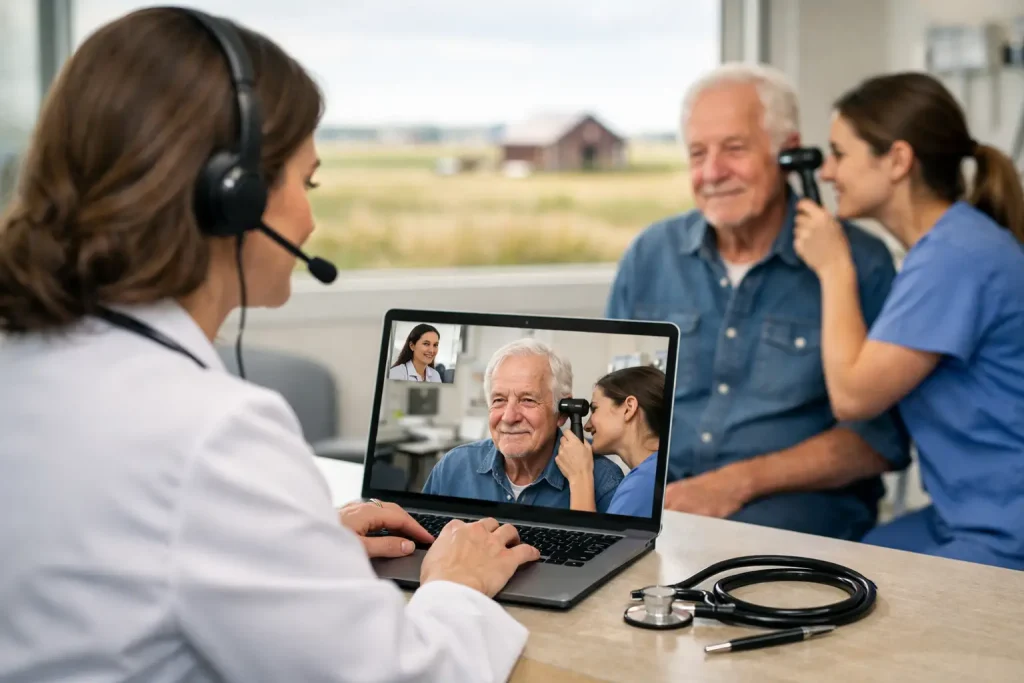
A pediatric patient in a farming community should not need a half-day drive, missed school, and a parent missing work just to complete a follow-up exam. Yet for many rural providers, that is still the operational reality. Virtual examination solutions for rural clinics are changing that equation by giving clinicians a better way to assess patients, collect meaningful clinical data, and keep care closer to home.
For rural health clinics, federally qualified health centers, critical access hospitals, and community-based programs, the question is no longer whether virtual care matters. The question is what kind of virtual care can support real clinical decision-making. A basic video visit may help with triage or medication follow-up, but it often falls short when a provider needs to listen to lung sounds, examine the ear, capture vitals, or evaluate symptoms that require more than conversation. That gap is where virtual examination technology becomes especially relevant.
Why rural clinics need more than video visits
Rural care delivery comes with structural limits that technology alone cannot erase. Workforce shortages, long travel distances, weather, transportation barriers, and specialist scarcity all shape what is possible on any given day. Clinics are often expected to do more with fewer staff while still meeting quality, access, and reimbursement expectations.
Traditional telehealth platforms solved one part of the problem by making remote appointments possible. They did not always solve the clinical depth problem. If the provider cannot gather enough information to make a confident assessment, the patient may still need an in-person visit elsewhere. That creates delays, duplicate effort, and added burden for families and care teams.
Virtual examination solutions for rural clinics work best when they extend the exam itself, not just the conversation. In practical terms, that means combining connected exam devices, remote patient data capture, care coordination workflows, and clinician-directed assessment tools that support a more complete virtual encounter.
What strong virtual examination solutions for rural clinics actually include
Not every platform marketed as telehealth is designed for exam-quality care. Rural organizations evaluating options should look beyond video capability and focus on whether the technology supports clinical relevance, operational fit, and financial sustainability.
At the clinical level, the solution should enable providers to perform virtual physical exams with connected tools that capture usable data. Depending on the care model, that may include digital auscultation, otoscopy, temperature, pulse oximetry, blood pressure, imaging support, and other medically relevant inputs. The goal is not to replicate every aspect of an in-person encounter. The goal is to capture enough reliable information to support safe, timely decisions in distributed settings.
The workflow matters just as much as the hardware. Rural clinics need systems that fit into existing staffing models, not systems that require a new department to operate them. A strong deployment supports role-based workflows for medical assistants, nurses, care coordinators, school staff, or community-based facilitators who may assist with the exam while the clinician directs the encounter remotely.
Reimbursement also matters. A technically impressive platform can still underperform if the organization cannot align it with RPM, chronic care management, virtual primary care, or other billable services. Rural leaders are usually balancing patient access goals with hard operational constraints. That makes reimbursement-aware implementation a core requirement, not an optional feature.
Where virtual exams make the biggest difference
The best use cases are often the ones that remove avoidable friction without lowering clinical standards. Follow-up care is an obvious example. Patients with chronic disease, respiratory concerns, pediatric developmental needs, or recurring acute issues often need serial assessment rather than a one-time visit. If those check-ins require repeated travel, adherence tends to drop.
Pediatrics is another area where virtual exam capabilities can have outsized value. Children, especially autistic children and those with special healthcare needs, may respond better in familiar environments such as home, school, or a trusted local clinic. A lower-stress setting can improve participation and allow caregivers to stay more engaged during the visit. That does not eliminate the need for in-person care when it is clinically necessary, but it can reduce unnecessary disruption for families.
Rural school-based programs also benefit from this model. When a clinician can evaluate a child remotely using connected exam tools, the school, family, and provider can coordinate around the child rather than forcing the child to move through a fragmented system. The same logic applies to community health centers and safety-net settings serving patients who face transportation, scheduling, or income-related barriers.
Operational trade-offs rural leaders should consider
There is no universal model that fits every rural organization. A standalone clinic with limited staff will have different needs than a multi-site health system or a critical access hospital supporting regional outreach. That is why vendor evaluation should focus on fit, not just features.
One trade-off is centralization versus flexibility. A highly centralized telehealth model can improve standardization, but it may not reflect the daily realities of dispersed rural care sites. On the other hand, a flexible model can support multiple use cases across clinics, schools, and community settings, but it requires clear protocols and training to maintain consistency.
Another trade-off involves exam scope. Some organizations begin with targeted service lines such as pediatrics, chronic care management, respiratory follow-up, or urgent access support. Others aim for broader virtual primary care from the start. Beginning with a narrower scope can make implementation easier and help teams establish clinical confidence. Expanding too quickly may create workflow strain before the program is fully stabilized.
Connectivity is another practical consideration. Rural broadband gaps are real, and any virtual examination program should account for variable internet performance across care settings. Mobile, wireless, and adaptable systems are often better suited to these environments than fixed setups designed for urban specialty centers.
Implementation works best when care delivery comes first
The most successful programs do not start with the device. They start with a care access problem that leadership wants to solve. That may be pediatric follow-up delays, specialist access gaps, avoidable patient travel, missed chronic care touchpoints, or workforce capacity limitations.
From there, implementation should map the clinical pathway. Who initiates the visit? Who supports the patient on-site? What exam data is collected? What triggers escalation to in-person care? How is documentation handled? How does the program align with compliance, quality reporting, and billing?
This is where many rural organizations benefit from a connected-care partner rather than a simple equipment purchase. Training, workflow customization, and deployment support often determine whether the solution becomes part of everyday operations or remains underused after launch. Dr. Miltie has built its approach around that reality, helping healthcare organizations extend clinician-directed virtual exams with a connected model that supports care teams, patients, and caregivers across distributed settings.
The role of caregiver participation and the Circle of Care
In rural healthcare, clinical access often depends on more than the patient-provider relationship alone. Family members, school personnel, community health workers, nurses, and referring clinicians may all play a role in keeping care on track. Virtual examination programs work better when they are built around that broader circle of support.
Caregiver participation can improve history-taking, reinforce treatment plans, and reduce the chance that important details are missed. This is especially meaningful in pediatrics, chronic disease management, and follow-up care after an acute event. A connected model allows the right people to participate at the right time without requiring every interaction to happen inside the traditional exam room.
That kind of design is not just patient-friendly. It is operationally smart. Rural clinics that can coordinate care more effectively are often better positioned to improve continuity, reduce leakage, and support value-based care goals.
What to ask before choosing a solution
Decision-makers should ask practical questions. Can the platform support clinician-directed virtual physical exams, not just video visits? Does it work in pediatric, community, and rural outreach settings? Can nonphysician staff help facilitate encounters without creating excessive workflow burden? Is the implementation aligned with HIPAA requirements and reimbursement realities? Can the solution grow from a single use case to a broader care model over time?
Those questions matter because rural care transformation is rarely about one technology purchase. It is about building a sustainable model for access, quality, and continuity in places where traditional care delivery alone has not been enough.
The strongest virtual examination strategies give rural clinics a way to bring more clinically meaningful care closer to patients, families, and communities. When the technology supports the exam, the workflow, and the people around the patient, distance stops being the defining feature of care.
Move from information to action
See how the N9+ can fit your organization.
Explore the remote physical exam platform or request a focused demonstration.