
How Virtual Examinations Improve Healthcare Access
See how virtual examinations improve healthcare access by reducing travel, supporting pediatric care, and extending clinician reach.
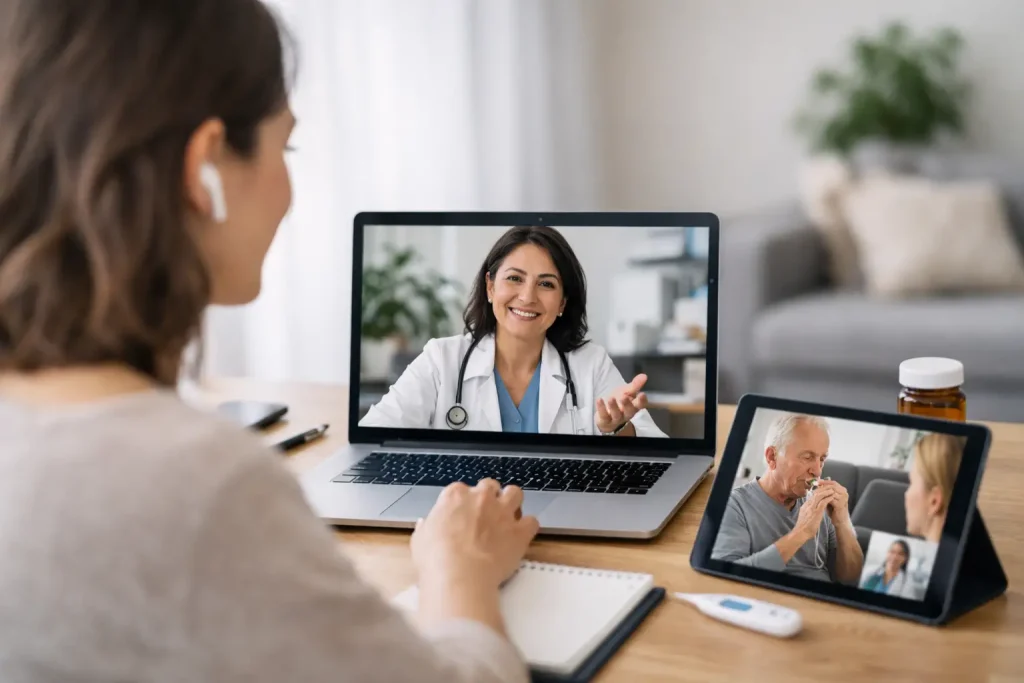
A missed follow-up visit is rarely just a scheduling problem. For a parent managing an autistic child’s care, a rural patient facing a two-hour drive, or a community clinic trying to stretch limited clinician capacity, that missed visit often reflects a larger access gap. That is exactly where how virtual examinations improve healthcare access becomes more than a telehealth talking point. It becomes an operational strategy for reaching patients who are often hardest to serve through traditional, site-based care alone.
Virtual care has moved well beyond video visits. For healthcare organizations under pressure to improve access, continuity, and outcomes, the real value comes from clinician-directed virtual examinations that allow providers to assess patients with greater clinical confidence outside the exam room. When supported by connected devices, care coordination workflows, and reimbursement-aware implementation, virtual examinations can help organizations extend care in ways that are practical, scalable, and better aligned with patient needs.
Why access problems are often exam problems
Many care gaps persist because the traditional in-person visit assumes patients can reliably travel, tolerate the setting, and return as often as clinically appropriate. That assumption breaks down quickly in pediatrics, rural health, safety-net care, and chronic disease management.
A video call alone may help with basic triage, medication review, or patient education. But when clinicians need to listen to lung sounds, examine the ears or throat, observe skin findings more closely, or gather additional physiologic data, standard telehealth can fall short. The result is often an unnecessary referral to urgent care, a delayed diagnosis, or a visit that must be repeated in person.
Virtual examination capabilities change that equation. By bringing more of the physical exam into the virtual encounter, healthcare organizations can reduce the distance between a patient’s location and a clinician’s decision-making capacity. That matters because access is not only about getting a patient onto a video platform. It is about enabling meaningful clinical evaluation without making every encounter depend on travel to a facility.
How virtual examinations improve healthcare access in practice
The strongest case for virtual examinations is operational, not theoretical. They improve healthcare access by removing barriers that prevent patients from completing care while preserving a higher standard of clinical assessment than video-only models typically allow.
For rural and underserved communities, the most immediate benefit is reduced travel burden. Patients who live far from specialty services, pediatric providers, or follow-up care often delay visits until symptoms worsen. Virtual examinations allow organizations to deliver timely assessments through distributed care models, including homes, schools, community clinics, and partner sites. That can be especially valuable for critical access hospitals, federally qualified health centers, and rural health clinics trying to expand clinical reach without overextending workforce resources.
For pediatric populations, access is often shaped by environment as much as geography. Some children, especially those with sensory sensitivities, autism, or special healthcare needs, may be more comfortable and more cooperative in familiar settings. A lower-stress encounter can produce better participation and more useful information for the clinician. It can also reduce the logistical strain on caregivers, who may otherwise need to coordinate transportation, school absences, time off work, and childcare for siblings.
Virtual examinations also improve healthcare access by making follow-up more achievable. Many organizations struggle not only with initial access, but with keeping patients engaged across the care continuum. Follow-up visits after an acute episode, chronic care management check-ins, medication monitoring, and post-discharge reassessments are all vulnerable to no-shows when in-person attendance is the default. A virtual exam model that includes clinically relevant patient data can make those touchpoints easier to complete without sacrificing quality.
The difference between telehealth access and clinical access
This distinction matters for healthcare leaders evaluating technology investments. Telehealth access means a patient can connect. Clinical access means a provider can assess, decide, and act with enough confidence to move care forward.
That difference becomes clear in use cases where visual observation is not enough. A child with an earache may need otoscopic imaging. A patient with respiratory symptoms may require more than a conversation about shortness of breath. A chronic care patient may need remote monitoring data to support treatment decisions between office visits.
When virtual examination tools are integrated into care delivery, clinicians can often gather a fuller picture during the encounter itself. That reduces the number of fragmented touchpoints where the patient is told to schedule another visit, go elsewhere for evaluation, or wait until symptoms change. In operational terms, it can improve throughput, reduce avoidable escalation, and support more appropriate utilization across the continuum.
Still, it depends on the clinical scenario. Not every condition can or should be managed virtually. Some patients require hands-on examination, imaging, procedures, or emergency care. The goal is not to replace in-person medicine. It is to reserve in-person resources for the encounters that truly require them while enabling more patients to receive timely clinician-directed evaluation where they are.
Why pediatric and community-based care see outsized benefits
Pediatric care is one of the clearest examples of how virtual examinations improve healthcare access because the barriers are often layered. Children depend on adults for transportation, scheduling, and communication. Families may face long drives, missed work, school disruptions, or behavioral stress tied to clinical environments. These factors can delay care even when a provider is technically available.
A virtual exam model allows care to move closer to the child. In homes, schools, pediatric practices, and community settings, clinicians can evaluate symptoms, involve caregivers directly, and support continuity without requiring every concern to become a facility-based visit. For children with complex needs, that can improve adherence to follow-up plans and create a more consistent connection between family, care team, and local support systems.
Community-based organizations also benefit because virtual examinations can strengthen the role of distributed care settings. A school nurse, community health worker, or clinic support team may help facilitate the encounter while the clinician conducts the evaluation remotely. That model can be particularly useful in areas where specialist access is limited or where workforce shortages make traditional scheduling difficult.
Administrative value matters too
Healthcare access initiatives often fail when they are clinically appealing but operationally fragile. Decision-makers need models that fit into compliance requirements, staffing realities, and reimbursement pathways.
Virtual examination programs work best when they are designed around workflow, training, and financial sustainability from the beginning. That includes selecting use cases where remote physical assessment adds clear value, defining who supports the encounter on the patient side, aligning documentation with payer expectations, and ensuring clinicians can incorporate device-enabled findings into routine decision-making.
This is also where connected-care platforms stand apart from standalone telehealth tools. Organizations need more than video. They need coordinated pathways that can support remote patient monitoring, chronic care management, follow-up workflows, and caregiver participation. They also need implementation models that recognize the realities of HIPAA compliance, CMS reimbursement, staff adoption, and multi-site deployment.
Dr. Miltie addresses this need through a connected-care approach that combines virtual examination capabilities, patient monitoring, workflow customization, and its Circle of Care model to help organizations expand access in a way that is clinically meaningful and operationally sustainable.
What healthcare leaders should evaluate before scaling
The most successful programs start with a focused question: which access barriers are we trying to solve? For some organizations, the answer is rural follow-up. For others, it is pediatric specialty reach, post-discharge continuity, school-based access, or chronic disease monitoring.
From there, leaders should look at whether virtual examinations will improve clinical decision-making enough to reduce unnecessary in-person visits, speed intervention, or strengthen continuity. They should also examine where caregiver involvement, community-based facilitation, or distributed workforce models could improve patient participation.
There are trade-offs. Not every population has equal digital readiness. Some settings need stronger onboarding, better connectivity, or on-site support. Clinicians may require training to adapt exam techniques and workflows for virtual encounters. And reimbursement opportunities vary by program design and payer mix. Those are not reasons to avoid virtual examinations. They are reasons to implement them deliberately.
Healthcare access improves when care models reflect how patients actually live, not just how clinics have historically operated. Virtual examinations make that shift possible by extending clinician-directed assessment into the places where barriers are lower and engagement is more realistic. For healthcare organizations focused on pediatrics, rural communities, and underserved populations, that is not just a technology upgrade. It is a more practical way to bring care closer to the people who need it most.
Move from information to action
See how the N9+ can fit your organization.
Explore the remote physical exam platform or request a focused demonstration.